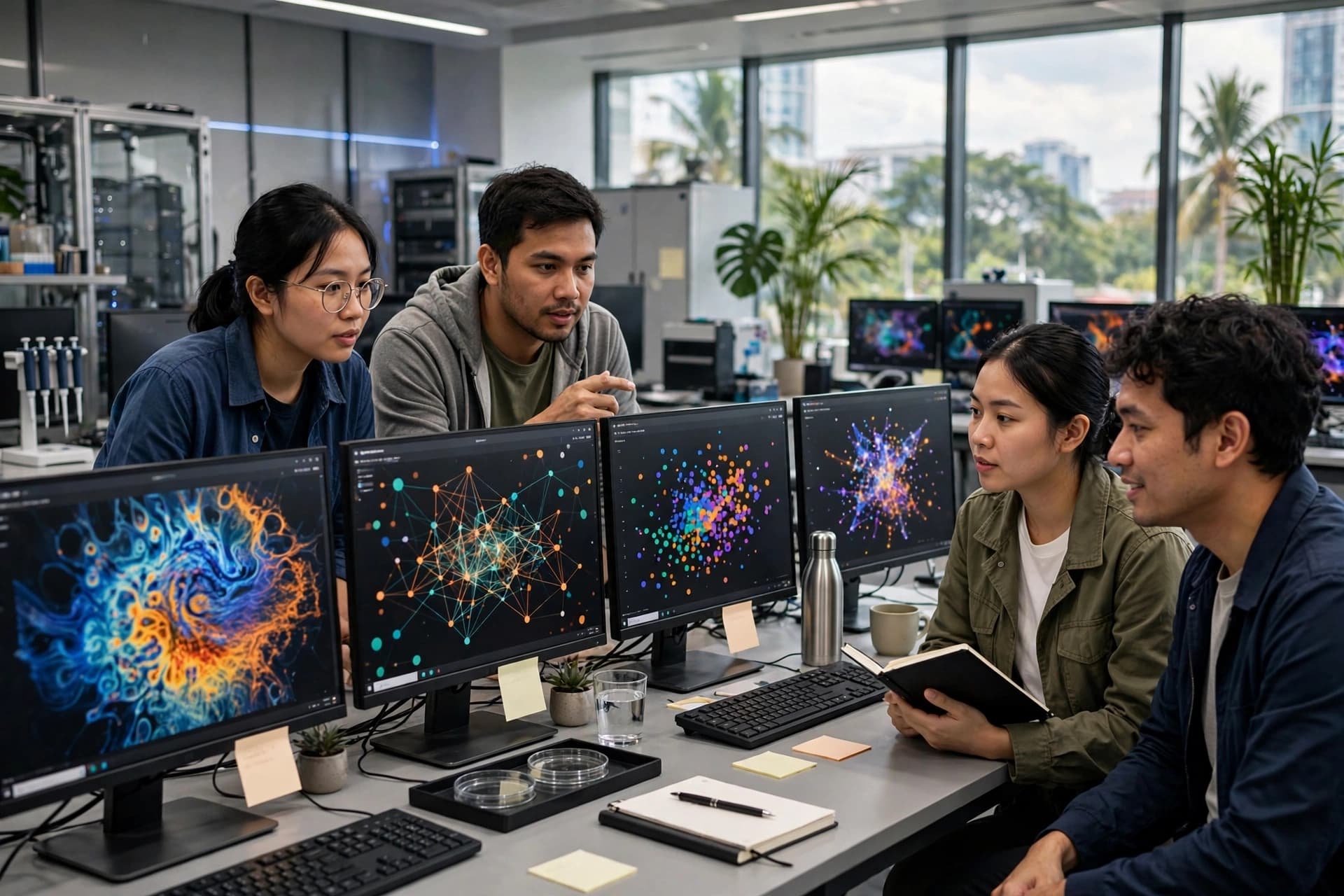
There are moments in industrial history when investment signals more than expansion — it signals a shift in how the future is imagined. Factories once defined by steel and assembly lines are increasingly guided by algorithms, sensors, and autonomous systems. In announcing a massive investment valued at approximately Rp105 trillion, appears to be placing a decisive bet on artificial intelligence and robotics as the engines of tomorrow’s mobility and manufacturing landscape.
The funding initiative is aimed at accelerating development across AI-driven mobility solutions, robotics platforms, smart manufacturing systems, and autonomous technologies. Rather than focusing solely on vehicle production, Hyundai is expanding its technological ecosystem — positioning itself within a future where cars, robots, and intelligent infrastructure operate as interconnected systems.
Artificial intelligence has become central to next-generation transportation, enabling advanced driver assistance systems, autonomous navigation, predictive maintenance, and intelligent traffic integration. By strengthening AI capabilities, Hyundai seeks to refine how vehicles perceive environments, respond to hazards, and optimize performance in real time. These advancements are expected to influence not only passenger vehicles, but also logistics fleets and smart mobility services.
Robotics represents another pillar of the investment strategy. Hyundai has steadily expanded its presence in robotics following high-profile acquisitions and research initiatives, focusing on machines designed to assist industrial operations, logistics handling, and human mobility support. From automated warehouse systems to wearable robotic devices that augment human strength, the company’s robotics vision extends beyond factories into everyday life.
Smart manufacturing is also a core focus. AI-powered production facilities promise improved efficiency, predictive quality control, and reduced operational waste. By integrating machine learning into assembly processes, Hyundai aims to create adaptive production lines capable of responding to supply chain changes and evolving consumer demand.
Industry analysts view the investment as part of a broader transformation within the global automotive sector. Traditional automakers are increasingly redefining themselves as mobility technology companies, competing not only in vehicle design but in software ecosystems, automation, and intelligent infrastructure. As electrification and autonomous driving reshape transportation, companies that invest early in AI and robotics may gain long-term strategic advantages.
Beyond technological ambition, the investment reflects economic positioning. South Korea continues to strengthen its role as a hub for advanced manufacturing and innovation, and large-scale corporate investments contribute to national competitiveness in high-tech sectors. The ripple effects may include job creation in advanced engineering fields, supply chain modernization, and expanded research collaborations.
Yet, as automation advances, the shift also invites reflection on workforce adaptation. Robotics and AI promise efficiency gains, but they also necessitate reskilling and education initiatives to prepare workers for increasingly digital industrial environments. The future factory may rely as much on data scientists and systems engineers as it once did on mechanical expertise.
In committing substantial resources to AI and robotics, Hyundai is not merely investing in technology — it is investing in a new industrial narrative. One where mobility is intelligent, machines collaborate with humans, and manufacturing becomes an adaptive, data-driven ecosystem.
The assembly lines of the past moved metal. The systems now being built aim to move intelligence itself — quietly shaping how people, goods, and machines will navigate the decades ahead.
AI Image Disclaimer Visuals are created with AI tools and are not real photographs.
Sources : Reuters Bloomberg CNBC The Korea Herald Nikkei Asia
Published by Banx Network. This article is part of the Banx decentralized media programme, powered by the BXE token on the XRP Ledger.

.jpg&w=3840&q=75 "The Artemis Revolution: How NASA Plans to Build Humanity's Future on the Moon")