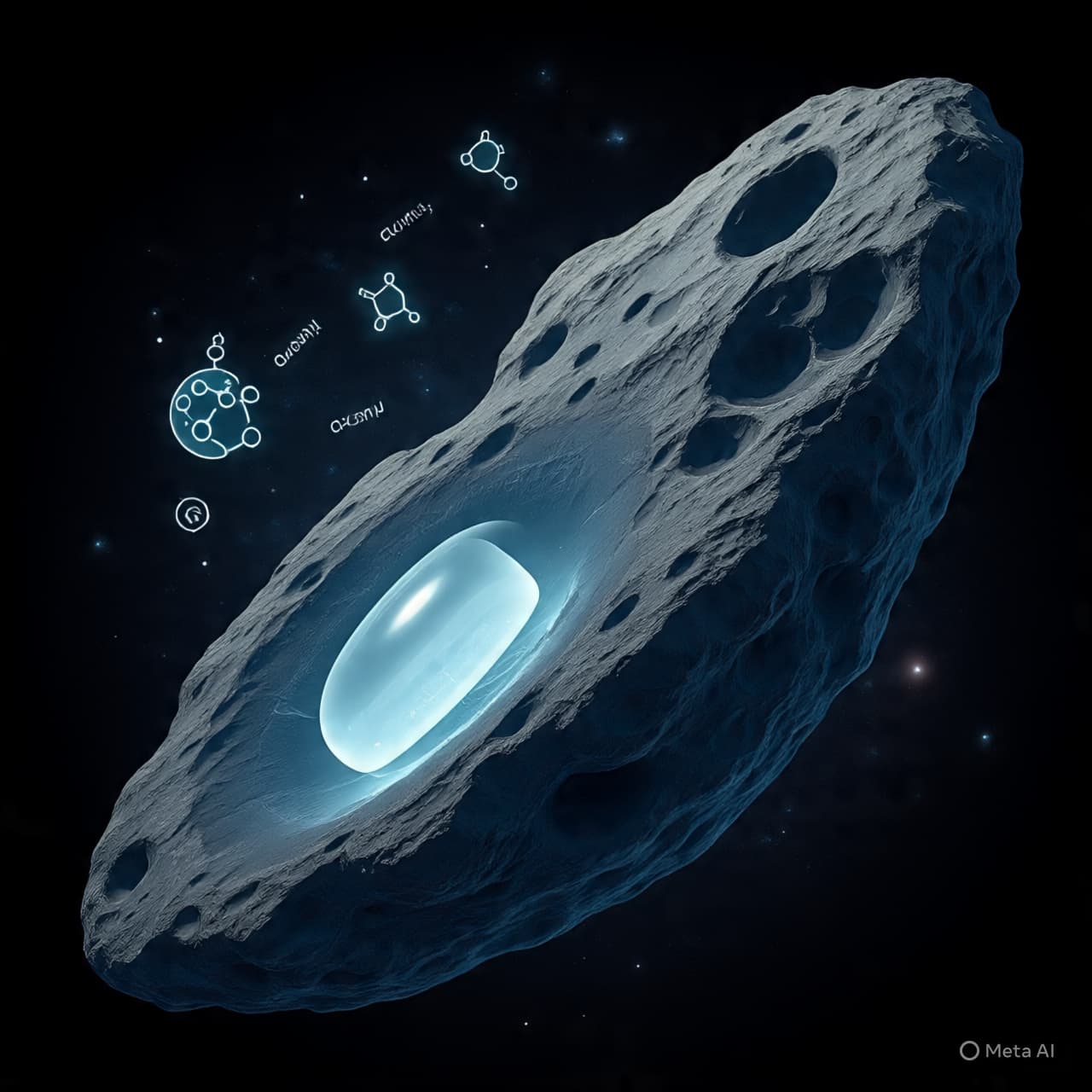
There’s a gentle wonder in finding the familiar where you least expect it: a melody humming in a windswept canyon or the scent of rain in a distant desert. Space, long thought to be the realm of extremes and lifeless voids, has recently revealed something equally profound — hints of life’s earliest chemistry written in the dust of an ancient asteroid.
Scientists studying pristine samples returned by NASA’s OSIRIS-REx mission from the near-Earth asteroid Bennu have detected amino acids — the small molecules that serve as the essential building blocks of proteins — in material that formed far from warmth, in the deep cold of the early solar system. Traditionally, researchers believed these molecules required liquid water in a “warm” environment to form. The new evidence suggests otherwise.
Bennu’s ancient ingredients are thought to have taken shape when the asteroid existed beyond the so-called “snow line,” where solar heat was too weak to sustain liquid water. Yet amino acids — including several that Earth-life depends on — appear to have been forged in icy, radiation-bathed conditions, reshaping long-held assumptions about where the chemical roots of life might emerge.
Even more intriguing, the amino acids from Bennu weren’t perfect mirror copies of each other — a subtlety that raises questions about why life on Earth favors certain molecular forms over others. This rarity in structure may offer clues not just about asteroid chemistry, but about the early choices nature made on this planet.
These findings do not prove that life ever existed on Bennu or that humans were seeded from space. Instead, they expand the cosmic landscape in which life’s essential threads might be woven. If such building blocks are not confined to warm, watery worlds but can form amid the deep freeze of space, the cosmic recipe for life becomes broader, and perhaps more common, than once imagined.
As scientists continue to unravel this ancient material, the story of how life’s chemistry may be sprinkled throughout the universe invites reflection. In the cold, quiet reaches beyond Earth’s warmth, space itself may be richer with possibility — hinting that life’s origins are a tapestry woven not just here, but among the stars.
AI Image Disclaimer “Visuals are created with AI tools and are not real photographs.”
🧠 Sources Jalopnik ScienceDaily Penn State University news StudyFinds Space.com
Published by Banx Network. This article is part of the Banx decentralized media programme, powered by the BXE token on the XRP Ledger.