There are moments when the Earth seems to murmur back to us in ways we least expect — a quiet shift in the wind, a ripple in the sea, an unforeseen turn in a vast and ancient system. The Antarctic, often imagined as a white, stoic expanse at the bottom of our world, holds secrets of the deep, dark waters that surround it. Recent research has revealed one such secret, hinting at a subtle yet important dialogue between the icy land and the ocean that laps its edges.
For decades, climate scientists have worked with a set of assumptions about how the Southern Ocean — the vast circumpolar waters touching Antarctica — helps to calm the rising tide of carbon dioxide in our atmosphere. In this cold, energetic place, iron and other nutrients fertilize tiny marine organisms, like unseen gardeners nurturing the ocean’s invisible forests, which in turn absorb carbon from the air. But just as the sea is more than a mirror, the processes beneath its surface are more complex than once thought. Recent findings suggest that as the West Antarctic Ice Sheet retreats, the nature of these fertilizing inputs may change in ways that reduce the ocean’s ability to take up carbon.
The surprise lies not in the fact that ice-borne minerals travel into the ocean, but in what form they arrive. Scientists analyzing sediment cores from the Pacific sector of the Southern Ocean — fragments of ancient seabed lifted from depths more than three miles below the surface — discovered that iron delivered by icebergs was surprisingly inert. Instead of acting like rich fertilizer that spurs algae growth, much of this iron was in a highly weathered, less-soluble state, like nutrients contained in stones that resist dissolution into soil.
In the delicate machinery of ocean life, iron plays the role of a limiting nutrient — the missing piece that allows algae to flourish. These microscopic organisms are like the forest floor of the ocean, pulling carbon down from the atmosphere as they grow. More growth tends to mean more carbon removed from the air. But in this case, the expected reaction didn’t happen. Despite abundant iron carried by broken fragments of the thinning ice sheet, algae growth remained muted, and carbon uptake did not rise as earlier models would have predicted.
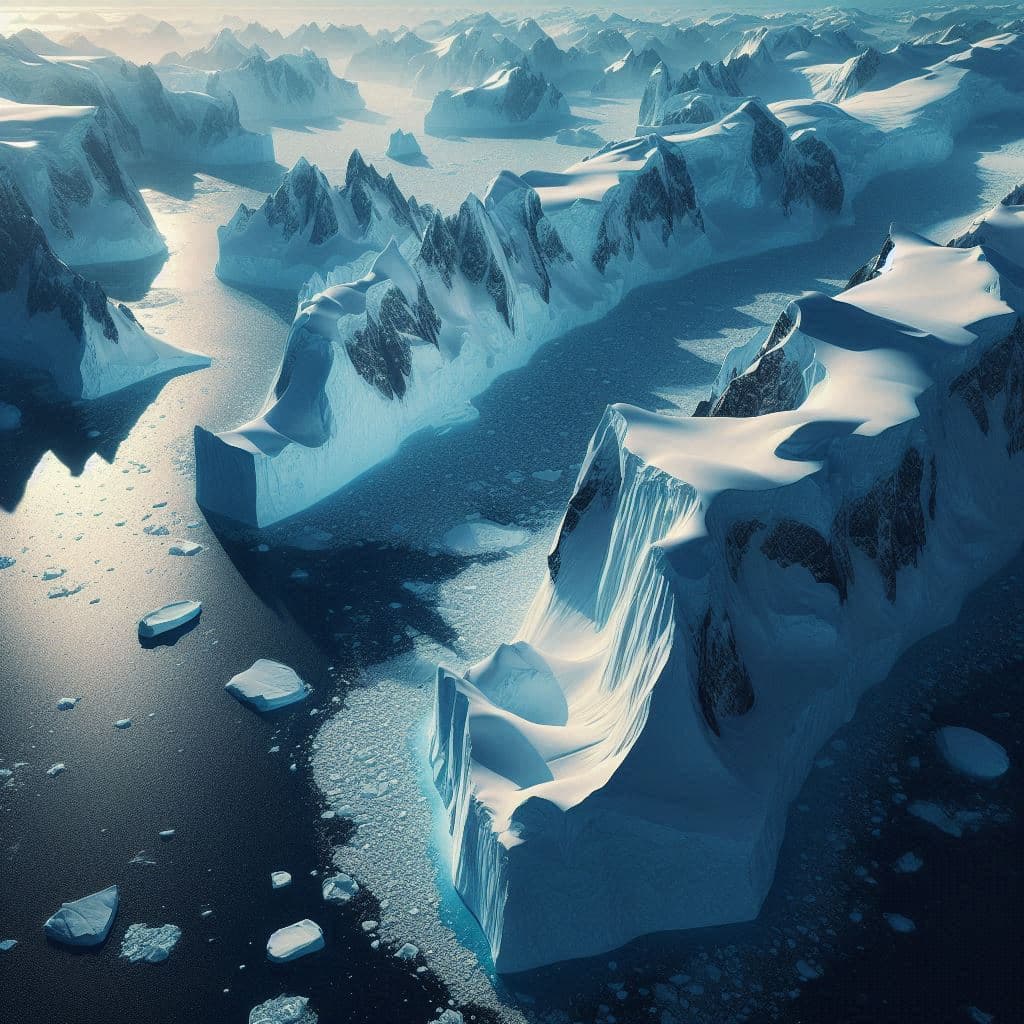
This discovery matters because it suggests a feedback loop that the climate system didn’t fully anticipate. As West Antarctica warms and sheds more ice, giant icebergs will continue to scrape up ancient, weathered minerals from the bedrock below, carrying them northward into ocean waters that might otherwise act as carbon sinks. Rather than supporting the brisk uptake of carbon that helps temper warming, these minerals may do less to nourish the ocean’s tiny carbon absorbers.
At its heart, Earth’s climate operates through connections that are both intricate and graceful. A change in one place — the thinning of ice a world away — can ripple across ecosystems, subtly altering the chemistry of the sea and, in turn, the choreography of life that dwells within it. In this case, the feedback uncovered by scientists reminds us that the ocean’s ability to absorb carbon is not fixed but subject to the shifting patterns of nature itself.
While the research does not suggest an immediate collapse of the ice sheet — that remains unlikely in the near term — it does offer a gentle yet profound insight: the Southern Ocean’s vast embrace of carbon may become less generous if the West Antarctic Ice Sheet continues to retreat. Such a change would add another whisper to the complex story of climate change — one that scientists and policymakers will be listening to with growing attention in years to come.
AI Image Disclaimer “Images in this article are AI-generated illustrations, meant for concept only.”
Sources Phys.org EurekAlert! SpaceDaily Encyclopaedia Britannica Lamont-Doherty Earth Observatory / Columbia Climate School
Published by Banx Network. This article is part of the Banx decentralized media programme, powered by the BXE token on the XRP Ledger.