
For centuries, the Moon has been a silent companion in Earth’s sky, reflecting light and curiosity back to the planet below. Today, it is gradually becoming something more than a distant object of observation, as international space agencies and private companies explore the possibility of sustained human presence beyond Earth.
NASA, alongside commercial and international partners, has been advancing plans for future lunar missions that extend beyond short-term exploration. These efforts are part of a broader strategy to establish infrastructure that could support long-duration activity on the Moon’s surface.
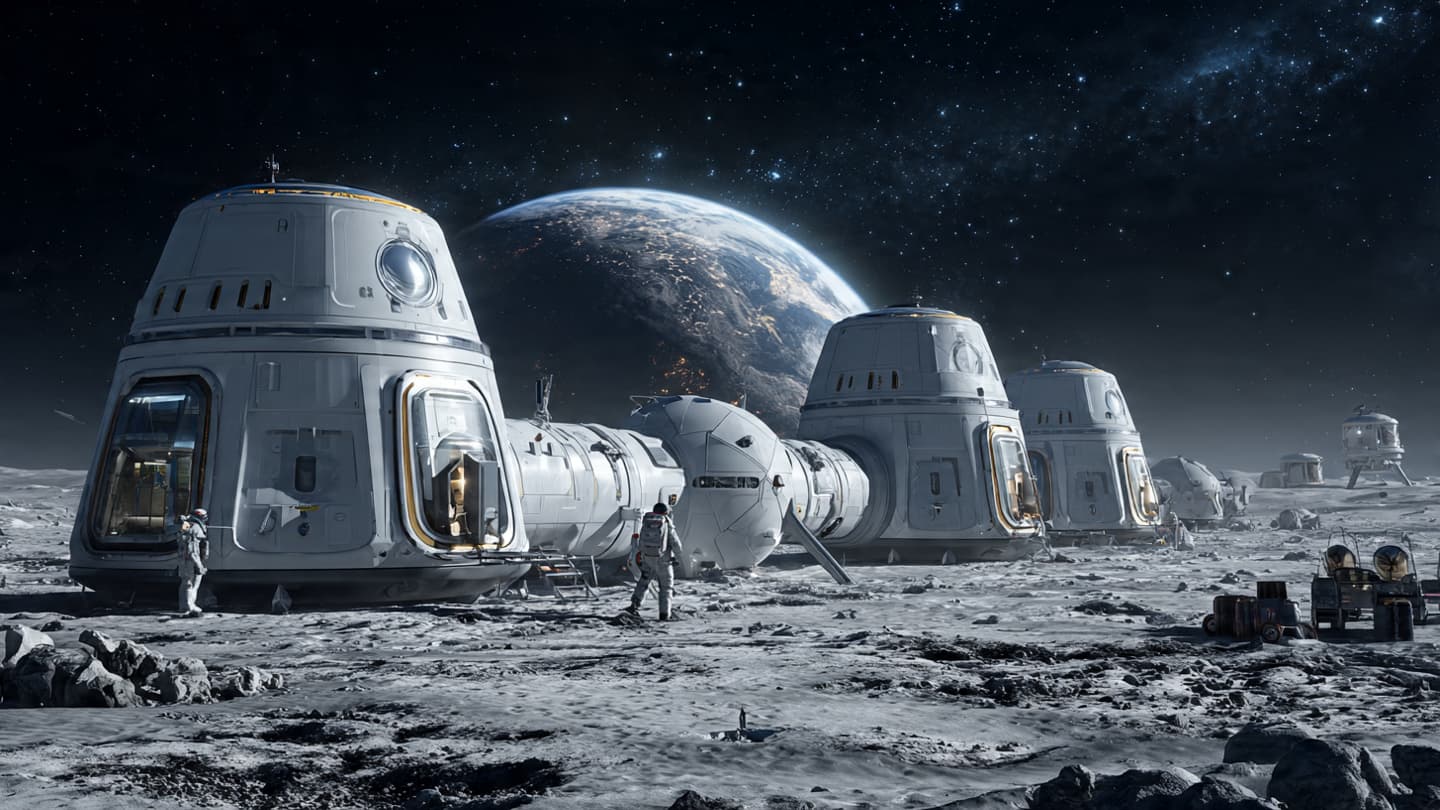
The proposed lunar base concepts often include modular habitats, energy systems, and scientific facilities designed to withstand extreme temperature variations and radiation exposure. These designs are being tested through simulations and Earth-based analog environments.
A key focus of current development is sustainability. Rather than relying entirely on Earth-based supply chains, researchers are exploring ways to use lunar resources, such as regolith, for construction and energy production.
Private aerospace companies are also contributing to this effort by developing landers and transport systems intended to reduce cost and increase mission frequency. This collaboration between public and private sectors marks a shift in how space exploration is organized.
Scientific interest in a lunar base extends beyond exploration alone. The Moon offers a stable platform for astronomical observation and could serve as a testing ground for technologies needed for future missions to Mars and beyond.
Despite progress, challenges remain significant. Harsh environmental conditions, communication delays, and the complexity of long-term life support systems continue to require extensive research and testing before permanent structures can be established.
As planning continues, the idea of a lunar base remains a long-term vision shaped by gradual engineering steps rather than immediate construction. It reflects a growing intention to extend human presence further into space in a careful and methodical way.
AI Image Disclaimer: Visuals accompanying this article are AI-generated representations for conceptual illustration purposes.
Sources: NASA, ESA, SpaceX reports, Nature Astronomy, MIT Technology Review
Published by Banx Network. This article is part of the Banx decentralized media programme, powered by the BXE token on the XRP Ledger.



