Along the rugged coastline of Newfoundland and Labrador, where the Atlantic Ocean meets the land with formidable force, safety at sea is a paramount concern. The arrival of a new Coast Guard vessel on the west coast marks a significant enhancement to the region’s search and rescue capabilities. This addition is more than just a new asset; it is a promise of protection for fishermen, mariners, and communities who rely on the waters for their livelihood and connection to the world. It is a testament to the enduring commitment to safeguarding life in one of Canada’s most challenging marine environments.
The new vessel, designed for versatility and endurance, brings advanced technology and improved speed to rescue operations. Its presence addresses long-standing needs for faster response times in remote areas, where weather conditions can change rapidly and unpredictably. For the crews who operate these ships, the upgrade means better tools to perform their dangerous and vital work. It is a recognition of the risks they take and the importance of their mission in preserving human life.
For the communities along the west coast, the new ship offers peace of mind. Fishing and maritime transport are integral to the local economy and culture, but they come with inherent dangers. Knowing that a capable and modern rescue team is nearby provides a sense of security that supports these industries. It allows families to send their loved ones out to sea with greater confidence, knowing that help is available if needed.
The investment in this vessel reflects a broader strategy by the Canadian Coast Guard to modernize its fleet. As climate change alters weather patterns and increases the frequency of extreme events, the need for robust rescue infrastructure grows. This new addition is part of a nationwide effort to ensure that coastal regions are equipped to handle contemporary challenges. It is a proactive step toward adapting to a changing environment.
Training and integration of the new crew are also critical components of this initiative. The personnel operating the vessel undergo rigorous preparation to handle complex rescue scenarios. Their expertise, combined with the ship’s capabilities, creates a powerful synergy that enhances overall effectiveness. This human element is crucial, as technology alone cannot replace the judgment and courage of skilled rescuers.
Local officials and maritime organizations have welcomed the arrival with enthusiasm. They view it as a validation of the region’s importance and a commitment to its well-being. The collaboration between federal agencies and local stakeholders ensures that the vessel is deployed where it is most needed. This partnership is essential for maximizing the benefits of the new resource and ensuring community trust.
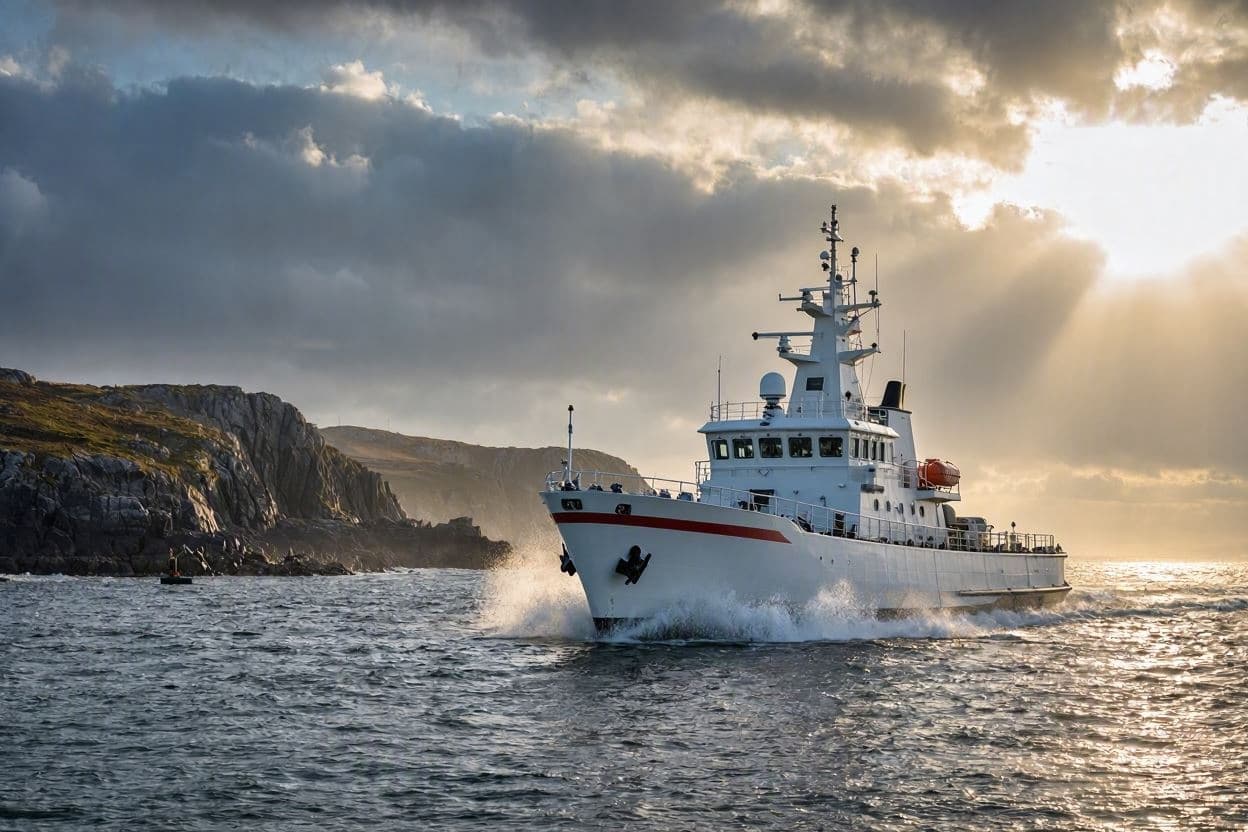
As the vessel begins its service, it becomes a symbol of hope and reliability. Its white hull cutting through the waves is a visible reminder of the support system in place. For those who live and work on the water, it is a beacon of safety in the vast expanse of the ocean. It represents the collective effort to protect those who brave the elements.
The introduction of the new Coast Guard vessel on Newfoundland and Labrador’s west coast is a positive development for maritime safety. It enhances the region’s ability to respond to emergencies and supports the livelihoods of coastal communities. As the ship sets out on its missions, it carries with it the hopes and gratitude of those it serves, reinforcing the bond between the sea and the people who depend on it.
AI Image Disclaimer: The visual representations in this article are AI-generated illustrations designed to convey the thematic elements of maritime safety and rescue operations, not actual photos of the specific vessel.
Sources: CBC News Newfoundland and Labrador Fisheries and Oceans Canada The Telegram Global News
Published by Banx Network. This article is part of the Banx decentralized media programme, powered by the BXE token on the XRP Ledger.