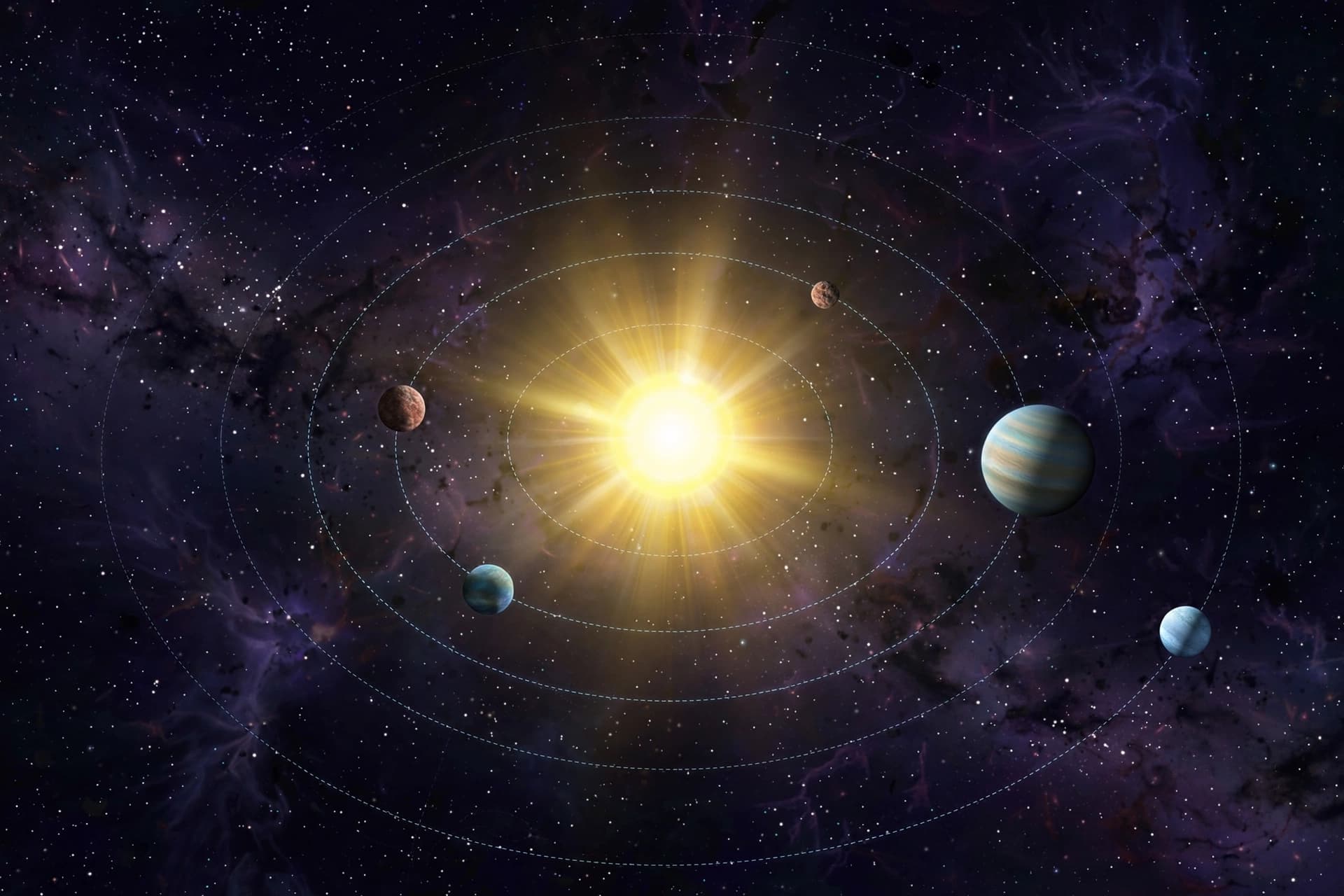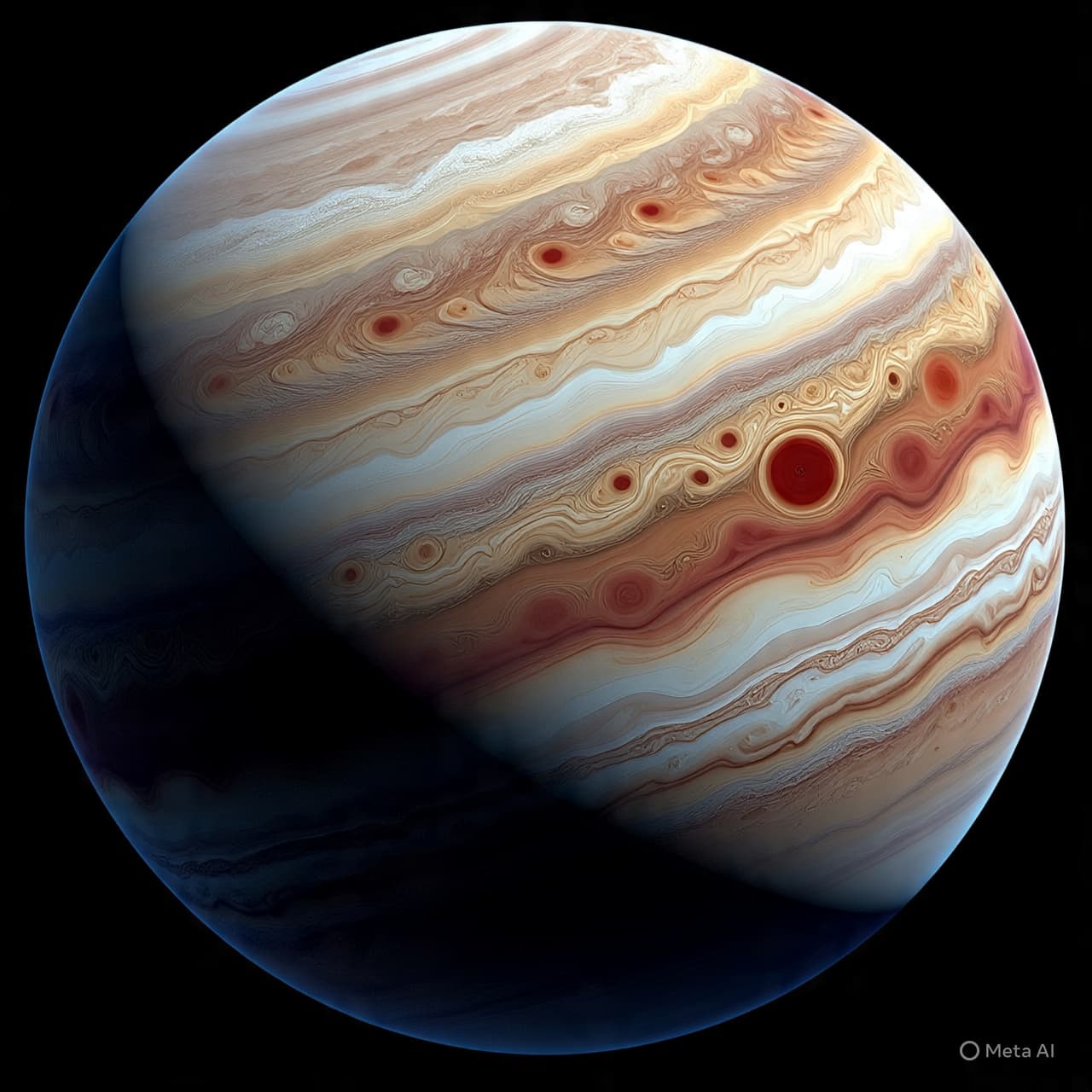
In the evening hush before starlight fully settles, Jupiter shines — a colossal lantern in the deep dark. For centuries, philosophers and dreamers alike pointed toward this swirling sphere, imagining its grand scale and majestic shape. We learned its name from mythic skies, a king among planets, painted in dazzling bands of color. Yet even as we watched, the story of this giant quietly continued to unfold, like a poem revealing another delicate verse upon closer reading.
Modern explorers of the cosmos have long based their understanding of Jupiter’s breadth and curves on observations from robotic pioneers nearly half a century past. These early glances, though brilliant for their era, offered only glimpses of the planet’s true dimensions. The gas giant’s immense figure — sculpted by rapid spin, turbulent winds, and deep atmospheric layers — was measured with the best tools at hand, and those figures became part of textbooks and classroom chalkboards around the world. Over time, the image of Jupiter in our minds became as familiar as an old friend’s silhouette, steady and unchanging beneath the night sky.
But the past few years have added fresh pages to this unfolding celestial narrative. NASA’s Juno spacecraft, looping and dipping through Jupiter’s realm, has given researchers a new vantage. By tracing the bend and whisper of radio signals passing through Jupiter’s thick atmosphere, scientists have mapped the giant with a precision that earlier explorers could only imagine. These refined measurements reveal that Jupiter is just a little bit smaller and more flattened than previously believed; the equatorial span and polar height differ from long‑held estimates by mere kilometers, subtle tweaks on a planetary scale that nevertheless tell a richer story about the forces shaping this world.
This is not a drama of drastic revision, but rather a gentle refinement — the cosmos inviting us to see with greater clarity. Jupiter remains the vast sentinel of our solar system, its presence unchanged in awe‑inspiring grandeur. Yet, in the harmonious interplay of data and discovery, we learn that even giants have more to reveal, whispering secrets in the language of elliptical shapes and atmospheric currents. These whispers deepen our appreciation, reminding us that the universe, in its vastness, rewards patience and curiosity with ever‑more nuanced beauty.
Recent findings show Jupiter’s equatorial diameter is slightly less wide, and the measure from pole to pole is modestly reduced, compared with earlier models. Scientists hope these refined figures will improve understanding of Jupiter’s internal structure and how its powerful winds and rotation shape its form.
AI Image Disclaimer Illustrations were produced with AI and serve as conceptual depictions.
Sources Reuters ScienceAlert Scientific American Smithsonian Magazine NASA official mission blog
Published by Banx Network. This article is part of the Banx decentralized media programme, powered by the BXE token on the XRP Ledger.