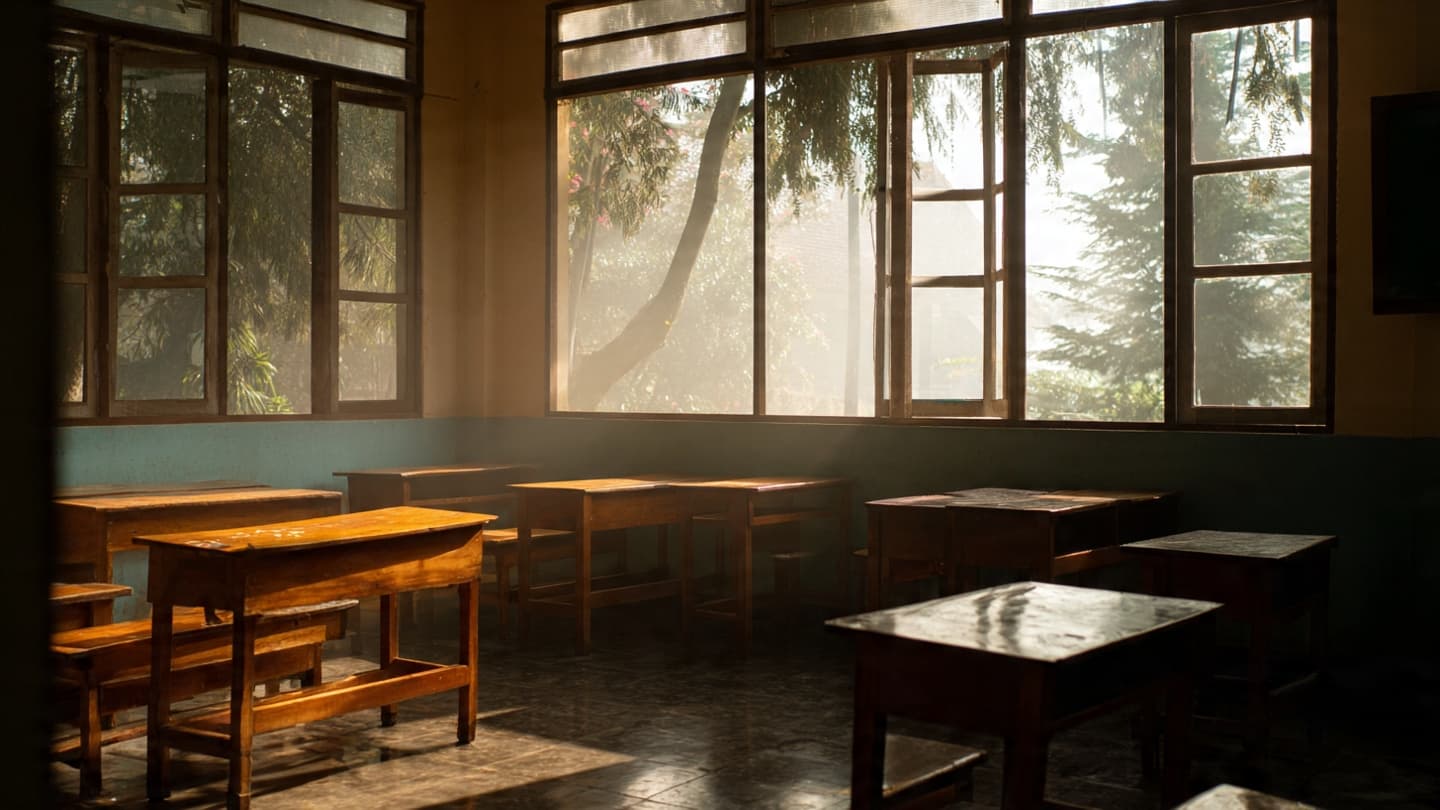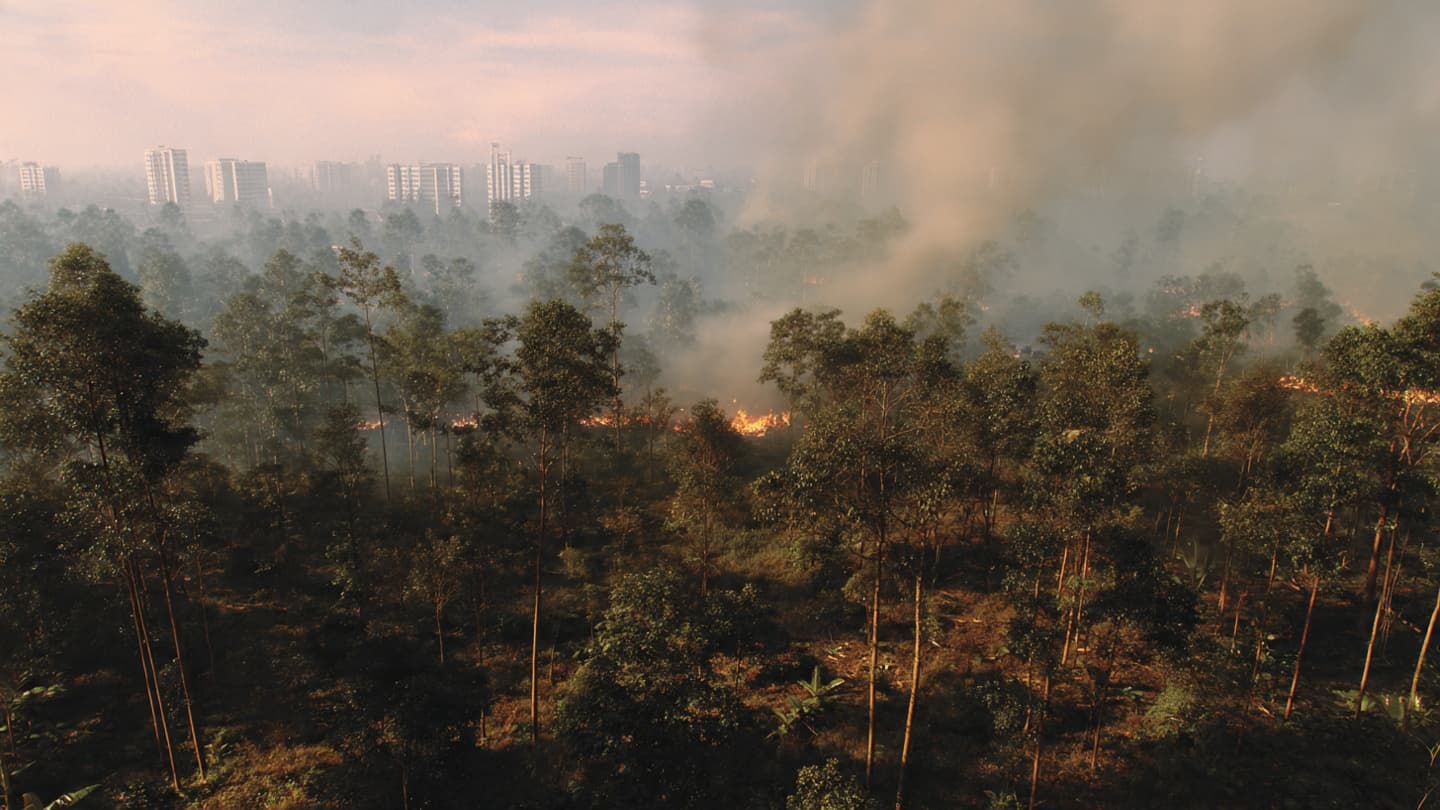
Beyond the planned avenues and unfinished structures of Nusantara, another landscape has been moving with a different rhythm. In the forests of eastern Borneo, flames have begun crossing dry ground, sending smoke through a region where the boundary between developing city and surrounding forest remains unusually close.
Around 400 hectares have burned near Nusantara, including roughly 300 hectares in Bukit Suharto, a forest park located about 50 kilometers from the city center. The fires have emerged during what authorities describe as Indonesia’s most severe dry season in a decade.
The dry conditions have been intensified by what Reuters described as a “super El Niño” phenomenon, creating an environment in which vegetation can dry rapidly and fires can spread more easily. For a forested region, the absence of rain changes not only the color of the landscape but also the speed at which a small fire can become a wider threat.
Nusantara was selected as Indonesia’s future capital in part because its location was considered less exposed to some of the environmental pressures affecting Jakarta. Yet the current fires demonstrate how closely any new urban development remains connected to the surrounding ecosystem. Roads, construction zones, forests, and communities exist within the same dry-weather system.
Authorities have responded with several methods, including cloud-seeding operations and water-bombing efforts. A fleet of 53 aircraft has been involved in firefighting and related operations, with additional assistance from Japan. The response reflects the scale of the challenge as officials attempt to prevent the fires from advancing toward areas surrounding the developing capital.
The fires also arrive during a period when Indonesia has been facing broader wildfire activity across Sumatra and Kalimantan. Officials have linked the heightened risk to the combination of dry weather and human activity, making the current season a difficult one for firefighters and environmental authorities working across large and sometimes remote areas.
For Nusantara, the situation carries a particular visual contrast. A city designed around a future of new infrastructure stands beside an older landscape shaped by forests, rivers, seasonal rain, and dry winds. The smoke does not distinguish between a construction site and a tree line; it moves according to the terrain and atmosphere around it.
Local communities have also responded to the dry conditions in ways that reach beyond firefighting. Muslims in the area have gathered for Istisqo prayers for rain, reflecting the severity of the prolonged dryness and the importance of rainfall to communities living near the affected forests.
Authorities are continuing efforts to contain the fires and protect areas surrounding Nusantara. With dry conditions expected to remain challenging, the immediate focus is on preventing additional spread while managing the wider wildfire situation across Indonesia. For now, the horizon around the new capital remains a meeting point between construction, forest, smoke, and the long wait for rain.
AI Image Disclaimer These images are AI-created visual interpretations intended to illustrate the reported circumstances and are not actual photographs.
Sources Reuters
Published by Banx Network. This article is part of the Banx decentralized media programme, powered by the BXE token on the XRP Ledger.