Morning usually arrives in Jakarta with a familiar procession: motorcycles filling intersections, trains moving through crowded stations, and school uniforms appearing along neighborhood streets. In early September, however, the city’s usual rhythm has been interrupted by something carried from much farther away—the fine volcanic material drifting through the atmosphere from Anak Krakatau.
The eruption in the Sunda Strait has sent ash high into the sky, with authorities reporting columns reaching as much as 50,000 feet. Winds then carried the material toward populated areas, bringing the consequences of an eruption on an island into the routines of communities across western Indonesia.
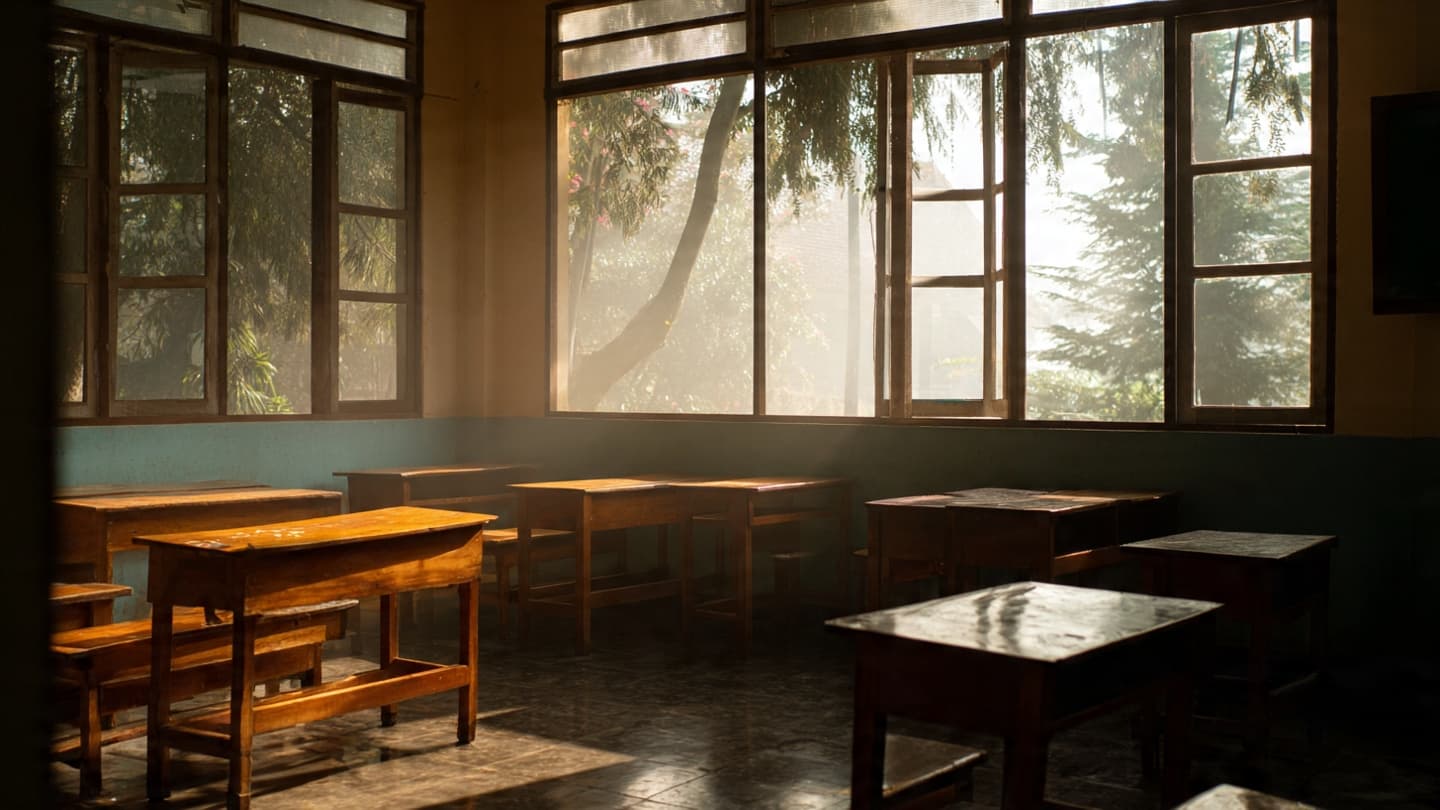
Among the immediate responses has been a temporary shift in schooling arrangements. Schools in Jakarta and Lampung have moved toward remote learning as authorities and communities respond to concerns about exposure to volcanic ash. The change is practical, but its effect can be felt in the familiar spaces of classrooms that suddenly become quieter.
Volcanic ash is different from ordinary dust. It consists of very fine particles created during an eruption, and when suspended in the air it can affect visibility and respiratory comfort. For this reason, authorities have urged residents to use masks when outdoors while monitoring the movement of ash and changing weather conditions.
The situation also illustrates how atmospheric movement can connect distant places. Anak Krakatau lies in the Sunda Strait, while Jakarta is considerably farther east. Yet when winds carry ash across the region, the distinction between a volcanic event and an urban environmental concern becomes less clear.
For students, the shift to remote learning changes a familiar daily sequence. Instead of walking through school gates, sitting among classmates, and hearing the sounds of a busy corridor, lessons can temporarily take place from homes. The classroom does not disappear; it simply changes location.
The decision also reflects the uncertainty surrounding volcanic ash. Authorities cannot determine its movement by distance alone because wind direction and speed can alter the affected area. That makes conditions something to be monitored continuously rather than treated as a fixed event with a predictable boundary.
Jakarta has experienced many forms of environmental disruption, from flooding to extreme heat, but volcanic ash carries a different kind of presence. It arrives from the horizon, sometimes barely visible, yet capable of affecting transportation, aviation, public health precautions, and education at the same time.
For now, authorities continue monitoring Anak Krakatau and atmospheric conditions across western Indonesia. Schools and residents are adjusting according to local conditions, while aviation operations remain subject to safety assessments. The city waits, as it often does, for the atmosphere to settle and ordinary routines to return.
AI Image Disclaimer The visuals accompanying this article are AI-generated conceptual illustrations and should not be mistaken for actual photographs.
Sources Reuters
Published by Banx Network. This article is part of the Banx decentralized media programme, powered by the BXE token on the XRP Ledger.