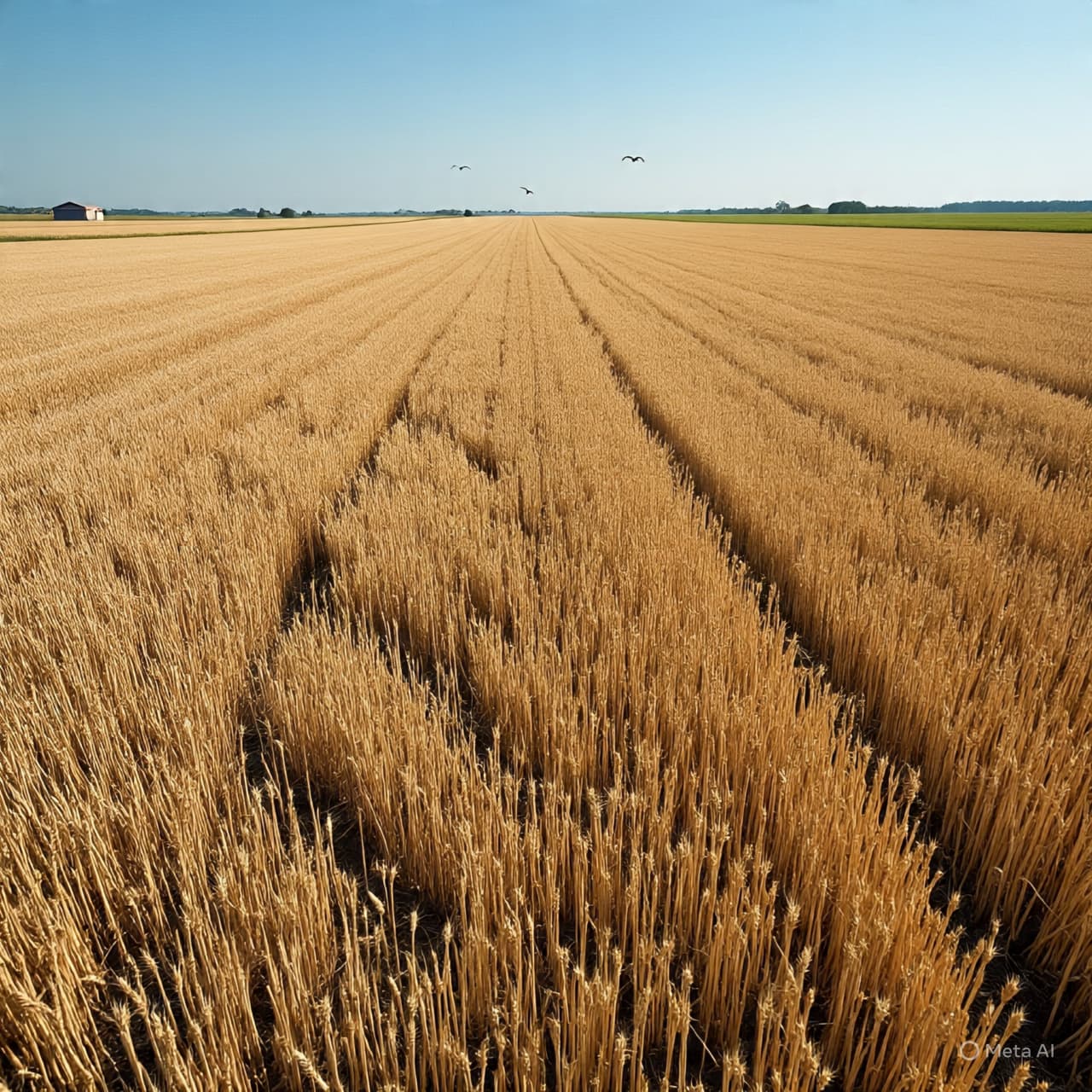
There are moments in agriculture when the land seems to speak in subtler ways—not through abundance, but through signs of strain. A field that once carried the quiet promise of harvest begins to show something different: a change in color, a shift in growth, a pattern that suggests interruption rather than continuity. For those who depend on these fields, such changes are rarely just seasonal; they are signals worth listening to.
In Ethiopia, where wheat holds both economic and social significance, such signals have drawn the attention of scientists. A recent outbreak of wheat disease has led researchers to identify a previously unrecognized species of Fusarium, a genus of fungi long associated with crop infections. The discovery does not merely add a new name to a scientific list; it reshapes the understanding of what has been affecting crops and how it might be addressed.
Fusarium species are not unfamiliar to agriculture. They are known for causing a range of plant diseases, often impacting yield and quality. What makes this development notable is the emergence of a new variant, one that appears to be linked to recent patterns of disease observed in Ethiopian wheat fields. Its identification helps clarify why certain outbreaks may not have responded as expected to existing management strategies.
The process of identifying a new species is, in itself, a careful and deliberate one. It involves analyzing genetic material, comparing characteristics, and distinguishing subtle differences that separate one organism from another. In this case, such analysis has provided a clearer picture of the pathogen involved, offering a more precise starting point for response.
For farmers, however, the implications are immediate and tangible. Wheat is a staple crop, central not only to local consumption but also to broader food security. When disease affects its production, the impact can ripple outward—touching markets, livelihoods, and access to food. The presence of a new pathogen adds a layer of complexity to these challenges, requiring adjustments in how crops are monitored and protected.
There is, nonetheless, a measure of clarity that comes with identification. Knowing the specific cause of a disease allows for more targeted research into resistant crop varieties, treatment options, and agricultural practices that can mitigate its spread. It transforms uncertainty into a framework for action, even if that action will take time to develop.
Environmental conditions also play a role in how such diseases emerge and spread. Climate variability, including shifts in temperature and rainfall, can create conditions that favor certain pathogens. In this sense, the appearance of a new Fusarium species may be connected to broader environmental changes, reflecting the dynamic relationship between crops and their surroundings.
Efforts to address the outbreak are likely to involve collaboration across multiple levels. National agricultural bodies, international research institutions, and local farming communities all contribute to the process of response. Knowledge sharing becomes essential, ensuring that findings in the laboratory translate into practical guidance in the field.
At the same time, the situation highlights a broader theme within agriculture: the need for adaptability. Crops, pests, and pathogens are part of an evolving system, one that requires continuous observation and adjustment. The identification of a new species is not an endpoint, but a moment within this ongoing process.
There is also a quieter dimension to consider—the resilience of those who work the land. Farmers have long navigated uncertainty, adapting to changing conditions with a combination of experience and innovation. Scientific insights, when aligned with this lived knowledge, can strengthen the capacity to respond effectively.
In closing, scientists have identified a new Fusarium species linked to a wheat disease outbreak in Ethiopia, providing clearer insight into the cause and supporting ongoing efforts to develop targeted agricultural responses and protect crop production.
AI Image Disclaimer Visuals are created with AI tools and are not real photographs
Source Check (Credible Media Scan) Here are relevant sources supporting the topic:
Reuters Nature Science Food and Agriculture Organization (FAO) CGIAR
Published by Banx Network. This article is part of the Banx decentralized media programme, powered by the BXE token on the XRP Ledger.