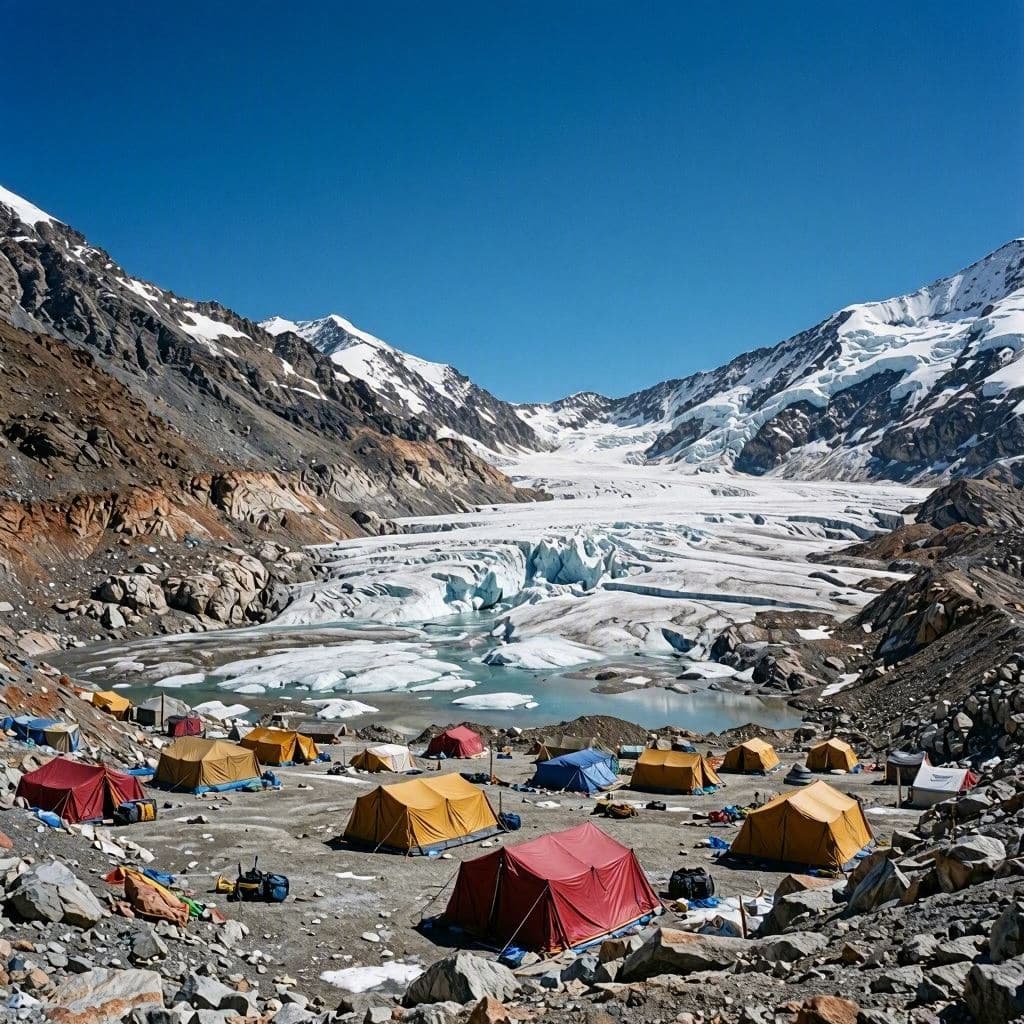
High above the tree line, where the air is thin and the silence is profound, Mount Everest stands as a monument to human ambition and natural grandeur. For decades, climbers have flocked to its slopes, drawn by the challenge of conquering the world’s highest peak. Yet, beneath the awe-inspiring vistas lies a quieter, more unsettling transformation. The iconic Base Camp, once a stable fortress of ice and rock, is slowly retreating, melting under the dual pressures of a warming climate and the unintended consequences of human presence. Among the many factors contributing to this change, one is surprisingly mundane: human urine.
This revelation is not meant to shame the climbers who brave the mountain’s dangers, but to highlight the complex interplay between human activity and fragile ecosystems. It serves as a reminder that even in the most remote corners of the Earth, our footprint leaves a mark, sometimes in ways we least expect. The melting of Base Camp is a symptom of a larger issue, one that requires both scientific understanding and collective responsibility.
The primary driver of the melting ice is undoubtedly global climate change. Rising temperatures have accelerated the retreat of glaciers across the Himalayas, threatening water supplies for millions downstream. However, recent studies suggest that local factors also play a significant role. The accumulation of dark debris, such as dust and soot, reduces the albedo effect, causing the ice to absorb more heat. But there is another, less discussed contributor: the chemical composition of human waste.
Urine contains nitrogen and other compounds that, when deposited in large quantities on snow and ice, can lower the freezing point and accelerate melting. At Base Camp, where thousands of climbers gather during the short climbing season, the concentration of human waste is significant. While efforts have been made to manage solid waste, liquid waste has often been left to dissipate into the snow, creating localized hotspots of melting. This phenomenon, though small in scale compared to global warming, adds to the overall degradation of the glacier.
The implications extend beyond the physical structure of the camp. As the ice melts, the stability of the terrain decreases, increasing the risk of avalanches and crevasse formation. This poses a direct threat to the safety of climbers and Sherpas who rely on the camp as a staging ground for their ascents. Moreover, the melting ice releases trapped pollutants and microplastics, further contaminating the local environment and potentially affecting water quality downstream.
Addressing this issue requires a multifaceted approach. Improved waste management systems, including portable toilets and designated disposal areas, are essential. Education campaigns can help climbers understand the impact of their actions and encourage responsible behavior. Additionally, technological innovations, such as biodegradable materials and advanced waste treatment solutions, offer promising avenues for reducing the environmental footprint of high-altitude expeditions.
The situation at Everest reflects a broader challenge facing mountain regions worldwide. As tourism increases and climates change, the balance between access and preservation becomes increasingly delicate. Communities that depend on mountain tourism for their livelihoods must navigate this tension, seeking ways to sustain their economies while protecting the natural resources that attract visitors in the first place.
There is also a philosophical dimension to this issue. The mountain has long been viewed as a place of purity and transcendence, a refuge from the complexities of modern life. The realization that our very presence contributes to its degradation challenges this notion, forcing us to confront the reality that there is no such thing as a truly untouched wilderness in the Anthropocene. It calls for a new ethic of stewardship, one that recognizes our interconnectedness with even the most remote environments.
The melting of Mount Everest Base Camp is a poignant symbol of the fragility of our planet’s highest places. While human urine is a minor contributor compared to global climate trends, it serves as a tangible reminder of the cumulative impact of human activity. By addressing these local issues with care and innovation, we can help preserve the majesty of Everest for future generations, ensuring that it remains a source of inspiration rather than a cautionary tale.
AI Image Disclaimer: Any images accompanying this text are AI-generated artistic representations intended to convey the environmental themes discussed, not actual photographic evidence of specific waste sites.
Sources:
• National Geographic
• The Conversation
• BBC Science
• Journal of Glaciology
Published by Banx Network. This article is part of the Banx decentralized media programme, powered by the BXE token on the XRP Ledger.