There are nights when a campus becomes more than classrooms and quiet sidewalks. It becomes a gathering place beneath a shared sky. On such evenings, telescopes replace textbooks, and conversation drifts upward toward constellations. The familiar landscape of Southern Illinois University takes on a softer glow, shaped not by streetlights, but by the Moon itself.
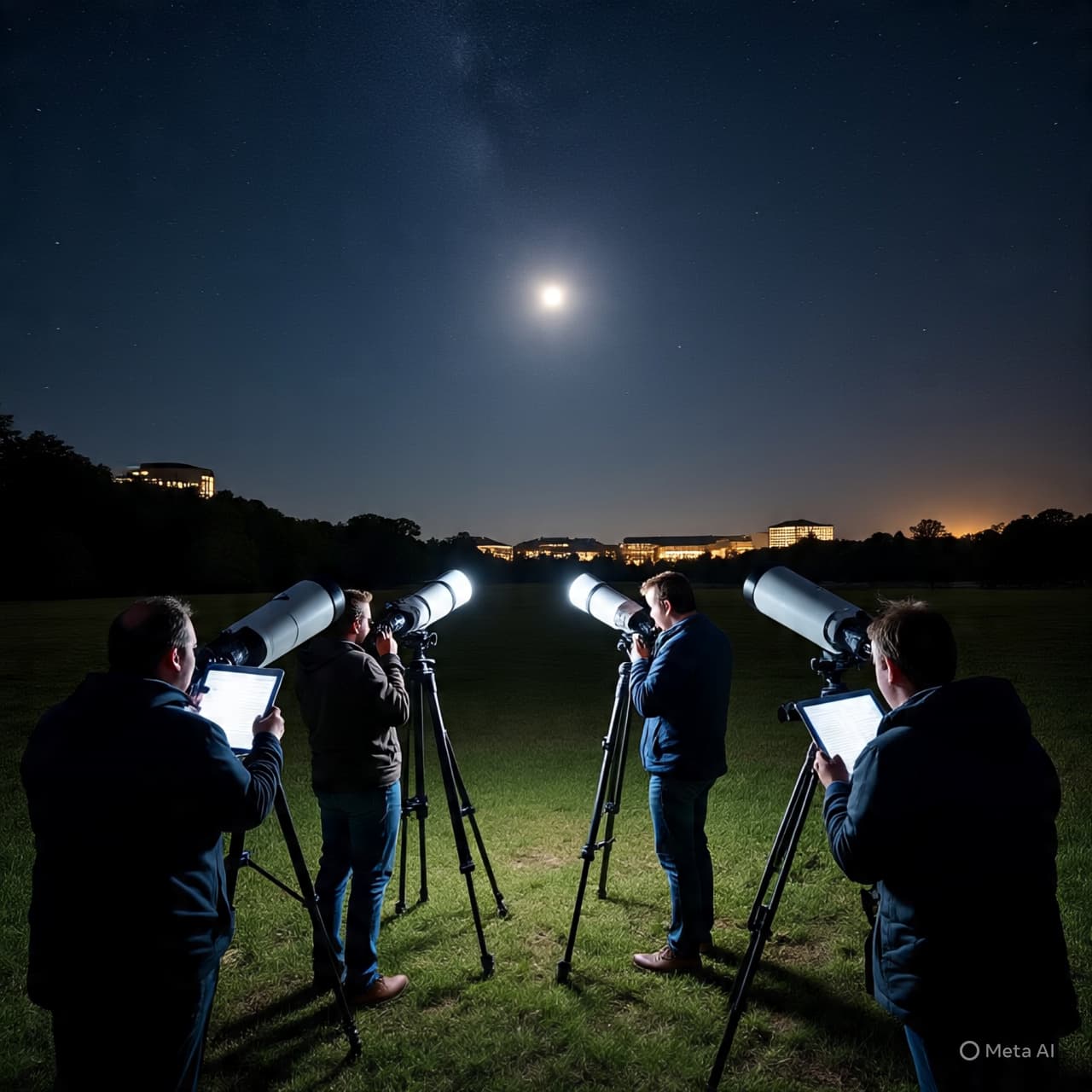
At SIU Farms, a public astronomy event is set to showcase the upcoming total lunar eclipse, inviting students, families, and residents to witness the celestial display together. Hosted in collaboration with faculty and local astronomy enthusiasts, the event will provide telescopes, guided explanations, and an open invitation to look skyward as Earth’s shadow gradually crosses the Moon.
A total lunar eclipse unfolds with a quiet patience. As the Moon enters Earth’s penumbra and then its darker umbra, its bright surface begins to dim. During totality, it takes on a copper or rust-colored hue — a phenomenon often referred to as a “Blood Moon.” The coloration results from sunlight filtering through Earth’s atmosphere, scattering shorter blue wavelengths and allowing red tones to reach the lunar surface.
Organizers say the SIU Farms location offers wide, unobstructed views of the horizon, making it well-suited for skywatching events. Telescopes will be positioned for close-up views, while educators explain the science behind eclipses, orbital mechanics, and atmospheric effects. For many attendees, it may be their first time seeing the Moon transformed so dramatically.
Public astronomy gatherings carry a particular warmth. They blend science with community, curiosity with shared experience. Children peer through eyepieces with wide-eyed focus; adults compare impressions of color and brightness. Questions flow easily — about why eclipses do not occur every month, about how ancient cultures interpreted such events, about what future missions may reveal about our nearest neighbor in space.
Weather conditions will determine visibility, as with any outdoor sky event. Organizers have encouraged attendees to check forecasts and dress appropriately for the evening temperatures. Even so, the atmosphere of anticipation remains steady.
Southern Illinois University Carbondale officials have indicated that the event is open to the public and designed to promote accessible science education. Faculty members and student volunteers will be present to guide visitors through the stages of the eclipse and answer questions throughout the night.
If skies cooperate, the total lunar eclipse will unfold over several hours, allowing ample time for observation. For a brief stretch of the evening, SIU Farms will become a vantage point where Earth’s shadow is not merely a concept, but something visible and shared.
AI Image Disclaimer Illustrations were produced with AI and serve as conceptual depictions.
Sources
The Southern Illinoisan
WSIU
KFVS12
Southern Illinois University Carbondale
The Daily
Published by Banx Network. This article is part of the Banx decentralized media programme, powered by the BXE token on the XRP Ledger.