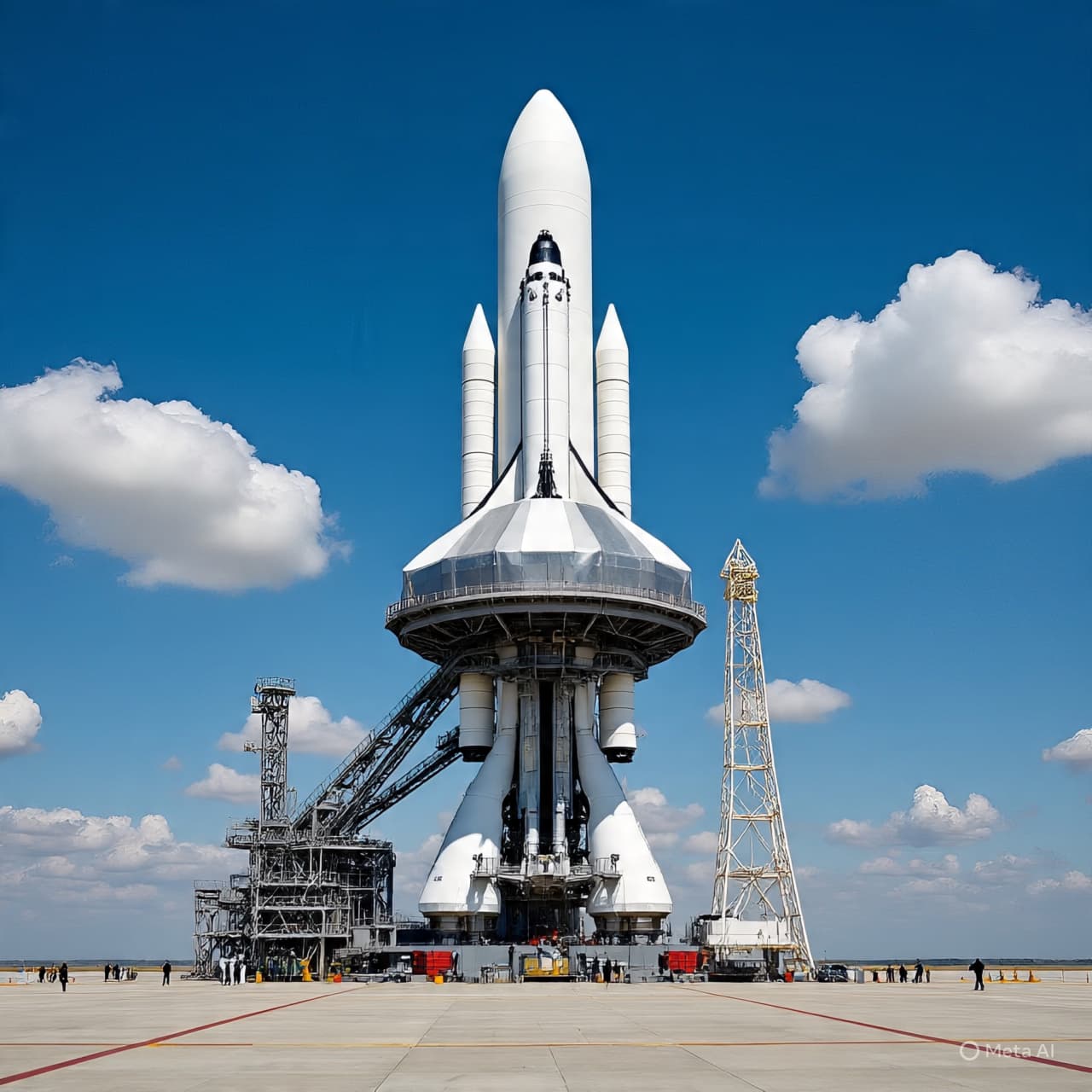
In the long arc of human curiosity, few dreams are as enduring as journeying beyond our home world — a longing for distant shores now written in the language of rockets and stars. There is something quietly poetic about watching a vehicle of steel and flame stand poised against the Florida sky, its height echoing mankind’s centuries‑old gaze toward the Moon. After years of planning, testing, and delays that have stretched the tape of anticipation, NASA’s Artemis II mission — a crewed voyage around Earth’s nearest celestial neighbour — now appears within reach once again, with March 6 emerging as the earliest possible date for liftoff. It is a date that ties past ambition to present resolve, reminding us of both the fragility and resilience of exploration.
This mission has not been simple in its unfolding. In the weeks leading up to the targeted March launch, engineers at the Kennedy Space Center in Florida worked through complex rehearsals of launch‑day procedures, including a crucial “wet dress rehearsal” that loaded the mighty Space Launch System (SLS) rocket with its liquid propellants. Early attempts were thwarted by persistent leaks in the hydrogen fueling system that required new seals and careful analysis, echoing challenges faced during the Artemis I uncrewed flight test. With those issues addressed, the second rehearsal successfully filled the rocket and ran through countdown sequences, a tangible sign that the craft is inching closer to crewed flight.
The Artemis II mission will carry four astronauts aboard the Orion spacecraft on a roughly 10‑day journey around the Moon and back, the first time humans have ventured beyond low‑Earth orbit since the last Apollo mission in 1972. The crew — Commander Reid Wiseman, pilot Victor Glover, mission specialist Christina Koch, and Canadian Space Agency astronaut Jeremy Hansen — will not land on the lunar surface this time, but their voyage will test critical systems and capabilities needed for future missions, including Artemis III, which aims to return humans to the lunar surface later in the decade.
The pathway to this moment has not been without its pauses, including a compressed launch window in February that succumbed to weather delays and technical fine‑tuning. Each adjustment reflects the judicious caution required when human lives are at stake beyond the edge of Earth’s breeze. For scientists, engineers and the astronauts themselves, these challenges have been part of a rhythmic effort — like tuning an instrument before a great performance. And in every test and review, from flight readiness boards to hardware checks, there lies a careful balance between urgency and safety.
As the countdown ticks toward March and teams prepare for multi‑day readiness reviews in the weeks ahead, the mission stands as both a tribute to past achievements and a harbinger of future ventures — to the Moon, and eventually beyond. Whether it ignites on March 6 as hoped or requires a touch more patience, Artemis II carries forward the long human narrative of exploration, urging us to look upward with curiosity and care.
AI Image Disclaimer “Visuals are created with AI tools and are not real photographs.”
Sources (Source Check) Reuters — coverage of Artemis II launch target and successful tests. The Guardian — report on NASA’s revised launch date and delays. Live Science — details of tests and mission preparations. Space.com — updates on fueling tests and launch readiness. Times of India — contextual briefing on Artemis II as part of NASA’s lunar program.
Published by Banx Network. This article is part of the Banx decentralized media programme, powered by the BXE token on the XRP Ledger.