In the hushed predawn hours of human ambition, the moon has long loomed like a distant lantern — a promise of discovery and yet a reminder of how far we still have to go. Dreams of lunar footsteps once carried on the Apollo era’s fire have inspired generations, and now, in the era of private-public partnership, the Artemis program stands as both homage and challenge to that legacy. But as the sun climbs slowly above NASA’s lunar horizon, the path forward for Artemis 3 has shifted once again, prompting reflection on what progress really looks like beyond Earth’s blue embrace.
At its core, Artemis 3 was to be the mission that saw astronauts step onto the moon’s surface for the first time since 1972. A bold stanza in humanity’s unfolding space odyssey, it was launched on hopes pinned to SpaceX’s Starship — a towering rocket whose promise seemed to match the grandeur of the mission itself. But life in the real world of engineering and exploration can be less like rocket ignition and more like the careful tightening of bolts, the slow mastering of systems that must work in utter silence before they ever meet the cold vacuum of space. In this light, NASA’s recent announcement revised Artemis 3’s objectives — turning it from a lunar landing to a vital test mission parked in low Earth orbit, where spacecraft can rendezvous, dock and dance through maneuvers that prepare them for what is to come.
This change reflects a measured return to fundamentals. The mission, now scheduled for 2027, will focus on proving crucial technologies and partnerships, including the Orion capsule and next-generation lunar landers. Among these, SpaceX’s Starship — originally slated as the human landing system — may not fly in its historic landing role on Artemis 3. Instead, that honor may be deferred to future missions, even as NASA encourages competition with other commercial lander designs and seeks to broaden the field of possibilities. The move is less a rejection than an invitation to refine and strengthen the architecture of lunar exploration.
While the details of spacecraft development, orbital rendezvous tests, and launch cadence adjustments may read like technical prose, the underlying theme is deeply human: perseverance. NASA now seeks to increase the frequency of launches and steadily rebuild core competencies, taking inspiration from the rapid sequence of flights that characterized the Apollo era — but now tempered with decades of caution and hard-earned understanding of complexity. This calibrated approach, while it delays the moment of lunar touchdown to Artemis 4 in 2028, also underscores a commitment to both safety and sustainability.
In this new chapter of Artemis, astronauts will not be grounded but docked; spacecraft will not yet touch the moondust but will prepare meticulously to do so in the near future. Starship’s path, entwined with the broader Artemis timeline, remains hopeful even as it evolves — a symbol of exploration that may yet rise higher when the conditions align and the groundwork has been thoroughly laid.
As we watch this slow dance between aspiration and reality unfold, the moon does not recede into silence. Instead, it remains a quiet beacon — its pull unbroken, its promise undiminished — reminding us that the journey outward often begins with steady steps, not leaps.
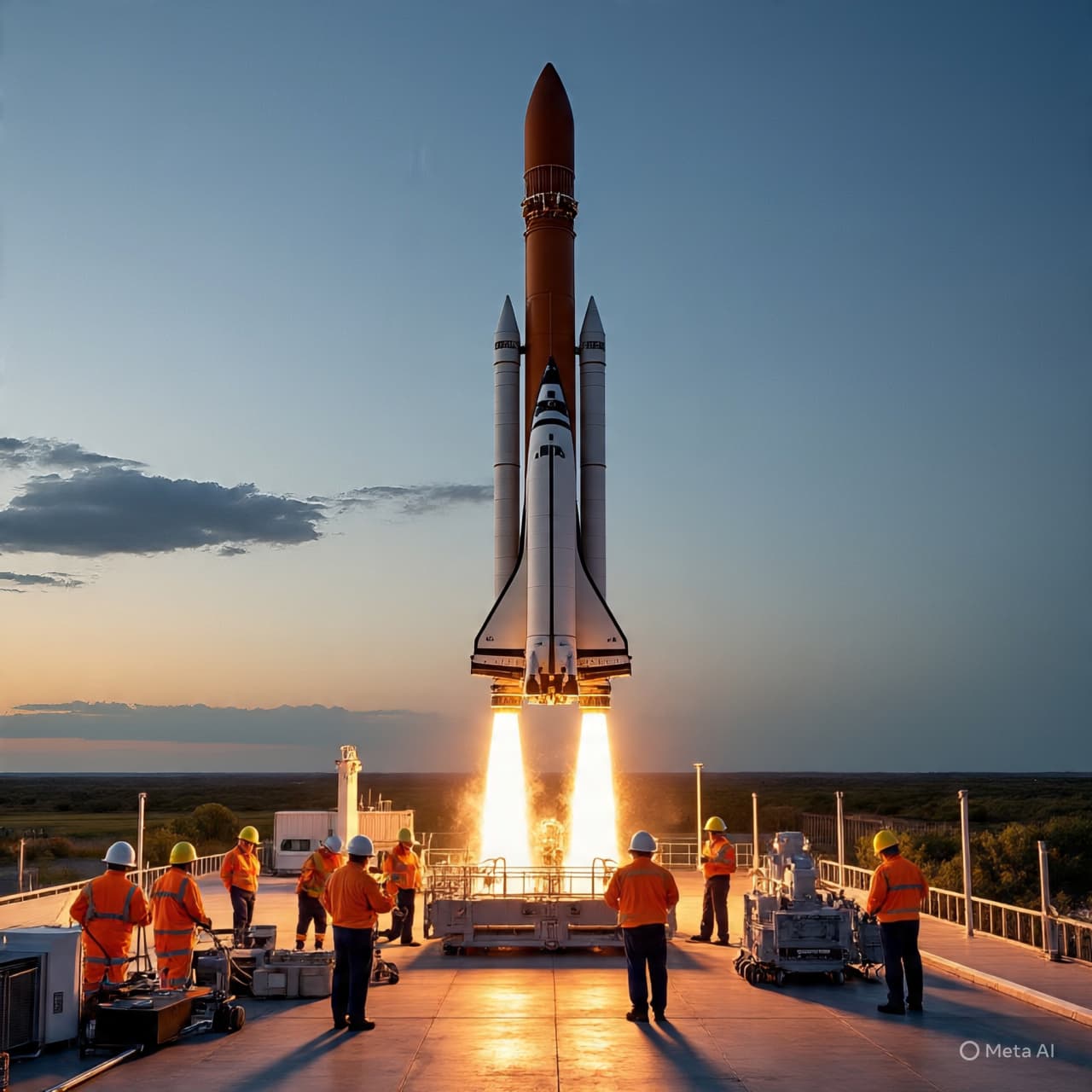
AI Image Disclaimer Visuals are created with AI tools and are not real photographs, intended for conceptual representation only.
🌕 Source Check Here are credible sources confirming the key recent developments about NASA’s Artemis 3 mission and the role of SpaceX’s Starship:
Sources (just names):
Space.com (Space exploration news) Spaceflight Now (space industry reporting) Universe Today (space news) The Verge (technology/news analysis) Houston Chronicle (local national space coverage)
Published by Banx Network. This article is part of the Banx decentralized media programme, powered by the BXE token on the XRP Ledger.