
The night sky has always carried a quiet invitation—an endless field of light that hints at worlds beyond human reach. Within that vastness, astronomy continues to search for places that might share conditions similar to our own planet.
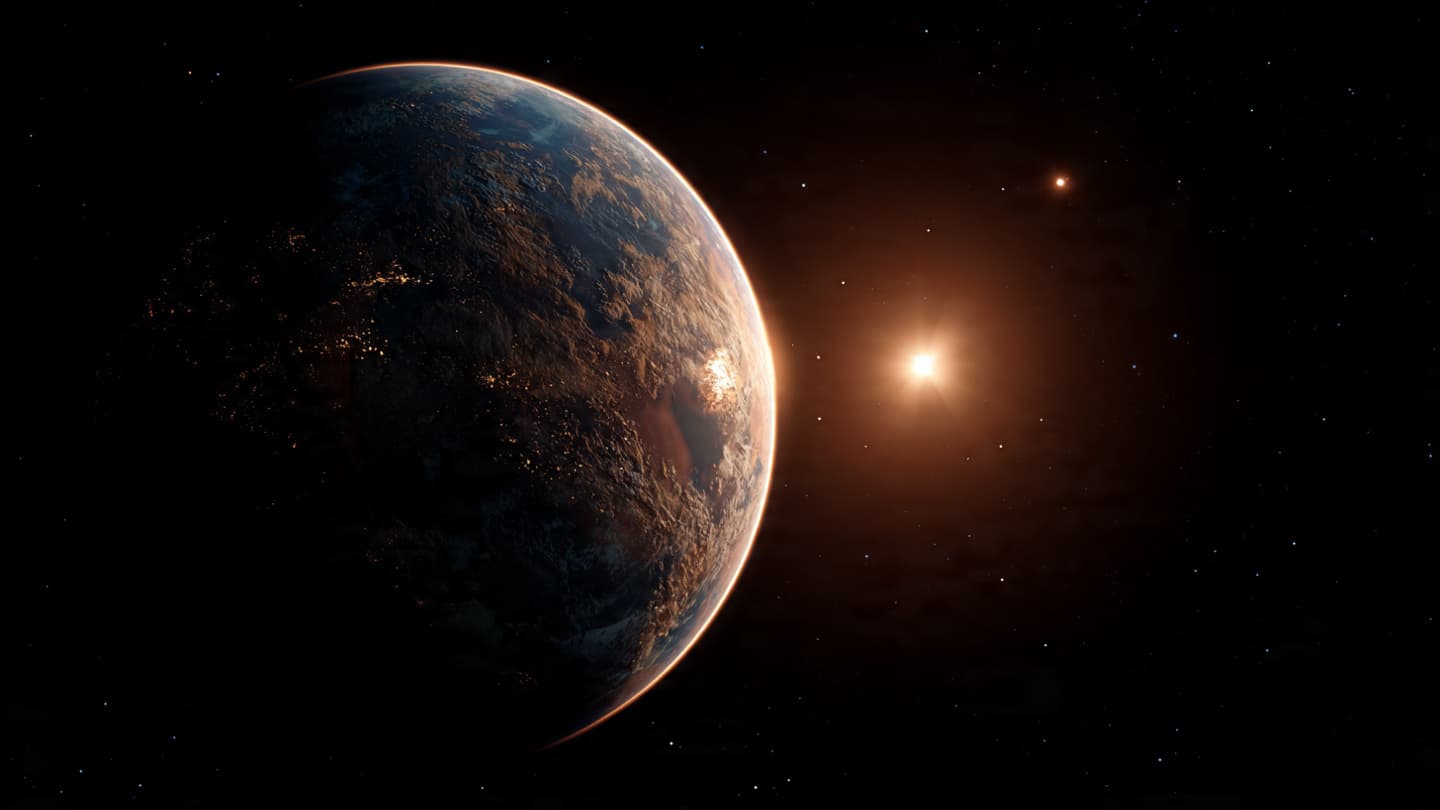
Body: Recent observations from space-based instruments have identified a new candidate exoplanet that falls within what scientists call the “habitable zone,” where conditions may allow liquid water to exist under the right atmospheric circumstances.
This region around a star is neither too hot nor too cold, creating a theoretical window in which life, as understood on Earth, could potentially develop or survive. However, being in this zone does not guarantee habitability.
Researchers rely on indirect measurements such as transit data, stellar radiation analysis, and orbital modeling to estimate a planet’s size, composition, and environmental conditions.
Each new candidate adds to a growing catalog of worlds that expand humanity’s understanding of how common—or rare—Earth-like conditions might be across the galaxy.
Scientists emphasize that these discoveries are early-stage classifications. Further observation is required to determine atmospheric composition, surface conditions, and potential chemical signatures.
Despite the distance and uncertainty, each new finding contributes to a broader shift in perspective: Earth is increasingly seen not as a singular exception, but as one of many possible environments in a vast cosmic system.
Closing: As exploration continues, the search for habitable worlds remains one of science’s most reflective pursuits—connecting observation with the deeper question of whether we are alone.
AI Image Disclaimer: All visuals are AI-generated conceptual illustrations and do not represent actual telescope imagery.
Sources (media names only): NASA, Space.com, Nature Astronomy, Science Daily
Published by Banx Network. This article is part of the Banx decentralized media programme, powered by the BXE token on the XRP Ledger.
.jpg&w=3840&q=75 "US Declares Drought Disaster for Parts of Puerto Rico as Dry Conditions Persist")

