
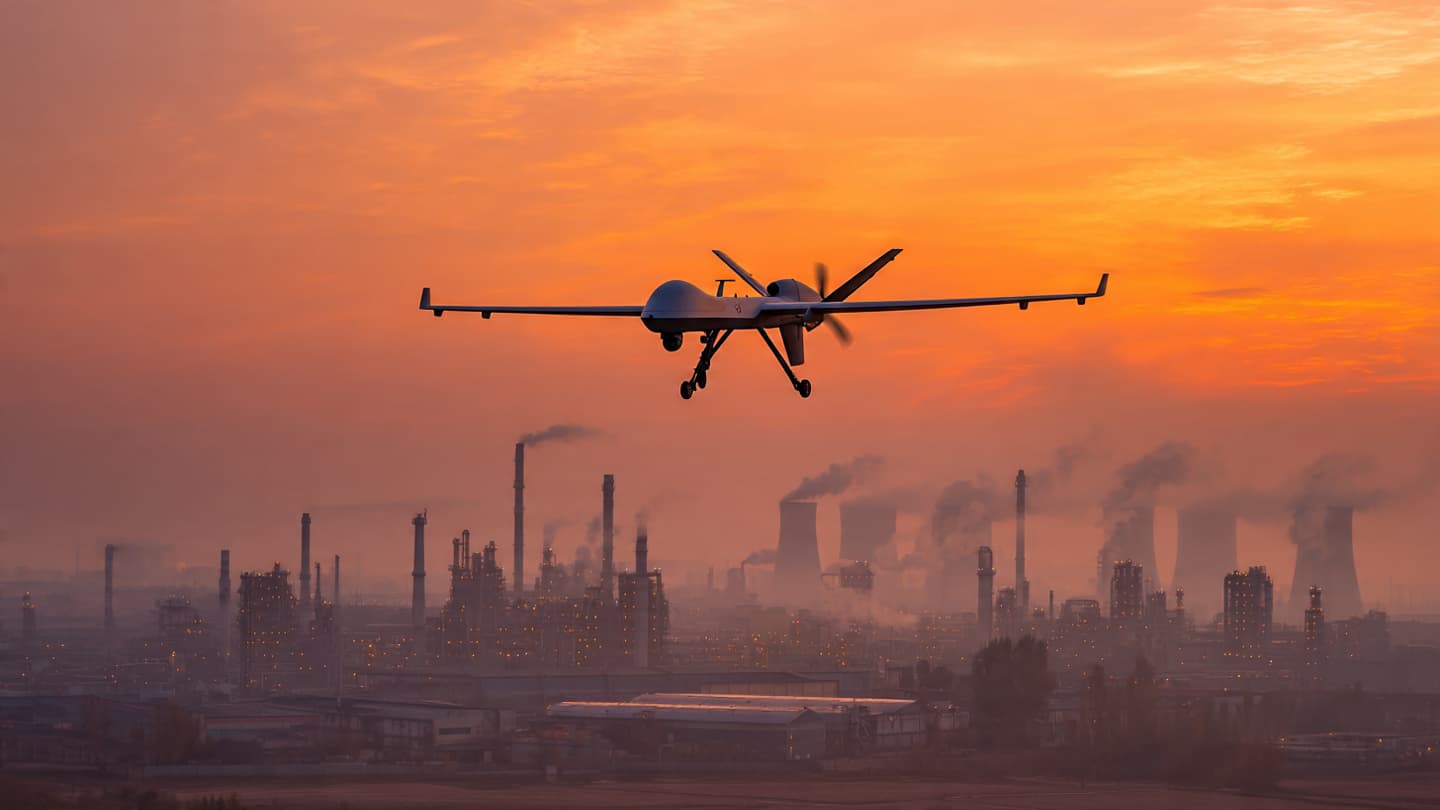
There are moments in modern conflict when distance seems to lose its meaning. A device launched hundreds of miles away can suddenly place strategic infrastructure at the center of global attention. As the conflict between Ukraine and Russia continues, drone operations have become one of the defining features of a war increasingly shaped by technology as much as territory.
Recent reports indicate that Ukrainian drone strikes targeting infrastructure inside Russia have continued, highlighting the growing role of unmanned systems in contemporary warfare. Energy facilities, transportation networks, and industrial sites have repeatedly emerged as areas of strategic concern as both sides seek to influence the broader course of the conflict.
Military analysts note that drones offer several advantages compared with traditional systems. They can be deployed rapidly, operate over long distances, and perform reconnaissance or strike missions while reducing risks to personnel. These characteristics have transformed how military planners think about both offensive and defensive operations.
The conflict has become a case study for governments and defense institutions around the world. Nations across Europe, Asia, and North America are closely observing how drone technologies are being integrated into military strategy, logistics, intelligence gathering, and battlefield coordination.
Russia has responded by strengthening air defense measures and increasing efforts to intercept incoming unmanned aircraft. At the same time, Ukraine has continued investing in domestic drone production and technological innovation, reflecting a broader trend toward self-reliance in defense manufacturing.
The growing use of drones has also generated discussions about critical infrastructure protection. Facilities that were once considered relatively distant from active combat zones now face new security considerations as long-range technologies become more accessible and sophisticated.
Beyond military implications, the conflict continues to affect global markets and international diplomacy. Disruptions involving energy infrastructure can influence commodity prices, transportation routes, and economic planning far beyond the immediate region.
Defense experts suggest that lessons learned from the conflict may influence military procurement decisions for years to come. Governments are increasingly evaluating how unmanned systems can complement traditional equipment while adapting to rapidly changing security environments.
As the war enters another phase, drone operations remain a visible reminder of how technological innovation continues to reshape conflict. The developments are being watched closely not only for their immediate impact but also for what they reveal about the future of modern warfare.
AI Image Disclaimer: The images accompanying this article are AI-generated visual interpretations created for illustrative purposes.
Source Verification Check: Reuters, Associated Press, BBC News, Financial Times
Published by Banx Network. This article is part of the Banx decentralized media programme, powered by the BXE token on the XRP Ledger.


