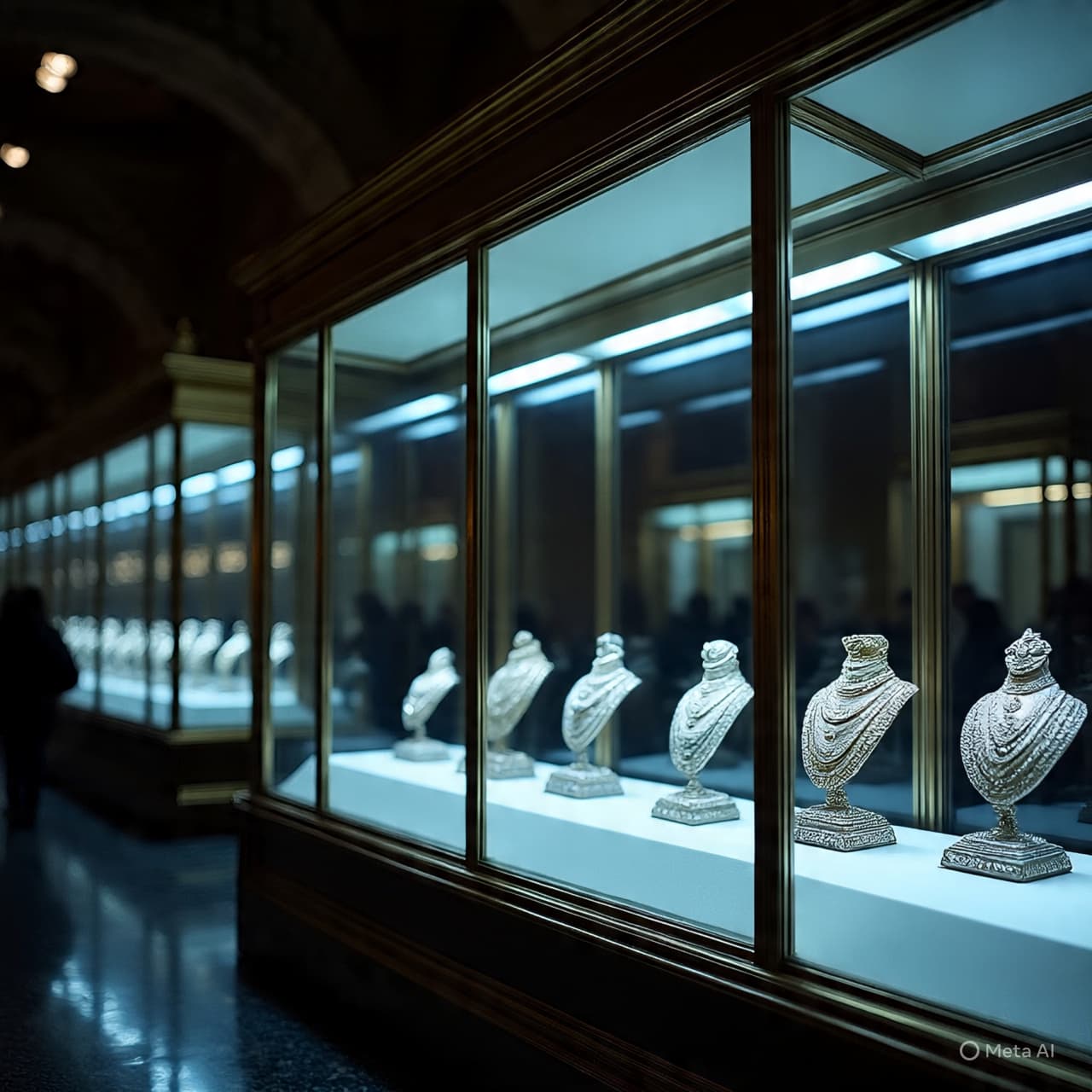
Visitors at the Tower of London expect grandeur—glass cases glowing with centuries of symbolism, artifacts that survived wars, fires, and political transformation. What they did not expect was a shower of crumble and custard splattering across the protective display around the Crown Jewels. Yet that was the scene that unfolded when four individuals were arrested for tossing the dessert mixture at one of Britain’s most watched treasures, an act that quickly drew bewilderment, criticism, and curiosity.
Early accounts from witnesses described a brief but startling moment. The group approached the display quietly, without causing immediate suspicion, before producing containers of crumble and custard and launching them toward the protective glass. The mixture slid down the surface in slow, sticky streaks, leaving the jewels untouched but the crowd stunned. Security quickly intervened, and the individuals were detained without resistance.
The motivation behind the incident is still under examination, but authorities indicated the act appeared to be a form of demonstration rather than simple vandalism. Dessert-based protests have surfaced in recent years, often aimed at high-profile cultural objects to amplify social or environmental messages. What differs here is the target: the Crown Jewels carry a uniquely symbolic weight, representing continuity, heritage, and ceremony. Even an act that caused no physical harm to the artifacts can resonate in the public imagination.
Cleanup crews moved swiftly to remove the custard traces from the reinforced glass, and the exhibit reopened shortly afterward. The jewels themselves remained unharmed, thanks to layers of modern protection designed to withstand far more serious threats than a thrown dessert. Still, the symbolic impact lingered. For many visitors, the moment raised questions about how far public demonstrations should go, and whether cultural institutions can stay both accessible and secure in an age of expressive activism.
Officials emphasized that the integrity of the collection was never compromised, though the arrests underscored the seriousness with which any interference is viewed. For generations, the Crown Jewels have served as both objects of history and a reflection of national identity. Even a harmless substance like custard, when cast against their enclosure, can shift ordinary museum space into a stage for broader debates.
As investigations continue, the incident’s long-term significance may rest not in the dessert itself but in what it represents—a collision between symbolic heritage and the modern impulse to make statements in the most visible places possible. The jewels remain behind their glass, unchanged, while the questions stirred by the act settle more slowly.
Published by Banx Network. This article is part of the Banx decentralized media programme, powered by the BXE token on the XRP Ledger.