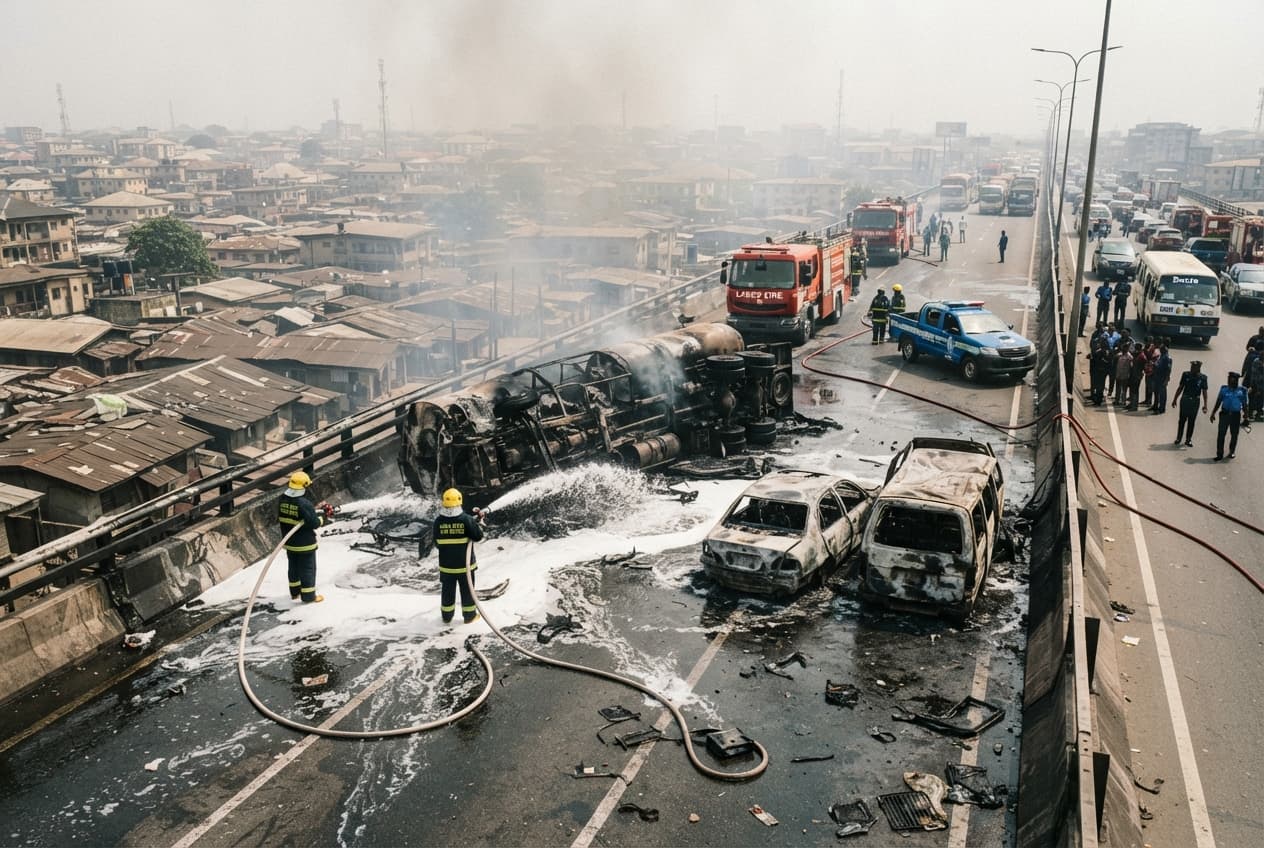
Lagos, Nigeria—A heavily laden fuel tanker overturned along a congested urban expressway, triggering a massive inferno that incinerated three neighboring cars and killed four people. State emergency management agencies received frantic distress calls as a river of burning fuel spread rapidly across multiple traffic lanes. Fire brigades mobilized multiple water tankers to combat the towering flames that trapped commuters during evening rush-hour transit. First responders pulled four charred bodies from the burned wreckage of passenger vehicles trapped beneath the spill zone.
Preliminary traffic police findings indicate that brake failure caused the tanker driver to lose control while negotiating an elevated highway interchange. The vehicle smashed through concrete median barriers before flipping on its side and discharging thousands of gallons of volatile fuel. Motorists abandoned their cars on the expressway as choking black smoke blotted out the sunset across the metropolitan district. Medical personnel at regional hospitals reported admitting several survivors suffering from severe thermal burns and acute smoke inhalation.
Transport safety watchdogs and urban planning advocates immediately condemned the continued operation of aging fuel carriers during peak metropolitan transit hours. Federal road safety corps have repeatedly urged strict enforcement of speed limiters and mandatory mechanical inspections for heavy commercial freight. Forensic teams cordoned off the blackened interchange, recovering twisted steel fragments and damaged engine blocks from the charred sedans. State authorities instituted a complete closure of the affected highway flyover to allow structural safety engineers to inspect the bridge deck.
Grieving relatives gathered outside the municipal morgue waiting for DNA identification procedures to confirm the identities of the victims. Transport union leaders expressed condolences while blaming deteriorating road surfaces and poor drainage design for exacerbating vehicle skids. Regional police commanders announced an immediate crackdown on reckless commercial driving and unroadworthy freight trucks entering the city center. Heavy salvage equipment labored through the night to clear the burnt tanker shell and incinerated cars from the asphalt.
Engineers intend to perform non-destructive testing on the elevated concrete bridge piers to check for structural weakening caused by intense heat. State infrastructure committees plan to fast-track proposed legislation restricting heavy fuel transport to off-peak night hours across metropolitan corridors. Traffic bottlenecks stretched for miles as alternative arterial routes absorbed diverted commuter vehicles. The damaged expressway interchange remains closed indefinitely while repair and resurfacing operations proceed.
Published by Banx Network. This article is part of the Banx decentralized media programme, powered by the BXE token on the XRP Ledger.