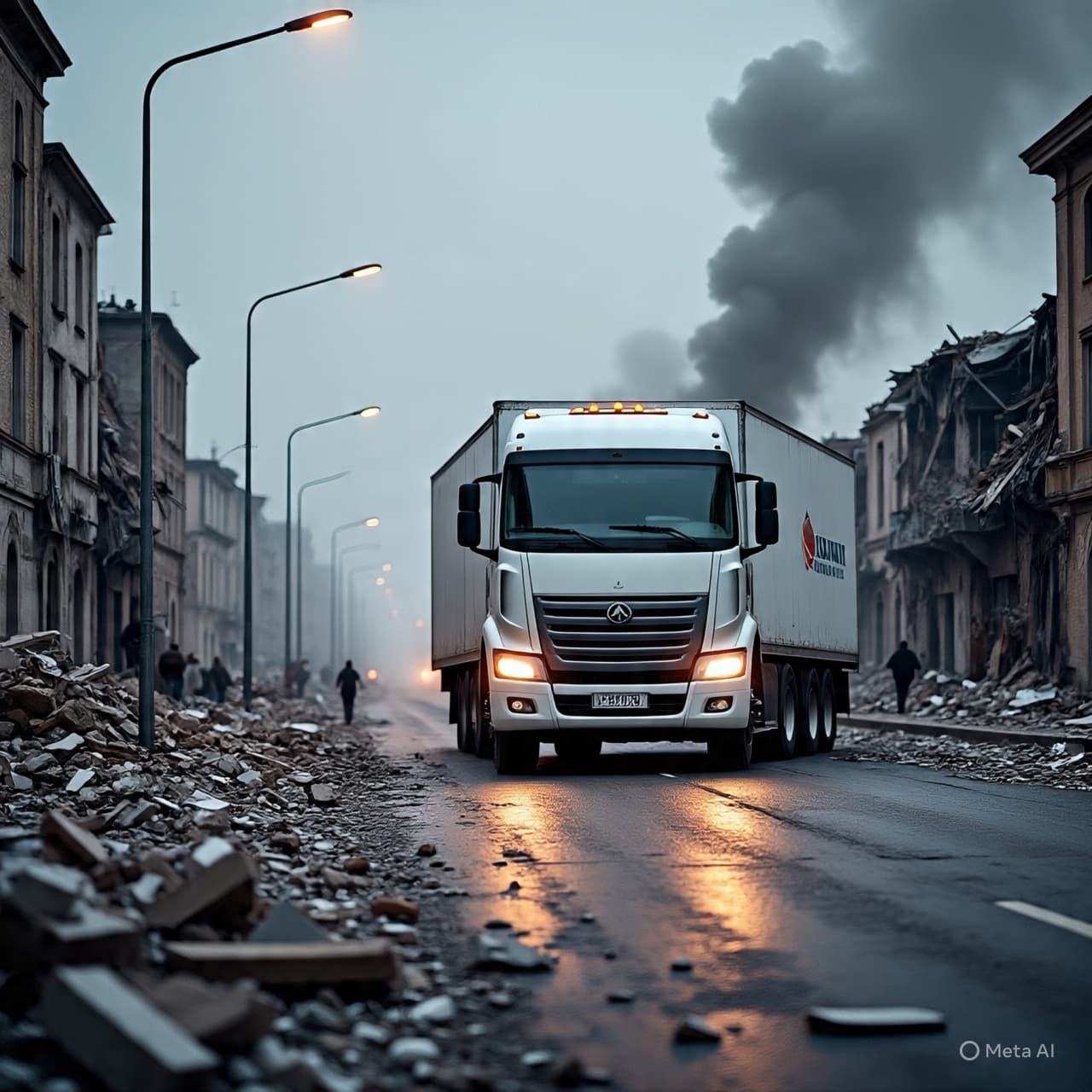
In times of war, distance is no longer measured only in kilometers, but in risk. Roads become uncertain, schedules fragile, and everyday logistics turn into acts of resolve. In Ukraine, where conflict has redrawn the meaning of movement itself, the simple act of delivery has taken on uncommon significance. It is within this altered landscape that Nova Post has quietly rewritten its role.
Before the war, Nova Post was known primarily as a fast-growing private logistics company, serving a country increasingly connected by e-commerce and internal mobility. When the full-scale invasion began, that familiar network was suddenly exposed to disruption, danger, and fragmentation. Warehouses stood near front lines, routes passed through contested areas, and employees faced choices that were no longer purely professional.
Rather than retreat, the company adapted. Nova Post restructured routes, decentralized operations, and empowered local decision-making to keep parcels moving even as conditions deteriorated. Temporary facilities replaced damaged ones, schedules became flexible, and delivery points shifted as communities relocated. What emerged was not simply continuity, but improvisation at scale.
Employees became the backbone of this transformation. Couriers and logistics staff operated under air raid sirens and power outages, often resuming work hours after attacks. The company adjusted labor policies, safety protocols, and compensation structures to reflect wartime realities. In doing so, it preserved not only operational capacity, but internal cohesion.
Nova Post’s role also expanded beyond commerce. Deliveries increasingly included humanitarian aid, medical supplies, and support for displaced populations. Partnerships with local authorities and volunteer networks blurred the line between private service and public function. Logistics, in this context, became infrastructure of resilience rather than profit alone.
The company’s success has been partly rooted in its pre-war investments. Digital tracking systems, automated sorting, and a dense network of branches allowed Nova Post to reroute operations quickly. Flexibility, once a competitive advantage, became a survival mechanism. What had been built for efficiency proved adaptable to crisis.
Internationally, Nova Post’s wartime performance has drawn attention as an example of private-sector endurance under extreme conditions. While many firms suspended operations, the company maintained service across most of the country, reinforcing a sense of continuity for businesses and individuals alike. Parcels arriving on time carried more than goods; they carried reassurance.
As the war continues, Nova Post operates without triumphal language. Its leaders frame success cautiously, emphasizing duty over victory. The future remains uncertain, shaped by security conditions and reconstruction needs. Yet for now, the company stands as evidence that even under fire, systems can function, adapt, and endure.
Published by Banx Network. This article is part of the Banx decentralized media programme, powered by the BXE token on the XRP Ledger.