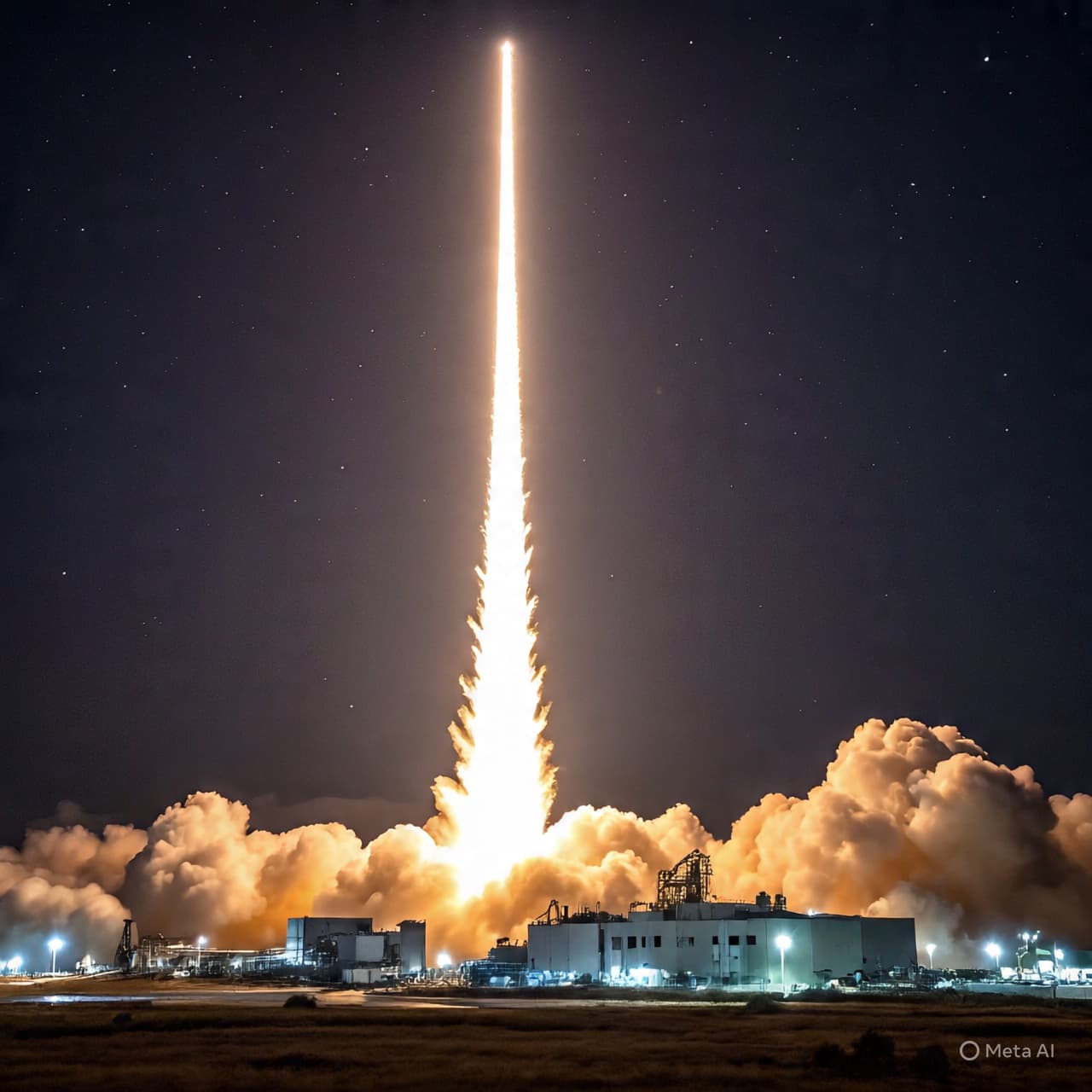
There are moments when the horizon seems to hush itself, as if feeling the stir of something extraordinary about to unfold. Before dawn on January 4, 2026, that quiet anticipation was set aside by the steady glow of flame and plume as a rocket rose from Cape Canaveral’s Space Launch Complex 40. Like a brushstroke of human aspiration across the early sky, SpaceX’s Falcon 9 lifted off carrying 29 Starlink satellites, weaving another thread into the vast tapestry of orbiting technology and human connection.
In that gentle pre-sunrise hour, the Falcon 9 — with its new first-stage booster — climbed skyward with purpose. At 1:48 a.m. EST, engines ignited and the slender silhouette of the rocket pierced the cool air, marking SpaceX’s first Starlink launch of 2026. The payload, designated Starlink Group 6-88, was released into low Earth orbit about nine minutes after liftoff, each satellite a small beacon in a constellation that continues to expand across the globe.
To observers on the ground, the launch was more than machinery and math; it was a visual poem of persistence. The booster, having completed its initial flight, returned home to Earth with practiced precision, landing on the drone ship Just Read the Instructions stationed in the Atlantic. This graceful return underscored the rhythm of reuse that has become part of SpaceX’s narrative, a cadence of renewal that feels almost like breathing.
This mission comes at a meaningful time. It was the first Starlink flight since a late-December incident knocked one satellite out of operation, a small reminder that even in the vast quiet of space, surprises can emerge. Yet the successful deployment of these 29 new satellites signals both resilience and continuity — an affirmation of routine progress after an unexpected pause.
Behind the technical achievements lies a broader reflection on connectivity. With nearly 9,300 satellites now encircling Earth as part of the Starlink network, the promise of broadband service reaches ever further into regions where communication was once distant or sparse. Each satellite released is a whisper of connection, a promise carried at orbital speeds, reminding us that even in the silent void above, our yearning to link lives and stories remains undimmed.
As this chapter of launch activity closes, the facts land gently — another successful mission for the new year, another set of satellites on their way to join an expanding mesh in low Earth orbit. The rhythm of launches, of reinvention and return, continues without harsh judgment, recorded simply as part of the ongoing story of spaceflight and our shared search for connection beyond the horizon.
AI Image Disclaimer “Images in this article are AI-generated illustrations, meant for concept only.”
Sources Space.com — detailed launch report. Spaceflight Now — mission specifics and context. The Morning News — overview of launch and recent satellite context. WESH — local U.S. coverage of the Florida launch. NextSpaceflight — technical launch details and mission stats.
Published by Banx Network. This article is part of the Banx decentralized media programme, powered by the BXE token on the XRP Ledger.