There is a moment in every long journey when imagination gives way to preparation. The maps are folded, the route no longer theoretical, and attention turns to details that carry weight and consequence. For NASA’s Artemis 2 mission, that moment is arriving quietly, not with a launch, but with fuel.
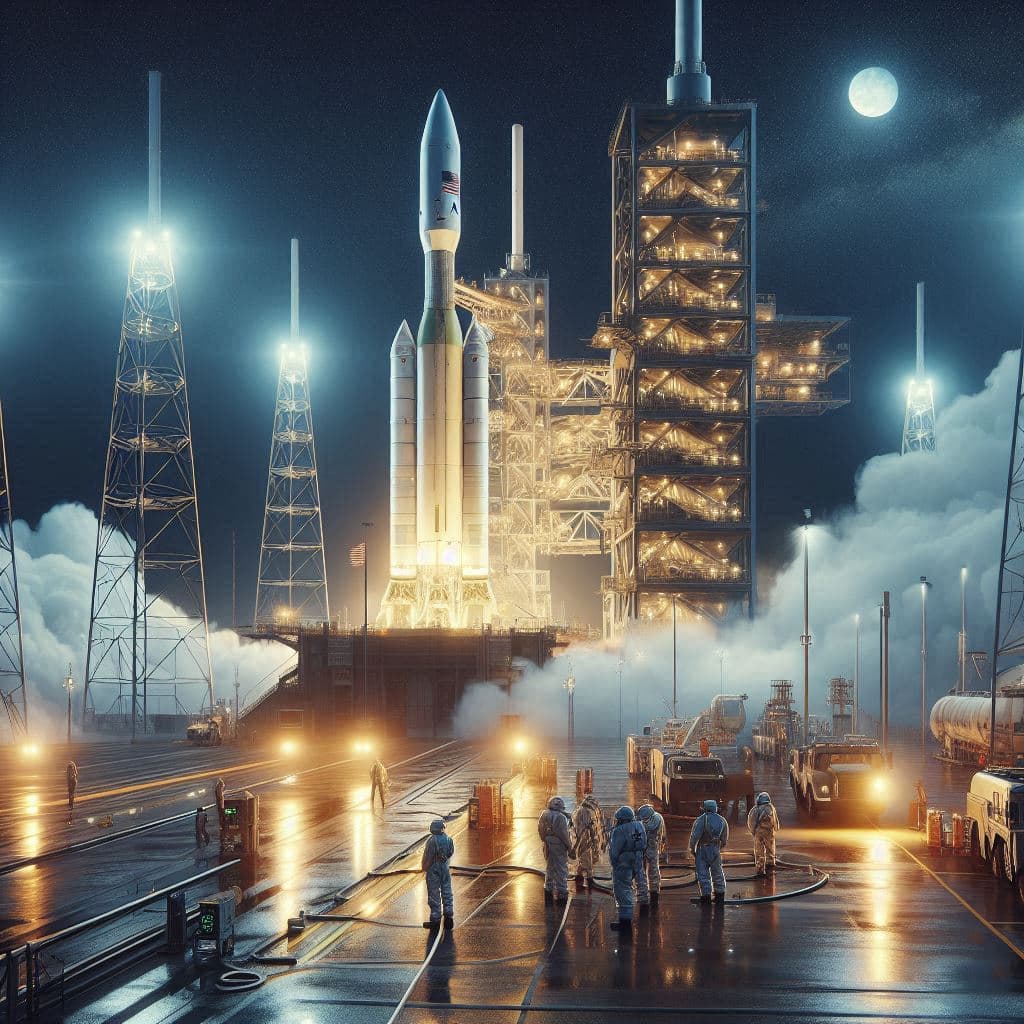
This Saturday, engineers plan to load propellants into the Space Launch System rocket at Kennedy Space Center, rehearsing a process that sits at the heart of any deep-space mission. It is not a spectacle meant for wide audiences, yet it carries a certain gravity. Fueling is where ambition meets physics, where timelines become tangible, and where errors are no longer abstract.
Artemis 2 is designed to carry astronauts around the Moon, marking humanity’s first crewed lunar mission in more than half a century. Unlike Artemis 1, which flew uncrewed in 2022, this mission brings human presence back into the equation. Every valve, sensor, and sequence must therefore perform not just correctly, but predictably.
The upcoming test will involve filling the rocket’s massive core stage with super-cold liquid hydrogen and liquid oxygen, then draining it, mirroring launch-day conditions without ignition. Such tests are as much about learning as confirming. Engineers watch how systems behave under stress, how temperature and pressure interact, and how the ground teams respond in real time.
NASA’s recent years have been marked by adjustments and delays, shaped by weather, hardware refinements, and the sheer complexity of building a new lunar architecture. The tone surrounding Artemis 2 has therefore become measured. Progress is acknowledged not in leaps, but in careful steps, each one meant to reduce uncertainty before astronauts are strapped in.
This fueling test does not signal a launch date, nor does it promise smooth sailing ahead. Instead, it reflects a methodical approach, one that values repetition and caution over urgency. It is a reminder that exploration is sustained not by bold moments alone, but by routine mastery.
If completed as planned, the test will allow NASA to move closer to final launch preparations, with additional integrated tests still ahead. Officials say data gathered this weekend will inform schedules and readiness assessments in the months to come.
For now, the rocket stands on the pad, silent and grounded, waiting not for applause but for confirmation. In the slow choreography of spaceflight, Saturday is simply another step — deliberate, necessary, and quietly consequential.
AI Image Disclaimer (Rotated Wording)
“Graphics are AI-generated and intended for representation, not reality.”
Sources
NASA Reuters Associated Press Space.com Ars Technica
Published by Banx Network. This article is part of the Banx decentralized media programme, powered by the BXE token on the XRP Ledger.