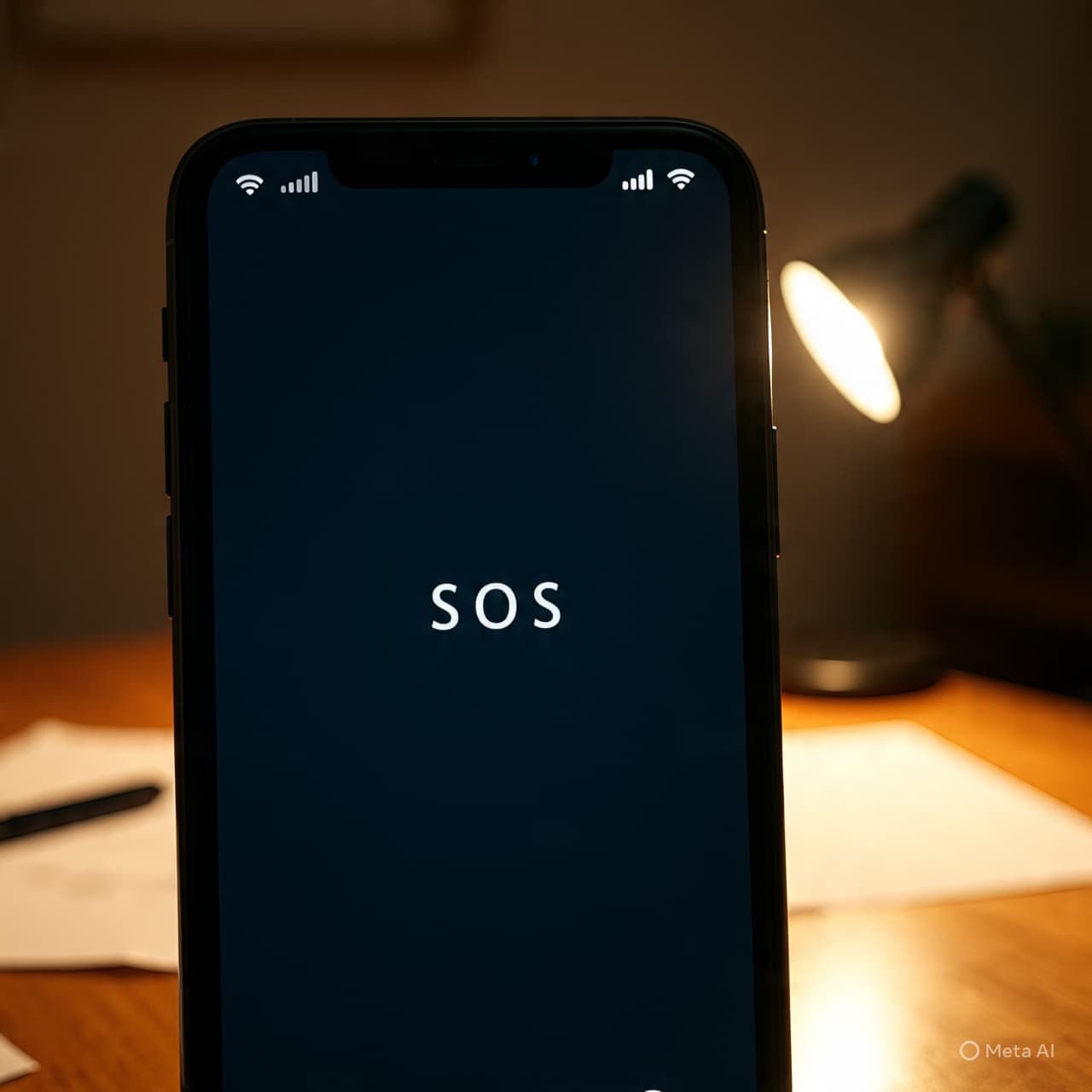
There are moments when the world’s hum — the soft vibration of connection, the quiet certainty that a voice will find a number or a map will find a street — suddenly goes still. In recent days, customers of a major wireless carrier found themselves inhabiting such a moment, as an overnight software update turned ordinary screens into refrains of uncertainty: “SOS.”
The effect, described by users as both bewildering and unwelcome, was widespread. Phones that once chimed with messages now displayed only that single, stark indicator of limited service. No full bars, no expected icons, no easy reassurance that a call would go through or that data would flow. Just a reminder that the network, for a time, had slipped out of reach.
For many, the disruption came with routine activities abruptly paused — a drive without directions, a message unsent, a question unanswered. In a society where connection often feels as essential as water or electricity, the absence of signal becomes not just an inconvenience but a momentary dislocation. People stood in doorways, walked toward windows, refreshed screens they knew would not change, and watched the familiar world persist while their devices sat unresponsive.
The source of this collective pause was, in technical terms, a software update that went awry. A code push meant to improve or maintain network function instead seemed to scramble how devices communicated with towers, prompting millions to see the same three letters blinking back at them. Internally, technicians worked to undo the glitch, pushing patches and rolling back changes as quietly and swiftly as circumstance would allow.
Across social media, stories accumulated like ripples from a stone dropped into a pond. In one town, a family’s attempt to coordinate dinner plans dissolved into confusion as messages failed to arrive. In another, a commuter realized midway that his navigation app, starved of signal, had led him askew. Strangers offered tips, workarounds, reassurances as if to comfort more than to instruct, and for a moment the broader world felt just slightly more distant.
The company behind the network called the event “temporary” and pledged to restore normal service, acknowledging that what was planned as a routine update instead left customers without full connectivity. Representatives offered apologies, technical explanations, and assurances that steps were underway to make accounts whole again.
Yet the episode speaks to a deeper truth about modern life: how fragile the architecture of connection can be when a series of zeroes and ones doesn’t land as intended. We carry in our pockets a promise of contact, of presence, of a thread unbroken between one person and the rest of the world. When that promise falters, even briefly, the stillness feels disproportionately loud.
By dawn the next day, towers and devices began to find each other once more. Icons bloomed where emptiness had been. Calls connected. Messages sent themselves out into the waiting air. The world resumed its cadence, as though suspicion of disconnection had been a dream.
In straightforward terms, a software update by a major wireless carrier caused widespread phone service disruptions, leaving many customers with only “SOS” displayed on their screens. The company acknowledged the issue and worked to restore normal connectivity.
AI Image Disclaimer Visuals are AI-generated and serve as conceptual representations.
Sources (Media Names Only) Reuters Associated Press Bloomberg The Verge CNET
Published by Banx Network. This article is part of the Banx decentralized media programme, powered by the BXE token on the XRP Ledger.