
Key Highlights
- Project Duration:Walmart's 3D-printed expansion completed in just 75 hours.
- Cost Efficiency:3D-printed walls cost 15% less than traditional methods.
- Waste Reduction:The project generated 55% less waste compared to conventional construction.
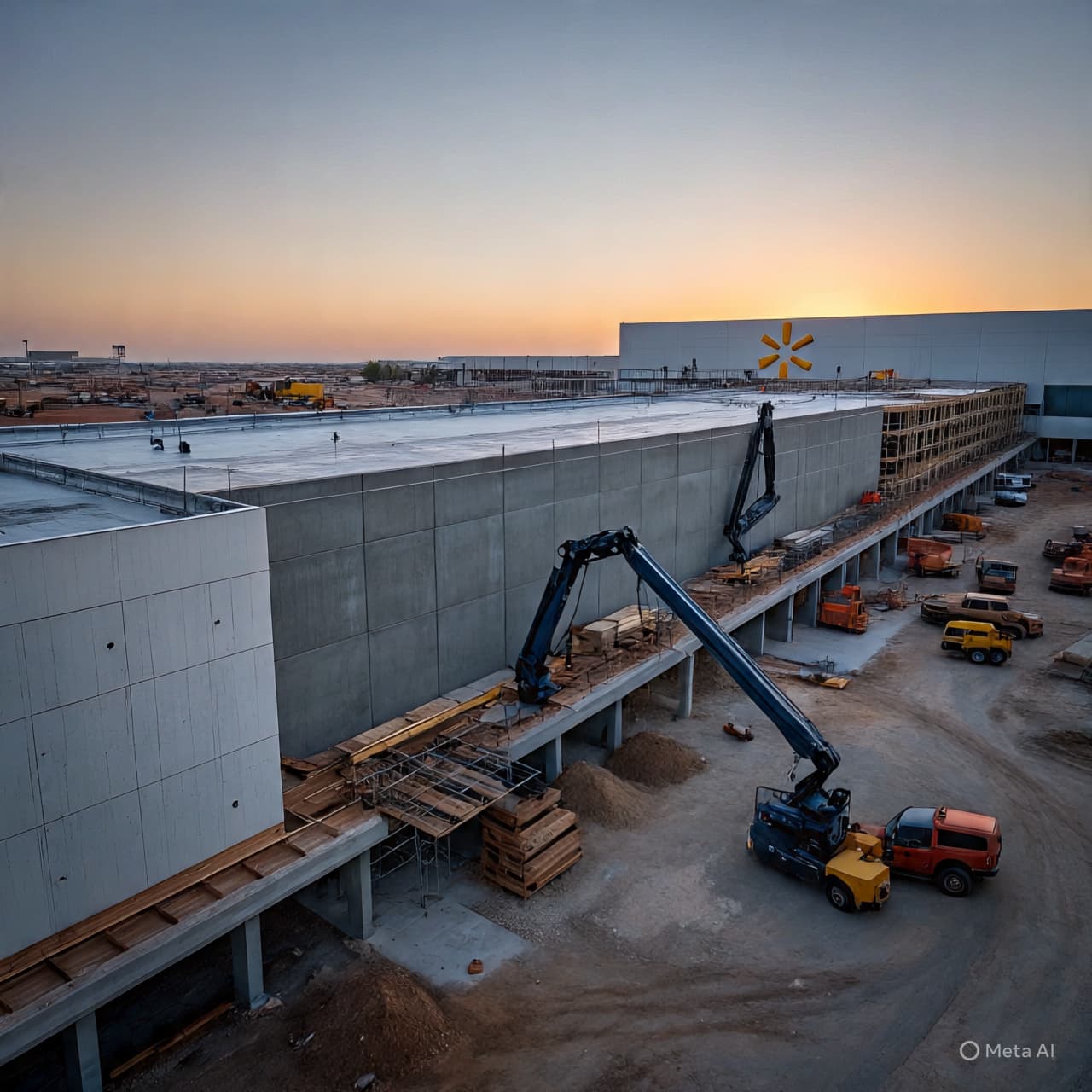
In a groundbreaking development for the construction industry, Walmart and Alquist 3D have successfully completed a 5,000-square-foot expansion at a Supercenter in Owens Cross Roads, Alabama, utilizing advanced 3D concrete printing (3DCP) technology. This innovative project, which took only seven working days to complete, showcases the potential of 3D printing to transform traditional construction practices. Guided by two robotic 3DCP systems, a five-person crew was able to print 16-foot-high structural walls for the store's pickup-and-delivery section, marking a significant milestone in the adoption of this technology.
The collaboration between Walmart and Alquist represents a pivotal moment in commercial real estate, as it moves beyond experimental projects into mainstream applications. Alquist, in partnership with FMGI, Inc. and Hugg & Hall Equipment Company, plans to roll out 3D-printed construction across the United States, leasing its proprietary A1X printers to contractors. This approach not only streamlines the construction process but also opens the door for widespread adoption of 3D printing in various sectors, including retail and public infrastructure.
The advantages of 3DCP are compelling. Traditional construction methods often involve lengthy timelines, significant material waste, and high labor costs. In contrast, the 3D-printed walls at Walmart's Alabama project were not only completed in a fraction of the time but also cost 15% less than conventional building methods and produced 55% less waste. This efficiency is crucial for a retailer like Walmart, which frequently undertakes remodels and expansions across its vast network of stores.
Moreover, the technology offers enhanced safety and consistency. By reducing the number of workers required on-site and minimizing the risks associated with manual masonry, 3D printing can lead to fewer accidents and errors. The specialized concrete mix used in the project is designed to cure quickly while maintaining structural integrity, even under varying weather conditions. This reliability is essential for ensuring that the construction meets the rigorous standards expected in commercial real estate.
Despite the promising results, the journey to widespread adoption of 3D printing in construction is not without challenges. Previous projects, such as an 8,000-square-foot addition at a Walmart store in Tennessee, faced delays and complications related to weather and logistics. However, the lessons learned from these experiences have informed improvements in the printing process, material selection, and overall workflow. The success of the Alabama project is a testament to the progress made in overcoming these hurdles.
As Alquist prepares for a national rollout of multiple 3D-printed commercial projects, the construction industry is closely monitoring the developments. If the current experiment proves successful, the implications could be far-reaching, leading to shorter project timelines, reduced costs, and a significant decrease in construction waste. This shift could fundamentally alter the landscape of commercial real estate, paving the way for a new era of building practices that prioritize efficiency and sustainability.
In conclusion, the partnership between Walmart and Alquist may serve as a turning point in the construction industry, signaling a move away from traditional methods toward a future defined by innovative, robot-powered construction techniques. As the technology continues to evolve, it is clear that the future of commercial real estate is being printed, layer by layer.
Published by Banx Network. This article is part of the Banx decentralized media programme, powered by the BXE token on the XRP Ledger.



