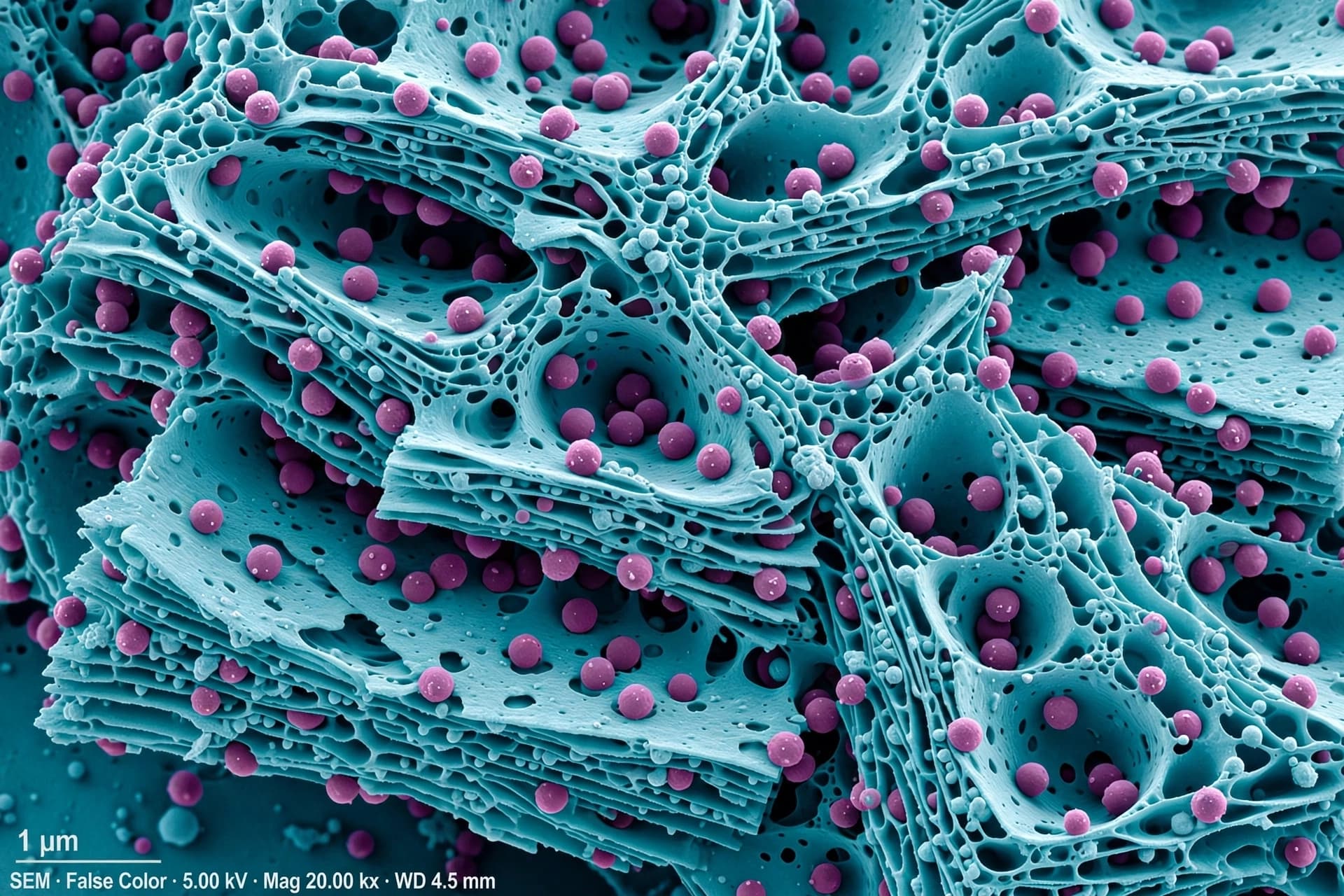
In the quiet architecture of the human body, there are spaces so small they escape our daily awareness, yet they hold conversations that shape healing itself. Between tooth and bone lies the periodontal ligament, a slender bridge of tissue that bears the rhythm of chewing and the silent burden of inflammation. Within it reside mesenchymal stem cells—patient custodians of regeneration—waiting for signals that call them to mend, to modulate, to restore.
Recent scientific observations suggest that not all of these cells speak in the same tone. Much like musicians sharing the same stage but carrying different instruments, human periodontal ligament mesenchymal stem cells, often abbreviated as hPDL-MSCs, appear to vary in their immunomediator expression depending on the presence of surface CD146. This subtle molecular distinction may shape how these cells respond to inflammation and interact with the immune system.
CD146, also known as MCAM, is a surface adhesion molecule frequently associated with vascular and perivascular cells. In mesenchymal stem cell biology, CD146 has been explored as a marker linked to enhanced migratory capacity, angiogenic potential, and in some cases, heightened immunomodulatory behavior. When researchers separate periodontal ligament MSCs into CD146-positive and CD146-negative populations, differences begin to emerge—not dramatic, but meaningful.
Studies indicate that CD146-positive hPDL-MSCs may express higher levels of certain immunoregulatory mediators, including cytokines and growth factors involved in dampening inflammation. Molecules such as interleukin-10 (IL-10), transforming growth factor-beta (TGF-β), and prostaglandin E2 (PGE2) are often evaluated in this context. These mediators do not act in isolation; rather, they shape the microenvironment, influencing T-cell proliferation, macrophage polarization, and broader immune balance.
Conversely, CD146-negative populations may exhibit different expression profiles, sometimes with comparatively reduced levels of specific immunosuppressive factors or distinct patterns of pro-inflammatory signaling. This does not imply deficiency, but difference—a variation in biological emphasis. In regenerative medicine, such nuance can be pivotal. The immune system is not merely an obstacle to healing; it is a partner. Cells that communicate differently with immune pathways may guide tissue repair along divergent trajectories.
The implications extend to periodontal regeneration strategies and cell-based therapies. If CD146 expression correlates with a more robust immunomodulatory phenotype, selecting or enriching CD146-positive MSC subsets could potentially enhance therapeutic outcomes in inflammatory periodontal diseases. At the same time, understanding the heterogeneity of MSC populations reinforces an essential lesson in stem cell science: identity is layered, not singular.
Importantly, these findings are emerging within controlled laboratory environments. Gene expression analyses, flow cytometry sorting, and in vitro immunomodulation assays provide insight into molecular behavior, yet clinical translation requires careful validation. The periodontal ligament is influenced by mechanical forces, microbial ecosystems, and systemic health conditions—factors that may reshape cellular responses beyond what laboratory conditions predict.
Still, the research gently reframes how we view stem cells. They are not uniform reservoirs of potential but living collectives with internal diversity. CD146, a small surface marker, becomes less a label and more a lens—revealing how cellular identity can influence the language of immunity.
As investigations continue, scientists aim to clarify whether CD146 expression serves merely as a marker or as a functional driver of immunological behavior. For now, the evidence suggests a measurable association between surface CD146 and immunomediator expression in human periodontal ligament MSCs. Future studies, including in vivo models and clinical evaluations, will help determine how this molecular distinction may guide therapeutic design.
In the measured cadence of science, such findings do not proclaim certainty. They offer direction. And within the intricate terrain between tooth and bone, that direction may one day help refine the art of regeneration with greater precision and care.
AI Image Disclaimer: Illustrations were produced with AI and serve as conceptual depictions.
Sources: PubMed ScienceDirect Journal of Periodontology Stem Cell Research & Therapy Frontiers in Immunology
Published by Banx Network. This article is part of the Banx decentralized media programme, powered by the BXE token on the XRP Ledger.