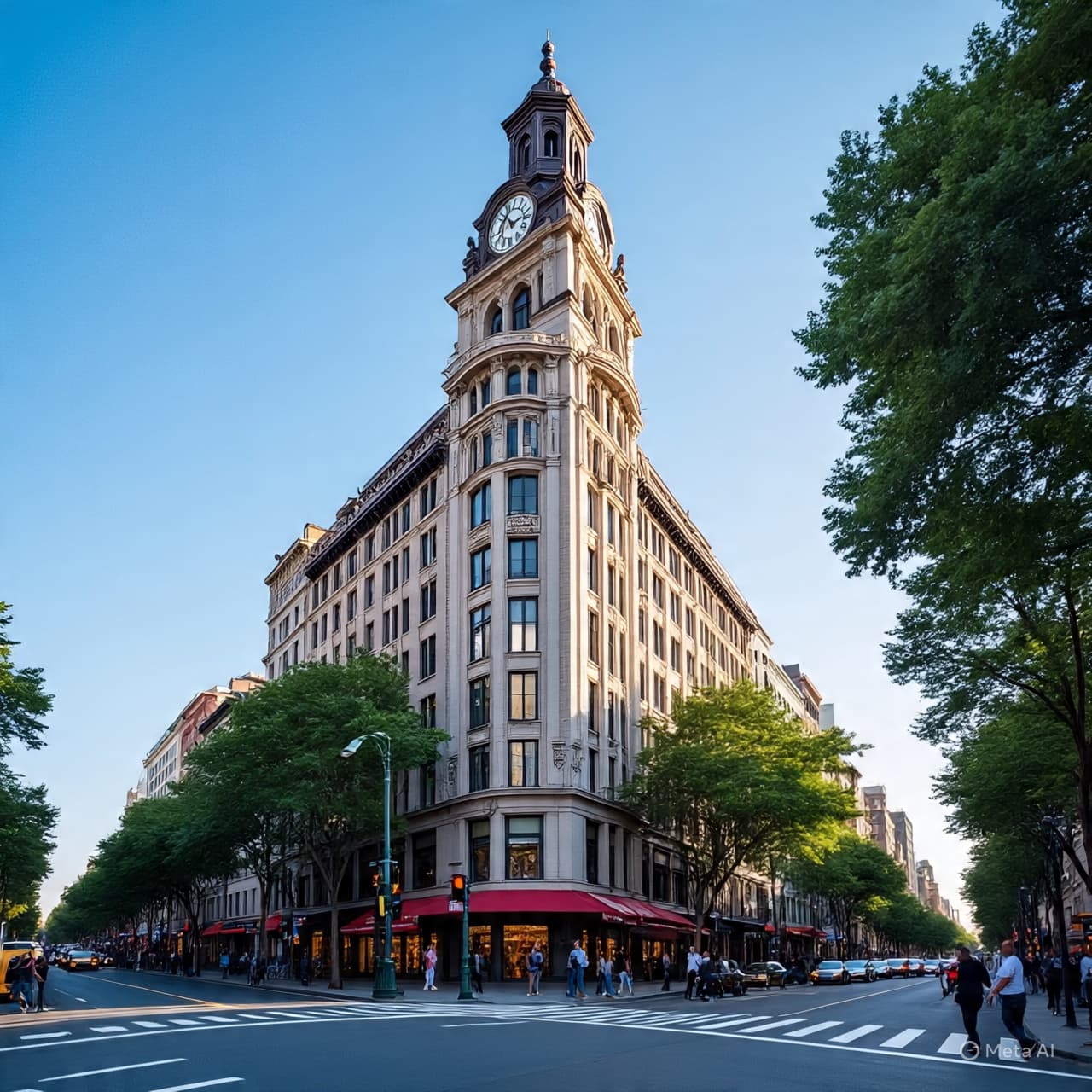
In the heart of Manhattan’s East Village, where history and the hum of everyday life weave through traffic and footsteps, buildings speak in a language of past and possibility. Among them is 51 Astor Place, its sleek lines and glass façade a quiet testament to an era that has passed and another still unfolding. Sometimes, in cities like this, what seems immovable reveals itself to be more like a riverbed: shaped by the currents of investment, purpose, and human intent.
It was recently announced that 51 Astor Place will be the recipient of a $62 million preferred equity investment, arranged by JLL Capital Markets on behalf of its owners. This sum, flowing into a building completed in 2013, reminds us that even familiar structures continue to adapt and find new roles in the ever-evolving narrative of New York City. The building, a 12-story office space with LEED Gold certification, sits at the intersection of Astor Place and the fabric of the East Village, Greenwich Village, and NoHo — neighborhoods that carry the traces of artists, students, immigrants, and innovators alike.
In quieter moments, investments such as this feel like gentle affirmations from the broader market: that spaces already established might still hold promise for those who see beyond ledger lines. The tenants now calling 51 Astor home — from tech and finance firms like Intuit and Perceptive Advisors to media presences — reflect the eclectic pulse of the city’s professional life. These organizations occupy offices where natural light and thoughtful design speak to the needs of a workforce still seeking balance between utility and inspiration.
The figure of $62 million is itself shaped by nuance. It is neither simply a dollar amount nor purely a symbol; it is a measure of confidence, a belief in the structure’s ability to attract and retain tenants and to remain relevant amid shifting trends in where and how New Yorkers work. In a market where office space has faced pressures from remote work patterns and fluctuating demand, this capital reinforces the idea that certain assets — especially those with solid tenancy and limited competitive supply — continue to appeal to discerning investors.
Yet 51 Astor Place does not stand alone. It is part of the larger tapestry of the East Village, a neighborhood that has never been static. Once a haven for creative subcultures and a crossroads of cultural exchange, the area has also felt the rhythms of change as demographic and economic forces play their part. Buildings are anchored not just by steel and stone, but by the stories of the people who fill their floors and the streets that surround them.
For observers of the city, the investment at 51 Astor Place offers a moment to consider: what does growth mean in a place as storied as this? And how do capital and community coexist when the skyline around us seems both eternal and impermanent? There may be no single answer, but each announcement invites reflection on the deeper currents shaping the city we inhabit and watch evolve.
In concrete terms, the recent $62 million preferred equity investment underscores a continued appetite from institutional capital for office properties with strong tenancy profiles in Manhattan’s core neighborhoods. The building’s existing mix of tenants and its design features — including amenities like fitness facilities, lounges, and outdoor space — support its competitive positioning in the office market, even as broader dynamics around workspace utilization continue to shift
AI Image Disclaimer
Graphics are AI-generated and intended for representation, not reality.
---
Sources
New York YIMBY CoStar News Commercial Observer Wikipedia (51 Astor Place) Wikipedia (East Village, Manhattan)
Published by Banx Network. This article is part of the Banx decentralized media programme, powered by the BXE token on the XRP Ledger.