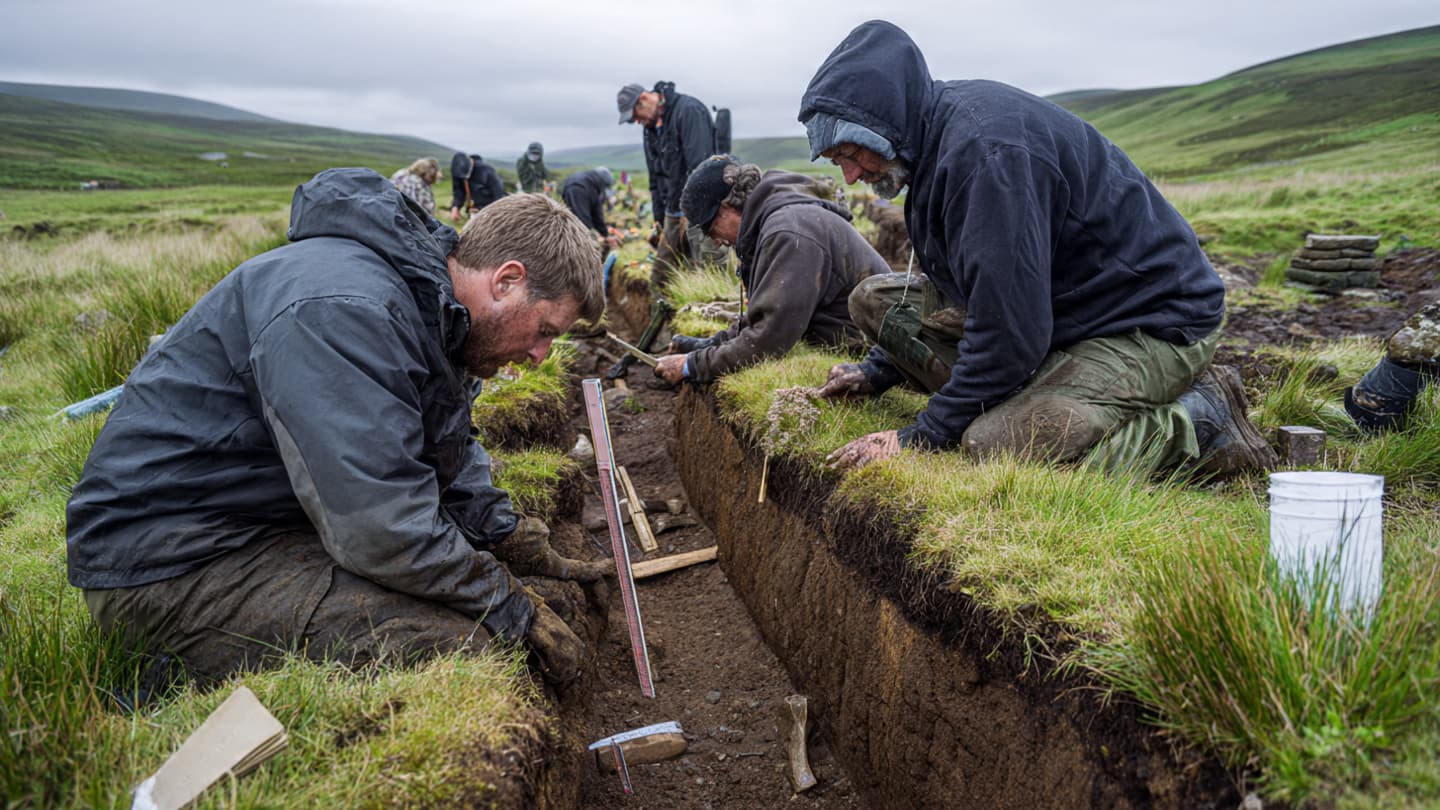
Archaeology often works like a conversation across time, where objects speak in fragments rather than full sentences. A recent discovery in Scotland adds another voice to that conversation, revealing how early humans shaped their world with the materials around them.
Body: Researchers have uncovered a set of 2,000-year-old artifacts made from animal bones, suggesting that ancient communities in the region used bone as a practical material for tools. These findings shed light on everyday life during that historical period.
Bone, being both durable and accessible, was commonly used in prehistoric societies for crafting tools, ornaments, and functional implements. Its versatility made it an important resource before widespread metal use.
The discovered artifacts show signs of careful shaping and wear, indicating repeated use rather than symbolic or ceremonial purpose alone. This suggests a level of craftsmanship and adaptation to available resources.
Archaeologists analyze such tools not only for their physical form but also for what they reveal about social structure, trade, and survival strategies of ancient communities.
The site in Scotland contributes to a broader understanding of how human societies across Europe developed independent methods for tool-making using local materials. These parallels help historians map cultural evolution over time.
Each artifact recovered from the site adds context to how people interacted with their environment, emphasizing practicality and resourcefulness in daily life.
While the discovery is regionally specific, its implications are global, as it reflects a shared human pattern of innovation across different civilizations.
Closing: As researchers continue their work, the ancient tools remind us that even the simplest materials can carry complex stories of human adaptation and creativity.
AI Image Disclaimer: Images in this article are AI-generated for illustrative purposes and historical reconstruction.
Sources: BBC History, National Geographic, Archaeology Magazine, Smithsonian, The Guardian History
Published by Banx Network. This article is part of the Banx decentralized media programme, powered by the BXE token on the XRP Ledger.