
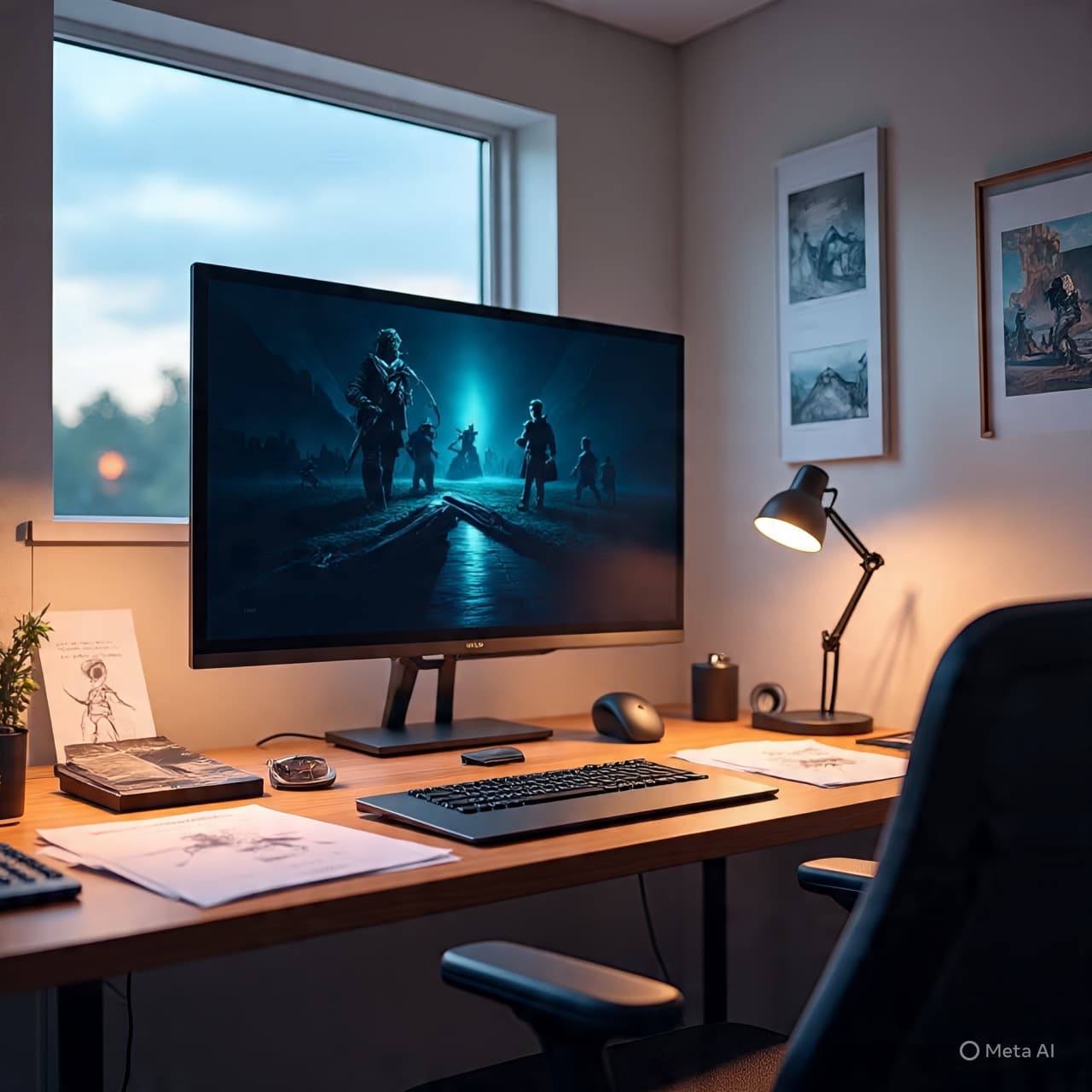
In the quieter corners of the internet, where late-night discussions linger and screenshots are studied like constellations, games often live a second life. They are not only played, but felt, debated, and slowly reshaped through the voices of the people who return to them again and again. Nightin Cage has been moving through that space lately, carried not just by its mechanics but by the expectations wrapped around it.
Following recent fan feedback, the developer behind Nightin Cage has spoken openly about plans to deepen the game’s sense of immersion, particularly in how its fanservice elements are presented. The response was not defensive, nor dismissive. Instead, it arrived with a tone of listening — an acknowledgment that atmosphere and intimacy matter as much as systems and progression.
The feedback itself centered on presence. Players described moments where visual framing, camera perspective, and interaction felt slightly distant, as though the game was holding something back. Fanservice, in their view, wasn’t simply about quantity, but about cohesion — how character design, animation, and environment worked together to sustain mood rather than interrupt it.
In response, the developer outlined adjustments aimed at tightening that connection. Subtle changes to camera angles, pacing, and environmental detail are being explored, with the goal of making scenes feel more lived-in and responsive. Rather than layering on excess, the focus appears to be refinement — letting existing elements breathe and align more naturally with player expectations.
What stands out is the framing of immersion as a shared responsibility. The developer described fanservice not as an isolated feature, but as part of the game’s emotional texture. When it works, it enhances engagement; when it feels detached, it can pull players out of the experience. This perspective treats feedback not as a demand, but as a map.
In the broader context of game development, such exchanges reflect a shift in how creators and communities interact. The distance between studio and player has narrowed, replaced by an ongoing conversation that continues well after release. Games like Nightin Cage evolve not through sweeping reinvention, but through attentive calibration — small changes that quietly reshape how a world feels to inhabit.
For now, the promised updates remain in progress, more intention than final form. But even in that unfinished state, the response itself carries weight. It suggests a developer willing to linger with feedback, to sit inside it, and to let it inform the atmosphere of what comes next.
Sometimes, immersion begins not on the screen, but in the act of listening.
AI Image Disclaimer Visuals are AI-generated and serve as conceptual representations.
Sources Game developer statements, community feedback discussions, independent game reporting outlets
Published by Banx Network. This article is part of the Banx decentralized media programme, powered by the BXE token on the XRP Ledger.



.jpg&w=3840&q=75 "The Artemis Revolution: How NASA Plans to Build Humanity's Future on the Moon")