There is something quietly profound about arrival in orbit. No wheels touch a runway, no harbor lines are cast. Instead, two vessels glide toward one another above a turning planet, guided by mathematics, trust, and a shared belief in exploration. In that silent convergence, distance yields to connection.
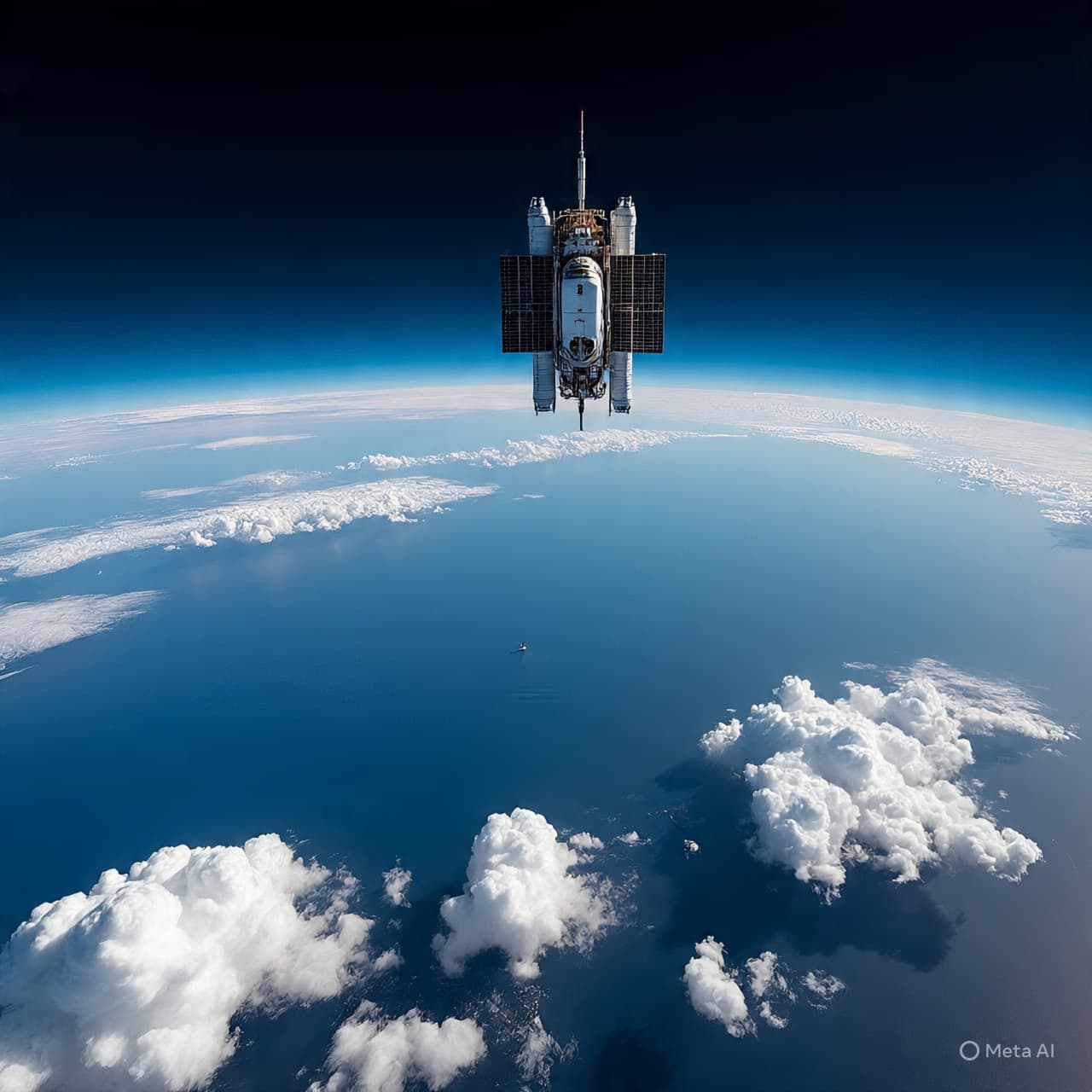
Four astronauts flying on have arrived at the , completing their journey aboard a capsule launched by . After liftoff atop a Falcon 9 rocket and a carefully timed orbital pursuit, the spacecraft docked smoothly with the station, marking the beginning of a new long-duration mission in microgravity.
The approach unfolded with characteristic precision. As Dragon closed the final distance, its thrusters fired in measured bursts, aligning the capsule with the station’s docking port. Engineers on the ground monitored telemetry while astronauts aboard the ISS prepared for arrival procedures. When soft capture was confirmed and structural latches secured, a journey measured in miles gave way to a connection measured in inches.
For the Crew-12 members, docking is both culmination and commencement. The intensity of launch transitions into the rhythm of orbital life. Over the coming months, the astronauts will conduct scientific investigations spanning human health, materials science, Earth observation, and technology demonstrations. The ISS, orbiting roughly 250 miles above Earth, remains one of humanity’s most consistent laboratories — a place where research continues regardless of weather or borders below.
Crew rotations ensure continuity aboard the station. The newly arrived astronauts will overlap briefly with departing crew members, exchanging insights and updates before those colleagues return to Earth. Such transitions reflect the steady cadence NASA has established through its Commercial Crew Program, blending public oversight with private-sector capability.
SpaceX’s reusable rocket system has helped normalize human spaceflight in recent years, yet each arrival retains a sense of ceremony. The ISS itself stands as a testament to international cooperation, supported by NASA and partners including Russia, Europe, Japan, and Canada. In orbit, coordination and shared purpose remain essential.
As hatches opened and greetings floated gently in microgravity, another chapter quietly began. The work ahead will demand discipline and collaboration, from maintaining station systems to executing complex experiments. Yet the moment of arrival — captured on cameras both inside and outside the station — serves as a reminder that exploration is often defined by careful preparation rather than spectacle.
NASA officials report that the launch, flight, and docking operations proceeded as planned. The Crew-12 astronauts are now integrating into station activities and preparing for their scheduled research agenda. Above the shifting landscapes of Earth, the ISS continues its patient orbit, sustained by the steady arrival of those willing to travel a little farther.
AI Image Disclaimer: Images in this article are AI-generated illustrations, meant for concept only.
Sources: Reuters BBC CNN The New York Times Politico
Published by Banx Network. This article is part of the Banx decentralized media programme, powered by the BXE token on the XRP Ledger.