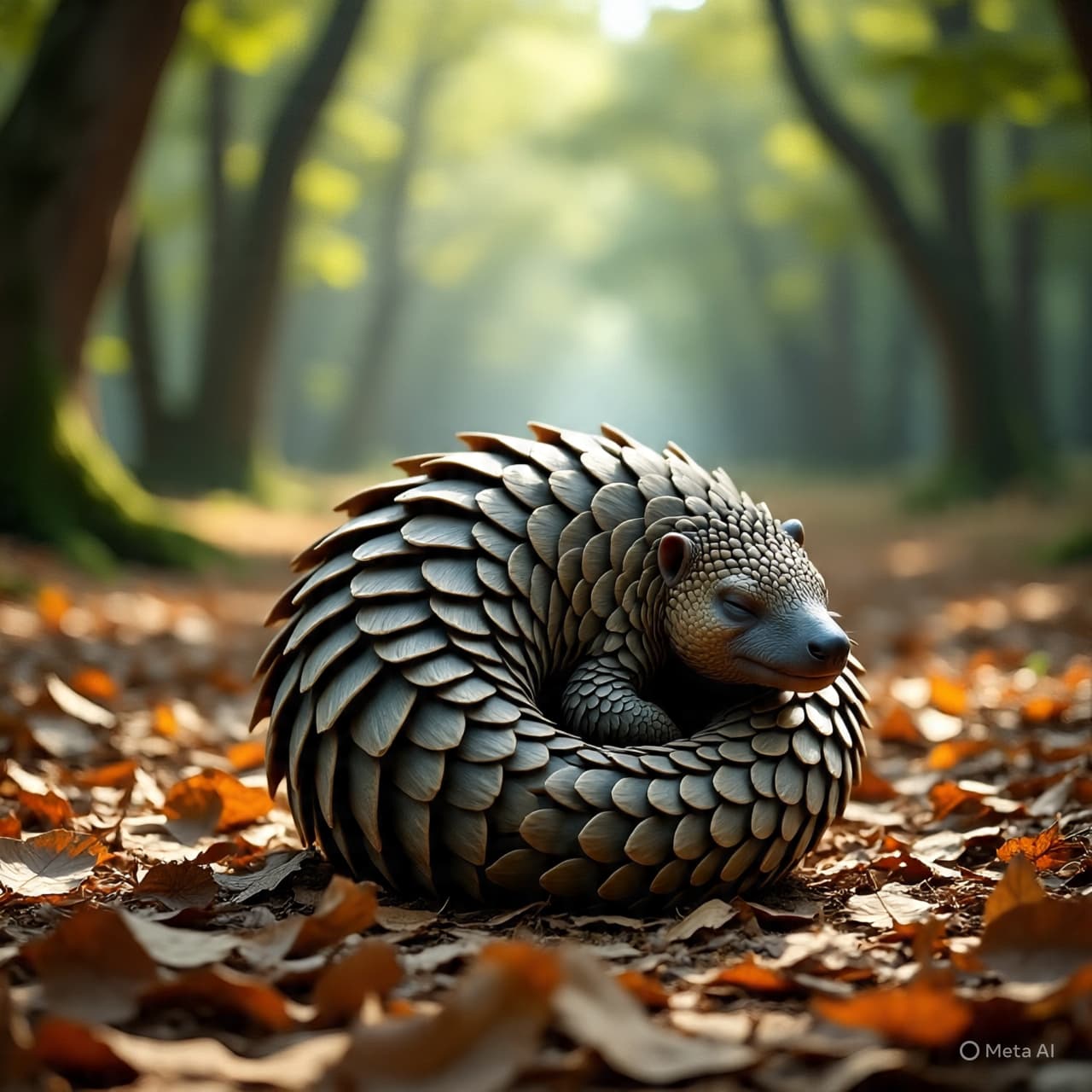
They curl into themselves when startled, turning soft bodies inward and presenting a shell of scales to the world. It is an ancient defense, evolved for forests and savannas, not for the attention of collectors scrolling through private chats and encrypted marketplaces.
Armored, spiky, and increasingly expensive, pangolins have become objects of desire far beyond their natural range. Once hunted primarily for meat or traditional medicine, they are now trafficked alive, marketed as exotic pets whose rarity confers status as much as ownership. The very traits that once protected them—overlapping scales, tight defensive coils—have been repurposed as selling points.
The trade operates quietly. Pangolins are pulled from the wild, often at night, moved through informal routes, and sold at prices that climb with each border crossed. For poachers, the incentive is simple: a single animal can be worth more than months of legal work. For buyers, the appeal lies in exclusivity, in possessing something few others can.
What is lost in this exchange is the animal itself. Pangolins are solitary, nocturnal insect-eaters, highly specialized and notoriously difficult to keep alive outside their habitats. Many die from stress, improper diets, or disease before they ever reach a buyer. Those that survive rarely thrive. The pet fantasy dissolves into quiet suffering.
Conservationists warn that the pet trade adds another layer of pressure to species already facing steep decline. Pangolins are among the most trafficked mammals in the world, their populations fragmented by years of exploitation. Removing live animals from the wild does more than reduce numbers; it disrupts breeding, alters ecosystems, and accelerates collapse in places where recovery is already fragile.
Law enforcement struggles to keep pace. Trafficking networks adapt quickly, shifting routes and disguising shipments. Social media has become both a storefront and a signal, where coded language replaces explicit ads and rarity drives demand. Each successful sale reinforces the idea that wildlife can be converted, piece by piece, into luxury.
There is a quieter truth beneath the market logic. Pangolins are not ornamental. Their scales are not armor meant to be admired. They are part of a long ecological story, shaped by millions of years of survival without human interference. Turning them into pets reduces that story to a transaction.
As prices rise, so does the urgency. Saving pangolins now depends not only on enforcement, but on restraint—on refusing the idea that rarity makes ownership acceptable. Some things, especially those built to endure by hiding, were never meant to be held at all.
AI Image Disclaimer Visuals are AI-generated and serve as conceptual representations.
Sources World Wildlife Fund International Union for Conservation of Nature TRAFFIC Wildlife Trade Monitoring Network Convention on International Trade in Endangered Species
Published by Banx Network. This article is part of the Banx decentralized media programme, powered by the BXE token on the XRP Ledger.