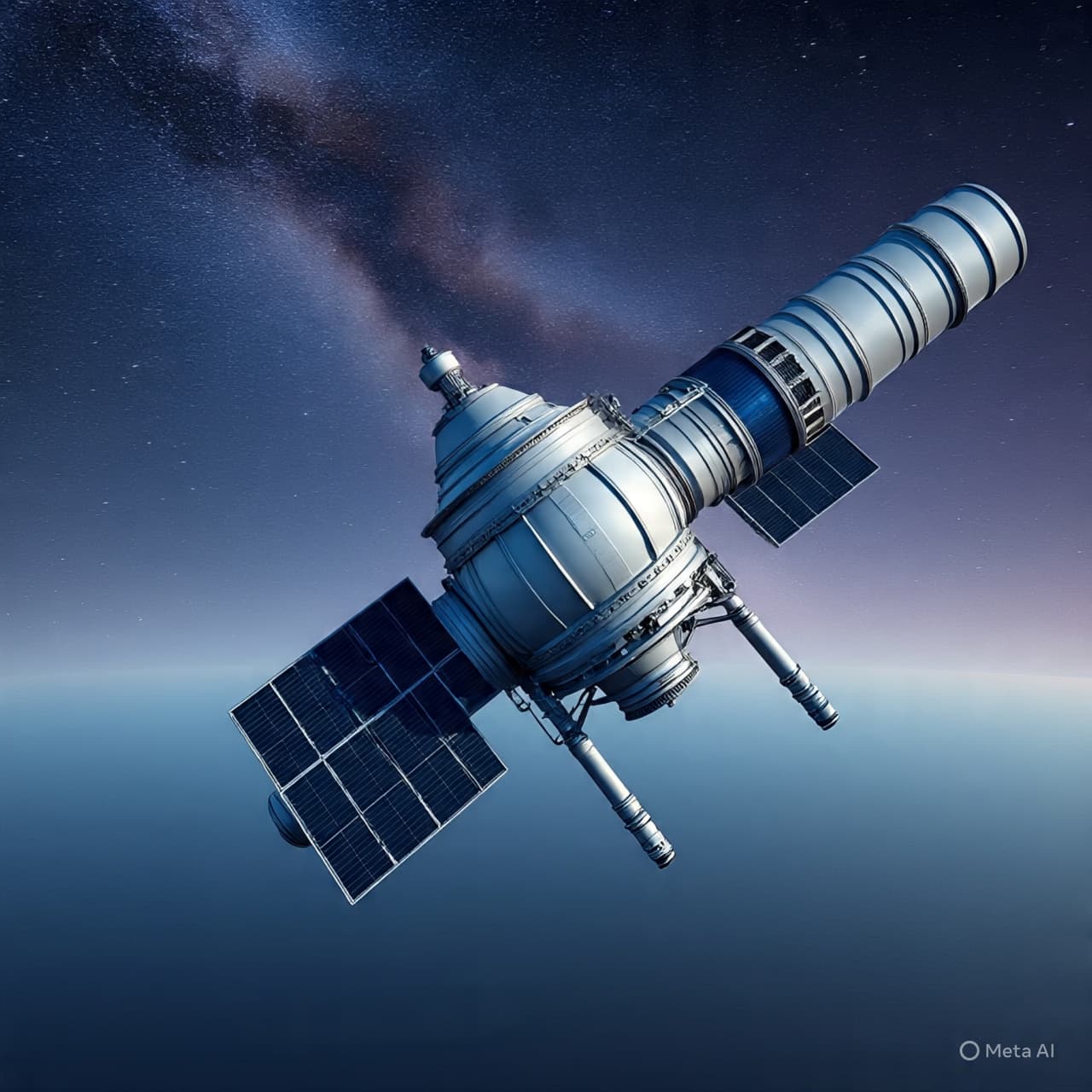
The Kepler Space Telescope has been quiet for years now, its instruments powered down, its gaze no longer fixed on distant stars. Yet in the long afterlife of its data—stored, revisited, reinterpreted—something new has surfaced, as if a faint signal finally learned how to speak.
Buried in those archival observations is a planet that appears strikingly familiar in size and strangely distant in temperament: a rocky world, roughly Earth-sized, orbiting its star at such a remove that surface temperatures may be profoundly cold. It is not a place of blue oceans or green continents, but of dim light and long seasons, where starlight arrives weakened, stretched thin by distance.
The planet was not noticed during Kepler’s primary mission, when the telescope was busy cataloging thousands of exoplanets through subtle dips in starlight. Instead, it emerged later, through refined analytical techniques applied to old data—algorithms better trained, questions more precise. What once looked like noise began to resemble a pattern. What was overlooked became legible.
This world appears to circle a red dwarf star, a type smaller and cooler than the Sun, where habitable zones sit close in and extremes are common. Even so, the planet’s orbit places it at the colder edge of what astronomers consider survivable. Models suggest an ice-dominated surface, perhaps locked in a slow gravitational rhythm, with one side perpetually facing its star while the other remains in darkness.
There is no claim of life here, no dramatic announcement of a second Earth. Instead, the finding adds texture to a growing realization: Earth-like planets are not rare exceptions, but variations on a theme, scattered across the galaxy in climates both gentle and severe. Some are scorched, others frozen. Most exist in conditions far removed from our own, yet they share familiar proportions—rock, gravity, orbit.
Kepler was designed to count planets, not to linger on their character. Still, years after its final transmission, it continues to shape how scientists think about planetary abundance and diversity. Each rediscovered signal reminds researchers that discovery does not always require new instruments, only new ways of listening.
In the cold orbit of this newly identified world, there is no warmth of welcome—only confirmation that the galaxy is filled with quiet, distant places, waiting patiently in the data, long after the telescopes that found them have gone dark.
AI Image Disclaimer Illustrations were created using AI tools and serve as conceptual representations rather than real photographs.
Sources NASA Kepler Space Telescope Mission The Astrophysical Journal Letters NASA Exoplanet Archive
Published by Banx Network. This article is part of the Banx decentralized media programme, powered by the BXE token on the XRP Ledger.