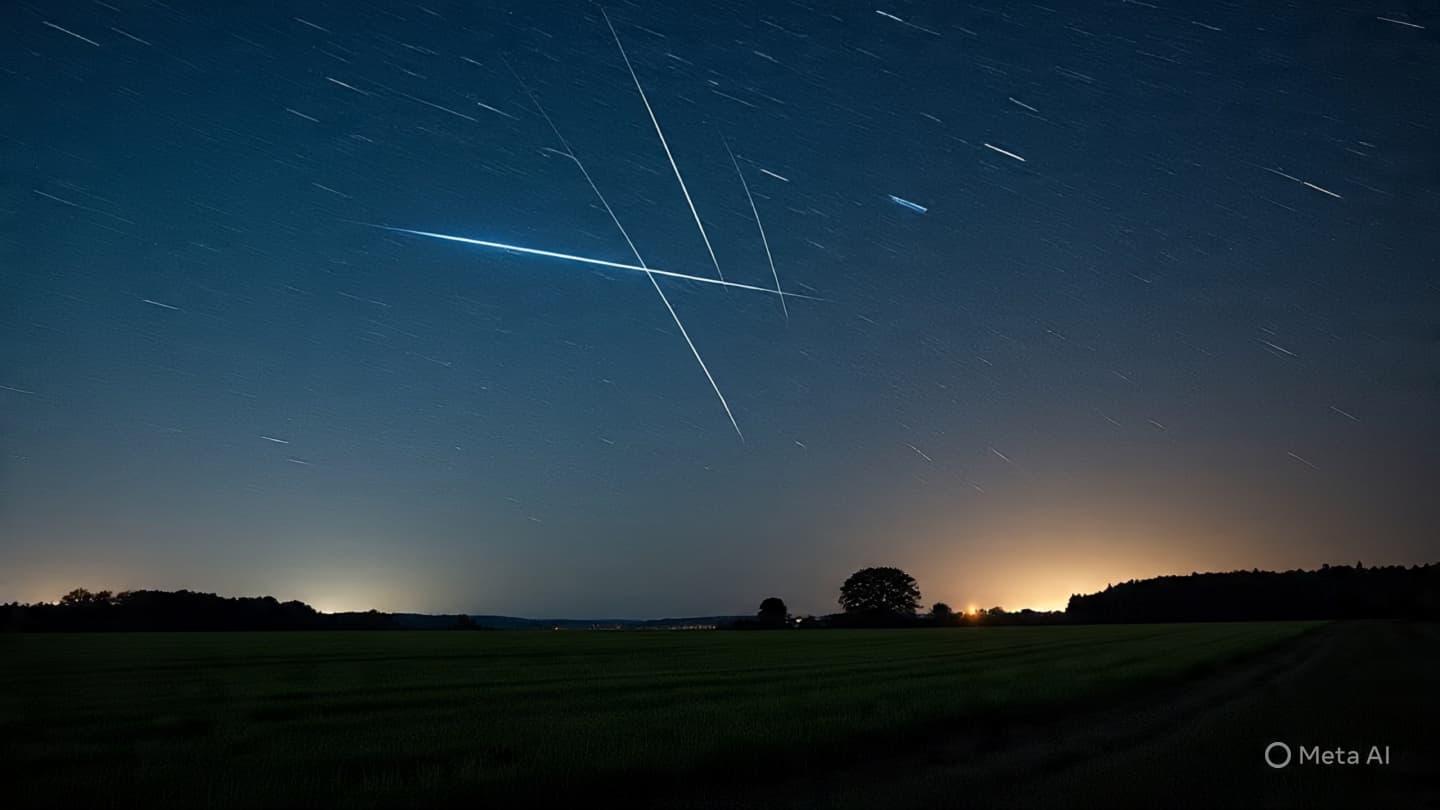
Like a quiet conversation between the Earth and the cosmos, the annual return of the Lyrid meteor shower once again traced luminous paths across the night sky in 2026. For a brief moment, the vastness above seemed to lean closer, offering a display both fleeting and deeply resonant.
Observers across multiple continents reported clear skies during the peak of the Lyrid meteor shower, allowing photographers and skywatchers to capture vivid streaks of light cutting through the darkness. The event, which typically peaks in April, is one of the oldest recorded meteor showers, with historical observations dating back more than two millennia.
From rural landscapes to urban outskirts, images revealed a delicate contrast between still horizons and swift celestial motion. In some regions, minimal light pollution created ideal conditions, producing sharp and detailed photographs that highlighted the meteors’ brightness and speed.
Beyond Earth, astronauts aboard orbiting platforms also contributed to the visual record. Images captured from space offered a unique perspective, showing meteors entering the atmosphere from above, appearing as brief flashes against the curvature of the planet. These views added depth to the broader understanding of how such phenomena unfold.
Astronomers note that the Lyrids originate from debris left behind by Comet Thatcher. As Earth passes through this stream of particles, fragments burn up in the atmosphere, producing the characteristic streaks visible from the ground.
Advancements in camera technology have played a significant role in documenting the event. High-sensitivity sensors and long-exposure techniques have allowed both professionals and amateurs to capture images that were once difficult to obtain.
Social media platforms and scientific communities quickly became repositories for these images, enabling global audiences to share in the experience. The widespread documentation reflects not only technological progress but also a continued fascination with the night sky.
While the Lyrids are not the most intense meteor shower of the year, their reliability and historical significance make them a consistent point of interest for observers and researchers alike.
As the final meteors faded, the 2026 Lyrid display left behind a collection of images that quietly bridge science and wonder, reminding viewers of the enduring rhythm of celestial events.
AI Image Disclaimer: Some images associated with this article are AI-generated representations intended to illustrate the event.
Sources: NASA European Space Agency Space.com Sky & Telescope
Published by Banx Network. This article is part of the Banx decentralized media programme, powered by the BXE token on the XRP Ledger.