Opening: The air we breathe is often taken for granted, an invisible constant that sustains life without demanding our attention. Yet, as atmospheric carbon dioxide levels climb to unprecedented heights, subtle changes may be occurring within our own bodies. Recent research suggests that rising CO2 concentrations are not just warming the planet but are also altering human blood chemistry, specifically increasing bicarbonate levels. This discovery invites a quiet reflection on the intimate connection between our environment and our physiology, hinting at a future where the very air might become a source of physiological stress.
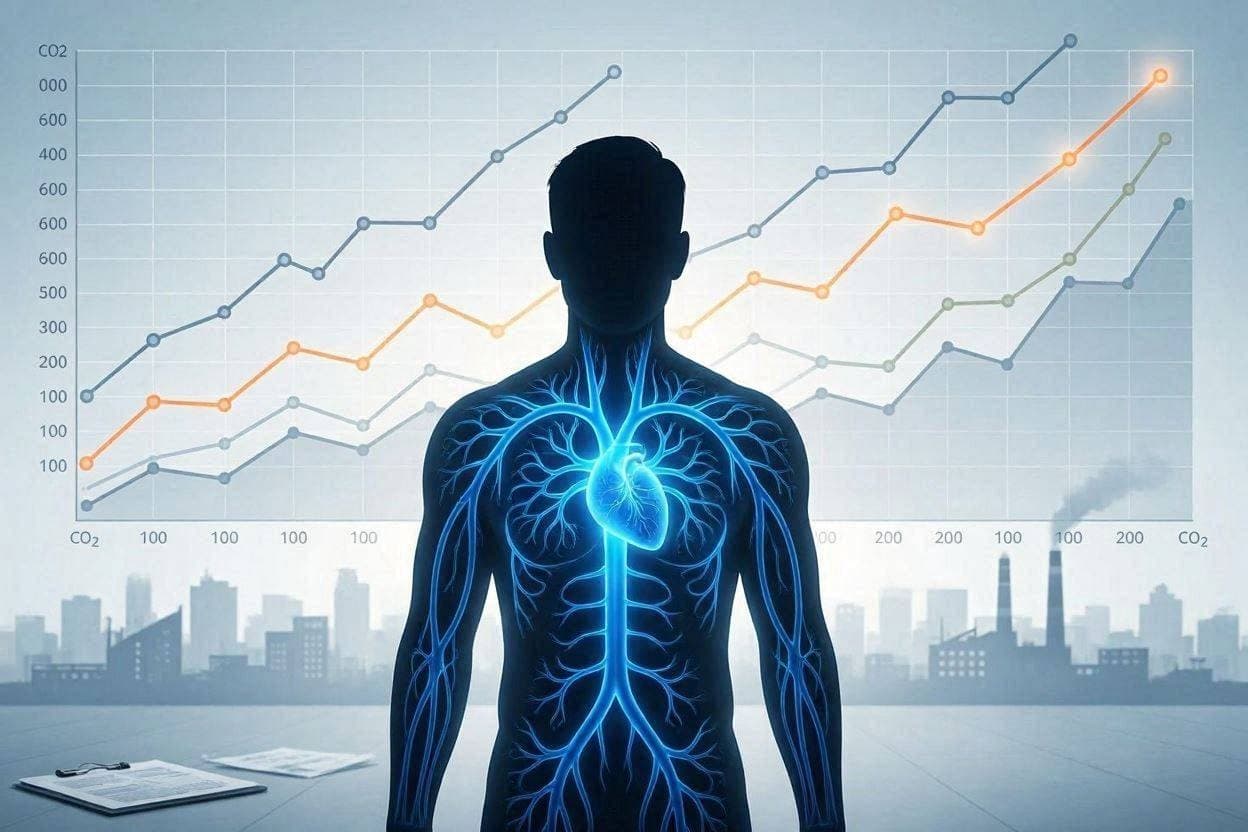
Body: A comprehensive study analyzing decades of health data has found that average serum bicarbonate levels in humans have risen by approximately 7% since 1999. This increase closely tracks the rise in atmospheric CO2 over the same period. Bicarbonate acts as a buffer in the blood, helping to maintain pH balance. When CO2 levels rise, the body compensates by producing more bicarbonate to prevent the blood from becoming too acidic. While this mechanism is effective in the short term, its long-term implications remain a subject of growing scientific concern.
The physiological impact of this shift is not yet fully understood, but experts warn of potential consequences. Chronic elevation of bicarbonate can affect bone density, kidney function, and overall metabolic health. For individuals with pre-existing conditions such as respiratory or renal issues, the added burden of processing higher CO2 levels could exacerbate their symptoms. The study highlights that while the current changes are modest, the trajectory suggests a cumulative effect that could become significant over time.
Researchers describe the potential future scenario as a "potentially toxic atmosphere." If CO2 levels continue to rise unchecked, the body’s compensatory mechanisms may eventually be overwhelmed. In extreme scenarios, this could lead to a state of chronic low-grade acidosis, affecting cognitive function and physical endurance. The timeline of fifty years mentioned in recent discussions serves not as a definitive prediction of catastrophe, but as a warning of the direction in which we are heading.
The findings underscore the broader impacts of climate change beyond temperature and weather patterns. It brings the crisis home, literally into our veins, making it a personal health issue rather than just an environmental one. This perspective may help bridge the gap between abstract climate data and tangible human experience, fostering a deeper sense of urgency among the public and policymakers alike.
Public health officials are beginning to consider how air quality standards might need to evolve to account for these physiological effects. Currently, regulations focus on pollutants like particulate matter and ozone, but CO2 is rarely regulated as a direct health hazard in ambient air. The new evidence suggests that this oversight may need to be addressed, prompting a reevaluation of what constitutes safe indoor and outdoor environments.
Mitigation strategies remain the most effective response. Reducing global emissions is crucial not only for stabilizing the climate but also for protecting human biology from further alteration. Individual actions, such as improving ventilation in homes and workplaces, can also help reduce personal exposure to elevated CO2 levels, particularly in enclosed spaces where concentrations can build up quickly.
Closing: The detection of rising CO2 effects in human blood is a sobering reminder of our vulnerability to environmental change. While the immediate health risks are manageable, the long-term trajectory warrants serious attention. By addressing the root causes of carbon emissions, we protect not just the planet, but the very chemistry of our bodies.
AI Image Disclaimer: Please note that any accompanying visuals for this article are AI-generated representations intended for illustrative purposes only.
Sources: CNN Phys.org The Conversation Science Alert
Published by Banx Network. This article is part of the Banx decentralized media programme, powered by the BXE token on the XRP Ledger.