For much of its recent history, artificial intelligence has followed a familiar rhythm. Models are trained, evaluated, released, and eventually replaced by newer versions. Improvement comes in stages, punctuated by updates and announcements, each one marking a clear before and after.
That rhythm is beginning to loosen.
Across research labs and technology companies, a new focus is emerging: models that can improve themselves after deployment. These systems are designed not only to perform tasks, but to observe their own performance, identify weaknesses, and adjust their behavior over time. The shift is subtle, but its implications are large.
At the center of this change is the idea that intelligence does not need to be frozen at launch. Instead of relying entirely on retraining from vast, static datasets, self-improving models use feedback loops, reinforcement signals, and internal evaluation mechanisms to refine how they reason, respond, or plan. Learning becomes continuous rather than episodic.
This approach reflects a broader truth about intelligence itself. Humans do not stop learning once formal training ends. Experience reshapes judgment. Mistakes refine intuition. By borrowing this principle, AI systems move closer to operating as processes rather than products.
The promise is efficiency and adaptability. A model that can recognize recurring errors and correct them autonomously requires fewer manual updates. It can adjust to changing environments, new patterns of use, or unforeseen edge cases without waiting for human intervention. In fields like robotics, cybersecurity, and scientific research, that flexibility is especially valuable.
But autonomy brings tension. A system that changes itself raises questions about predictability and control. Engineers must ensure that improvement does not drift into degradation, bias amplification, or unsafe behavior. Guardrails become as important as innovation, shaping how far and how freely a model is allowed to adapt.
Researchers are responding with cautious architectures. Self-improvement is often constrained within defined boundaries, guided by reward functions, safety checks, and periodic human oversight. The goal is not unbounded evolution, but guided refinement — a system that learns, but does not forget its purpose.
There is also a philosophical shift underway. If models improve continuously, version numbers lose some of their meaning. Intelligence becomes less about releases and more about trajectories. The question changes from “Is this model better than the last?” to “Is it improving in the right direction?”
This evolution arrives at a moment when AI systems are already deeply embedded in daily life. They write, recommend, translate, and decide. Allowing them to refine themselves adds another layer of complexity to an already intricate relationship between humans and machines.
Still, the momentum is difficult to ignore. In a field driven by performance gains, self-improving models offer a way to move forward without endlessly scaling data and compute. They suggest an intelligence that grows inward, learning not just from the world, but from its own experience within it.
If this path holds, the next leap in artificial intelligence may not come from bigger models or more data alone. It may come from systems that understand, quietly and incrementally, how to become better than they were yesterday.
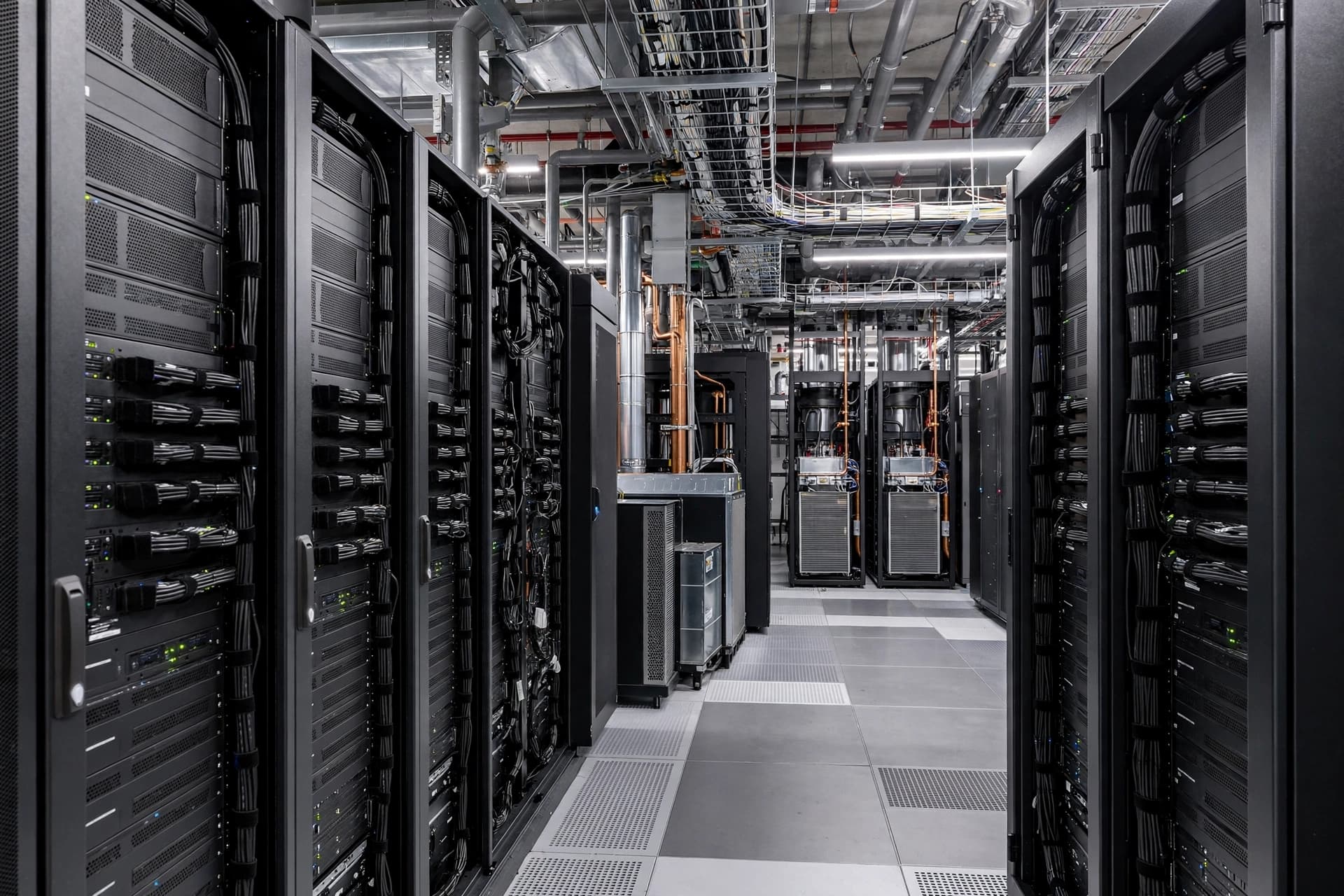
AI Image Disclaimer Visuals are AI-generated and serve as conceptual representations.
Sources MIT Technology Review Nature Machine Intelligence Stanford Artificial Intelligence Laboratory OpenAI research publications
Published by Banx Network. This article is part of the Banx decentralized media programme, powered by the BXE token on the XRP Ledger.