A country does not only move through highways, ports, or communication networks. It also moves through documents, public services, permits, data, and administrative decisions that touch the lives of citizens every day.
In Morocco, changes in this area are being directed through cooperation between the Ministry of Digital Transition and Administrative Reform and the United Nations Economic and Social Commission for Western Asia (ESCWA). The two parties signed a memorandum of understanding to strengthen digital transformation, modernize public administration, governance, artificial intelligence, and innovation.
The agreement illustrates that the digitization of administration is no longer seen merely as a transfer of paper forms to computer screens. The Moroccan government positions digital transformation and administrative reform as two interconnected processes in shaping a more modern public service model.
The goals include improving service quality, strengthening administrative performance, and bringing government services closer to the public and the business world. Behind these statements lies a significant change: the way the government operates needs to adapt to how society lives in the digital era.
The Moroccan government has also prepared a roadmap for administrative transformation for the period 2026–2030. This framework is aimed at building a more modern, flexible, and efficient administration that can adapt to rapid social, economic, and technological changes.
Cooperation with ESCWA also places experience exchange as an important part. Countries do not have to build entire systems from scratch. Experiences regarding digitization, governance, system interoperability, and technology utilization can be learned, adapted, and then applied according to each country's needs.
One important idea that emerged from this agenda is interoperability. In the world of administration, systems that can connect with each other allow information to flow more smoothly between agencies. Processes that previously required several separate stages can be designed to be simpler and more coordinated.
This change is also in line with Morocco's broader digital transformation program. By 2026, the country is preparing a digital transformation acceleration program worth approximately $250 million, supported by the World Bank, aimed at expanding user-oriented digital public services and supporting the digitization of the private sector.
However, technology is not the ultimate goal. Faster digital systems still require well-designed administration. Complicated procedures do not automatically become simple just because they are moved to a digital platform. Therefore, process reform, simplification of procedures, governance, and data utilization become inseparable parts of this transformation.
Ultimately, administrative changes may feel far removed from the technological buzz that usually fills the news. Yet it is precisely behind the scenes that digital transformation can find its meaning: when technology not only accelerates the machinery of government but helps make the relationships between the state, society, and the business world simpler, connected, and accessible.
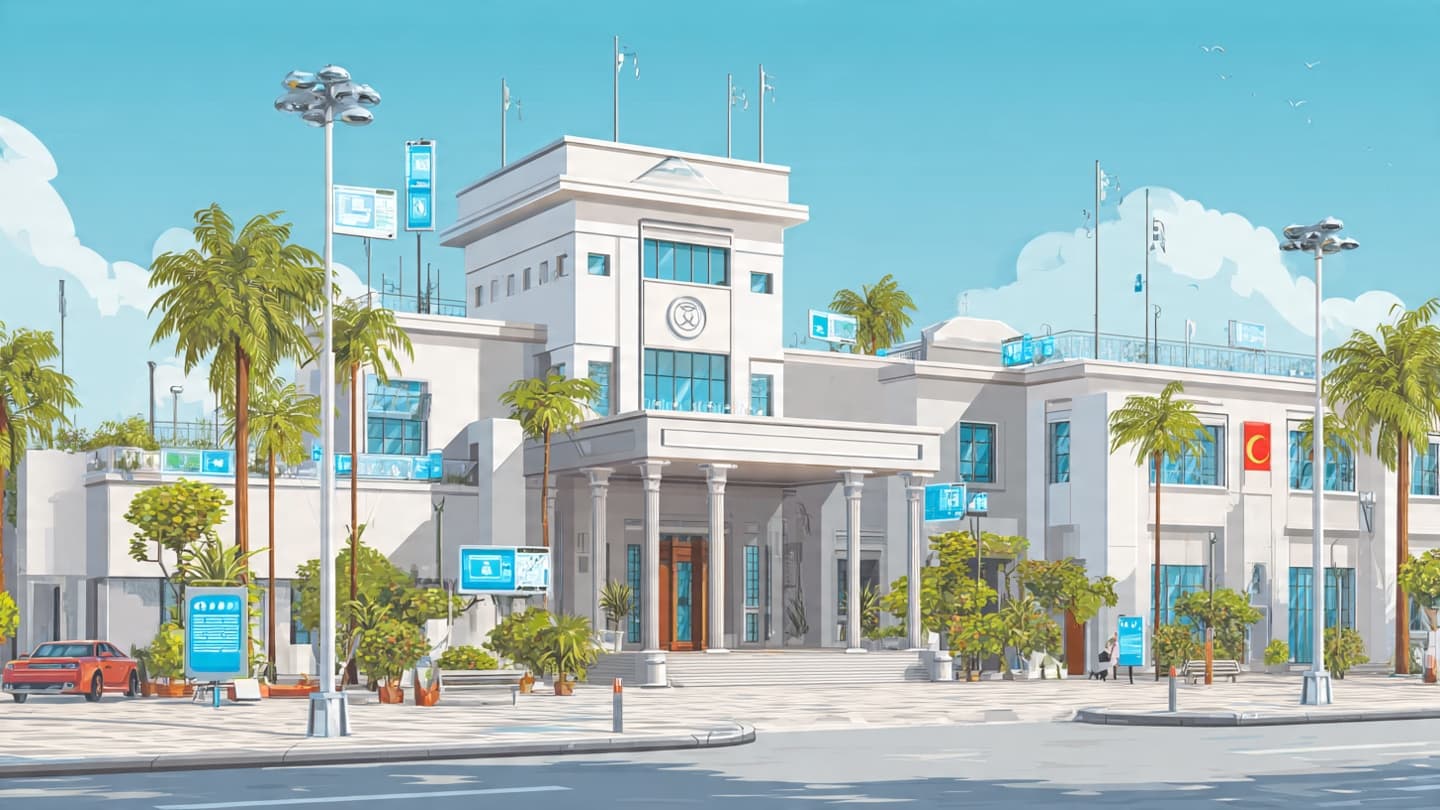
Image Disclaimer: Visual is a conceptual illustration based on AI depicting the digital transformation of public administration and is not direct documentation of the cooperation signing.
Sources:
Morocco World News United Nations Economic and Social Commission for Western Asia (ESCWA) Morocco Ministry of Digital Transition and Administrative Reform World Bank
Published by Banx Network. This article is part of the Banx decentralized media programme, powered by the BXE token on the XRP Ledger.

.jpg&w=3840&q=75 "Indian Aviation Firm Bets Big on Deal With Russia’s UAC for 50 IL-114-300 Aircraft")