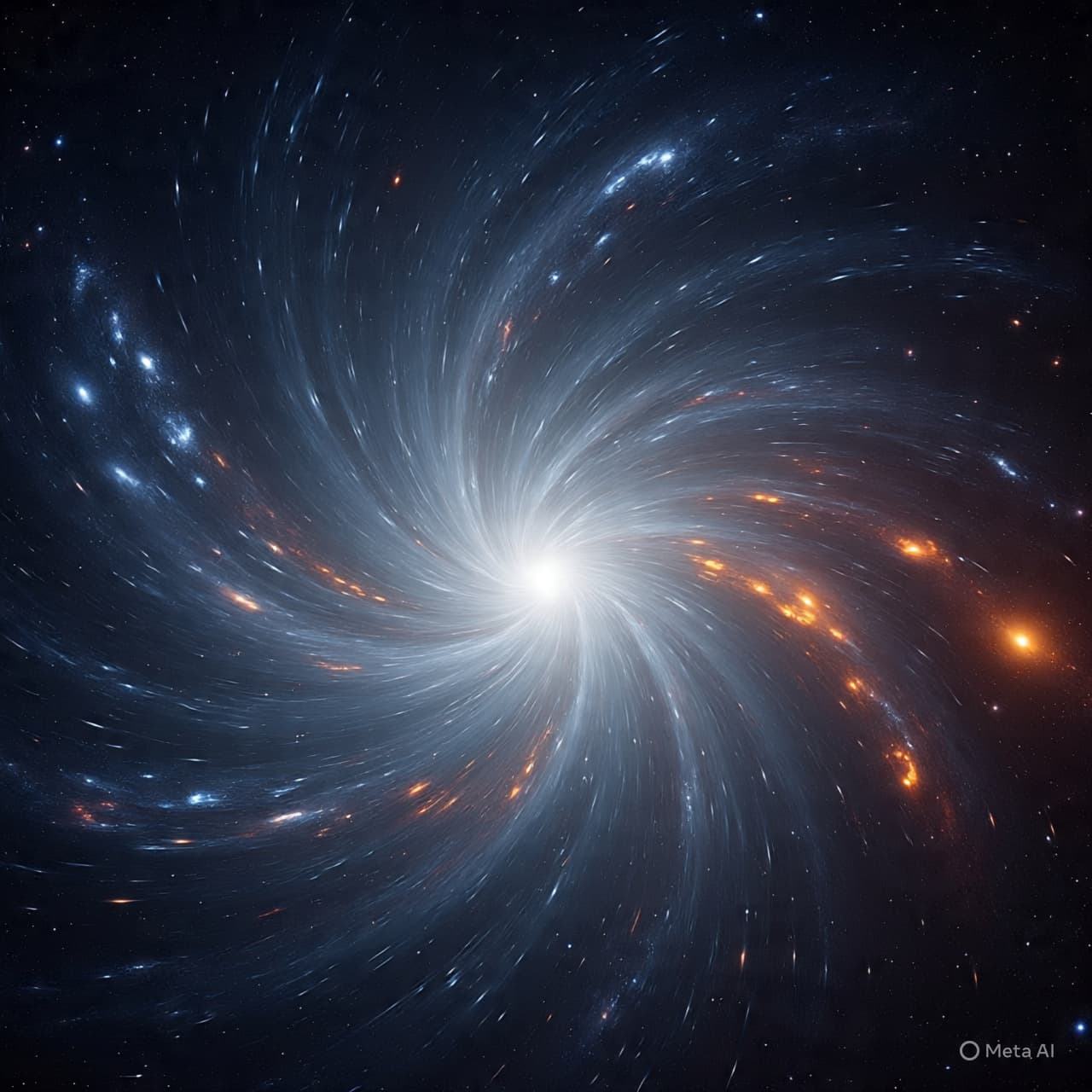
In the vast cathedral of the Milky Way, stars do more than shine; they breathe. Imagine a young sun inhaling and exhaling, each pulse sending invisible streams of energy outward, shaping its neighborhood like a sculptor with an unseen hand. Astronomers have now glimpsed this tender choreography in action — observing a young Sun‑like star blowing a bubble of hot gas, its stellar winds quietly carving patterns into the cosmic canvas. This is HD 61005, a star that mirrors the Sun’s youth, revealing in soft X‑ray light the gentle forces that govern stellar infancy.
Beneath its radiant surface, HD 61005 churns with energy far more intense than our mature Sun. Streams of charged particles surge outward, pushing against the cooler gas and dust of the surrounding interstellar medium. The result is an astrosphere — a vast bubble of hot, glowing gas, invisible to the naked eye but illuminated through the eyes of NASA’s Chandra X‑ray Observatory. It is in this bubble that scientists witness the silent shaping of space, the subtle imprint of stellar wind on the galactic environment.
The young star spins its story in quiet detail. Its wind flows three times faster and is twenty-five times denser than the Sun’s current solar wind, creating X‑ray signatures that betray the motion and force within. By studying HD 61005, researchers can trace what conditions may have been like around the early Sun — a time when our solar system was only a cluster of forming planets and drifting dust. Each ripple of the bubble tells a tale of energy, motion, and the ongoing dialogue between star and space.
This discovery is more than a curiosity; it is a window into the cosmos’ gentle rhythms. Observing how a Sun‑like star sculpts its environment helps scientists understand how stellar winds influence planet formation, space weather, and the distribution of elements. From the delicate swirl of hot gas to the faint X‑ray glow, HD 61005 offers a rare portrait of cosmic youth, reminding us that even in the vast emptiness, stars shape the universe with subtle, persistent artistry.
As telescopes and models grow more precise, astronomers are increasingly able to map these stellar breathing patterns. HD 61005 is a quiet teacher, offering a glimpse of what our own Sun once did, long before it lit the Earth with familiar warmth. In this, the bubble is more than gas — it is a story, a memory of youthful energy, and a testament to the hidden motions that govern our galaxy.
AI Image Disclaimer (rotated style) Illustrations were produced with AI and serve as conceptual depictions, not real photographs.
Sources Scientific American NASA Chandra news release DailyGalaxy Universe Today Gadgets360
Published by Banx Network. This article is part of the Banx decentralized media programme, powered by the BXE token on the XRP Ledger.