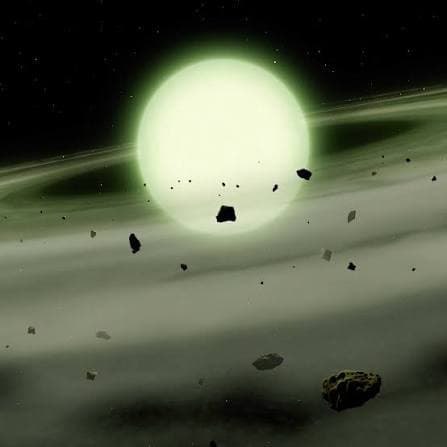
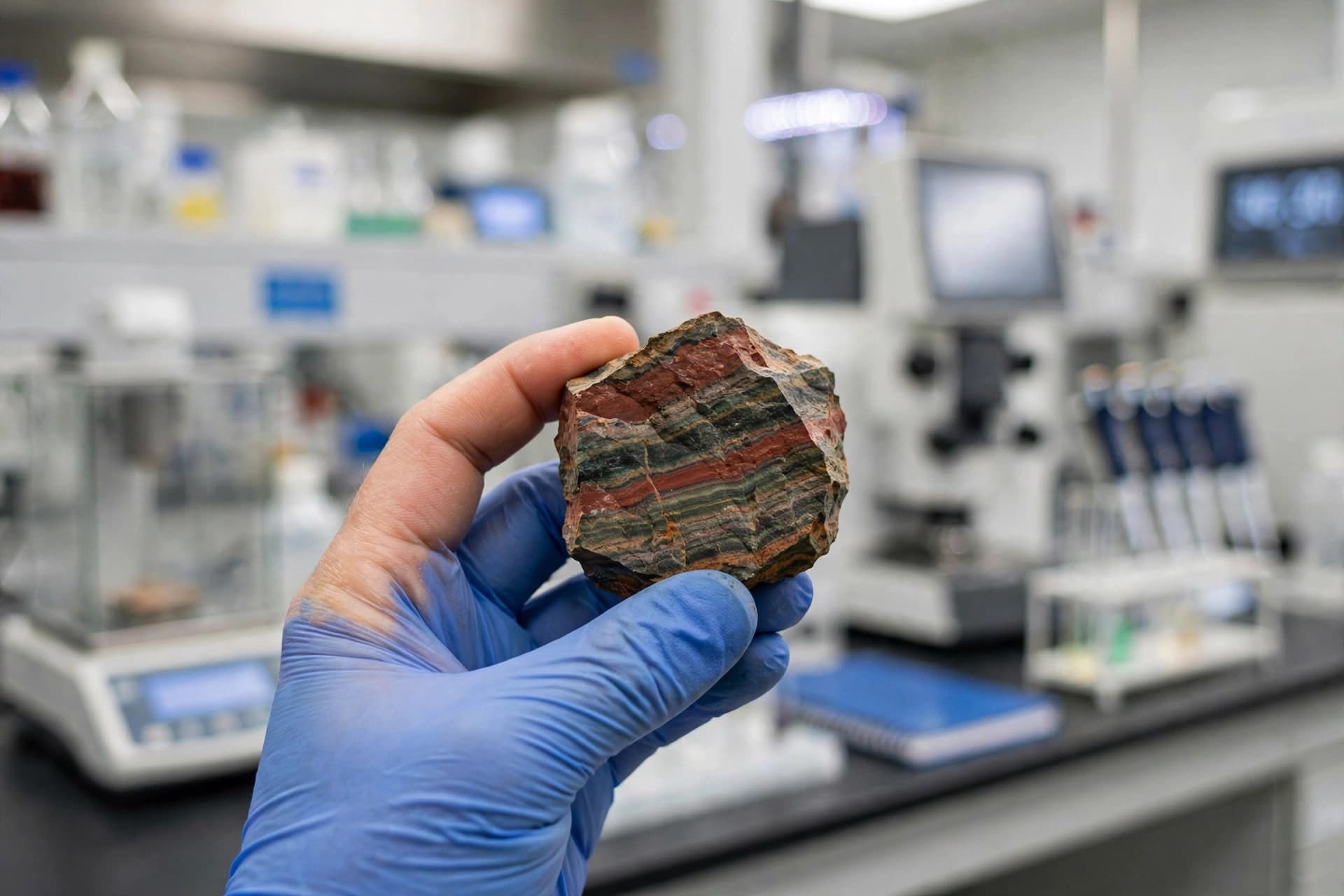
There are moments when the sky, usually distant and untouchable, briefly reaches down to meet the Earth. Not with thunder or storm, but with something quieter—a fragment of stone, carrying a history far older than any landscape it touches. Such moments pass quickly, often unnoticed, yet they leave behind a trace that invites both curiosity and urgency.
Recently, that quiet interruption unfolded over the skies of Ohio. A meteor streaked through the atmosphere, its descent marked by light and speed, before breaking apart and sending fragments toward the ground. For those who witnessed it, the event was fleeting—a flash, a sound, perhaps a lingering sense of wonder. But for meteorite hunters, it was the beginning of a race shaped by both science and time.
When a space rock survives its journey through the atmosphere and reaches the Earth, it becomes more than debris. Meteorites are fragments of asteroids, sometimes even remnants from the early formation of the solar system. Each piece holds clues—chemical signatures, mineral structures—that can help scientists better understand the origins of planets and the processes that shaped them.
This is why the response is often immediate. Researchers and enthusiasts alike move quickly to identify the fall zone, guided by eyewitness reports, radar data, and trajectory models. The sooner a meteorite is recovered, the more pristine it remains. Exposure to moisture, oxygen, and human handling can gradually alter its composition, quietly erasing some of the information it carries.
In Ohio, that urgency became visible as individuals and teams began searching fields, roadsides, and open spaces where fragments might have landed. Some are professionals, connected to academic institutions or scientific organizations. Others are independent collectors, drawn by both the scientific value and the rarity of such finds. Though their motivations may differ, they share a common awareness: these stones are fleeting opportunities.
There is also a broader layer to these events. Meteorite falls connect the vastness of space with the familiarity of everyday places. A farm, a neighborhood, a quiet stretch of land can suddenly become part of a much larger narrative—one that extends beyond Earth itself. It is a reminder that our planet is not isolated, but part of a dynamic and ever-moving system.
Yet, as with many scientific pursuits, the process is careful and methodical. Authorities and researchers often encourage proper reporting and documentation of any finds. Verified meteorites can contribute to collections, studies, and public knowledge, while unverified claims require cautious examination. The goal is not simply to collect, but to understand.
For now, the search in Ohio continues, shaped by both excitement and patience. Some fragments may already have been found, others may remain hidden, waiting quietly in the landscape. Each discovery, however small, adds a piece to a much larger puzzle—one that stretches back billions of years.
In the days ahead, more information is expected as analyses are conducted and findings are confirmed. What began as a brief flash in the sky may, in time, offer insights that endure far longer. Until then, the fields remain under quiet watch, holding the possibility that something ancient has just arrived, and is only beginning to be understood.
AI Image Disclaimer Illustrations were produced with AI and serve as conceptual depictions.
Source Check (Credible Media Scan):
NASA Space.com CNN BBC News The New York Times
Published by Banx Network. This article is part of the Banx decentralized media programme, powered by the BXE token on the XRP Ledger.