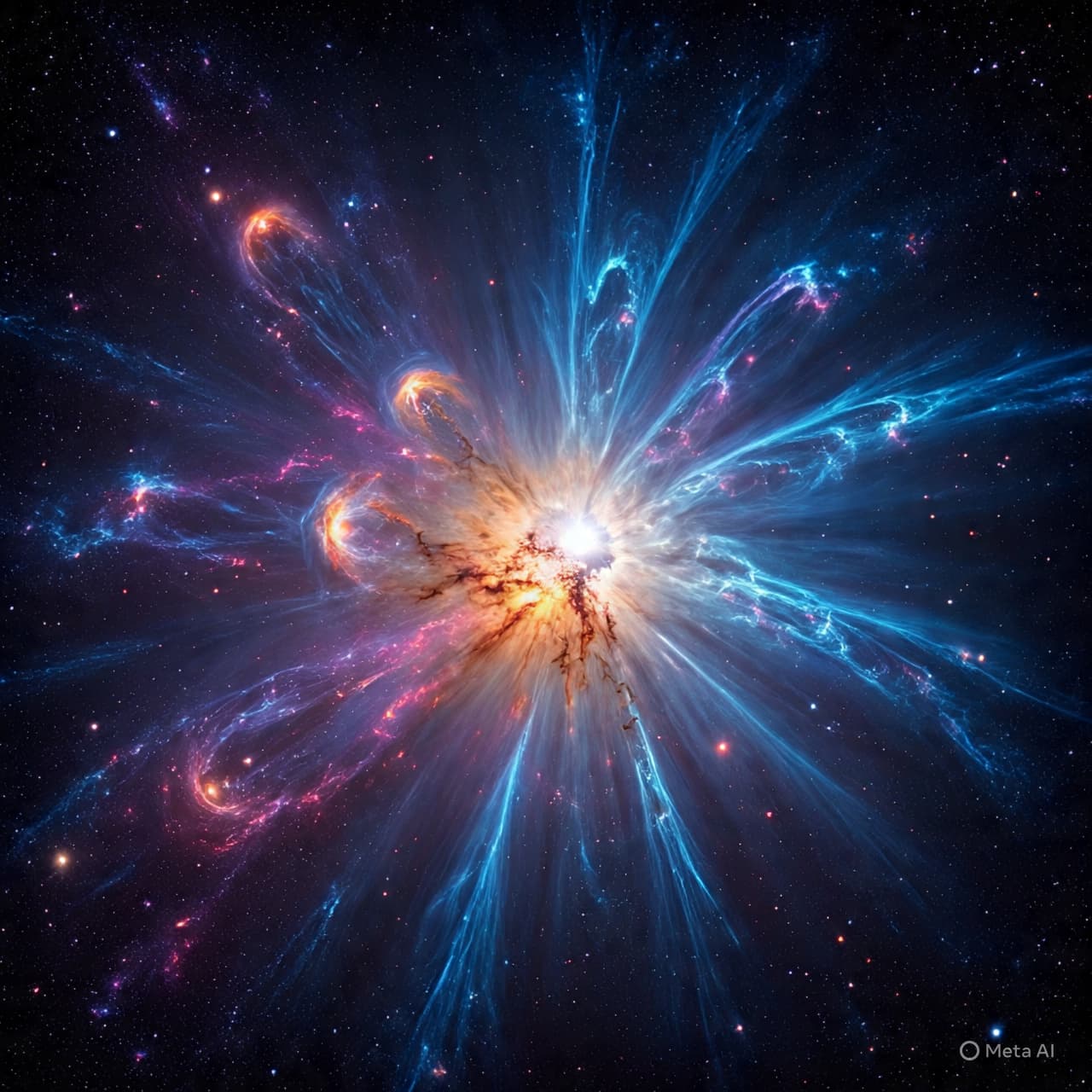
In the vast theater of the cosmos, stars live and die on scales both majestic and terrifying. For the first time, scientists have captured a supernova ripping open its host star, providing an unprecedented view of the violent processes that mark the end of stellar life. This observation offers a window into phenomena that have long been theorized but never directly witnessed in such detail.
The supernova, a massive explosion signaling the death of a star, was recorded using a combination of ground-based telescopes and space observatories. Researchers observed the moment when the star’s core collapsed and outer layers were violently expelled into space, creating a shockwave of light and matter that will eventually seed surrounding regions with heavy elements — the building blocks of planets, life, and future stars.
This capture allows astronomers to study the dynamics of stellar collapse in real time, testing models of nuclear fusion, core collapse, and energy release. Observing the initial moments of a supernova provides critical information about how these events produce elements like iron, nickel, and heavier metals, which are dispersed into the galaxy and contribute to cosmic evolution.
Beyond the scientific significance, the image is a powerful reminder of the universe’s scale and its cycles of creation and destruction. Light from the explosion traveled millions of years to reach Earth, a signal of events that predate humanity yet directly inform our understanding of the cosmos today.
As astronomers continue to analyze the data, the first real-time view of a star’s death may reshape our knowledge of stellar evolution, supernova mechanisms, and the chemical enrichment of galaxies. For now, humanity bears witness to a stellar finale — both beautiful and violent — that emphasizes our place in an ever-changing universe.
Published by Banx Network. This article is part of the Banx decentralized media programme, powered by the BXE token on the XRP Ledger.