There is a quiet contradiction at the heart of any prison: it is meant to be a place where privilege is stripped away, where the law renders everyone equal in the narrow space of a cell. Yet in Indonesia, that equality has long been a fragile promise, eroded by the weight of money and connection. This week, the contradiction became impossible to ignore when inspectors walked into a prison near Jakarta and found something that resembled a hotel more than a penitentiary.
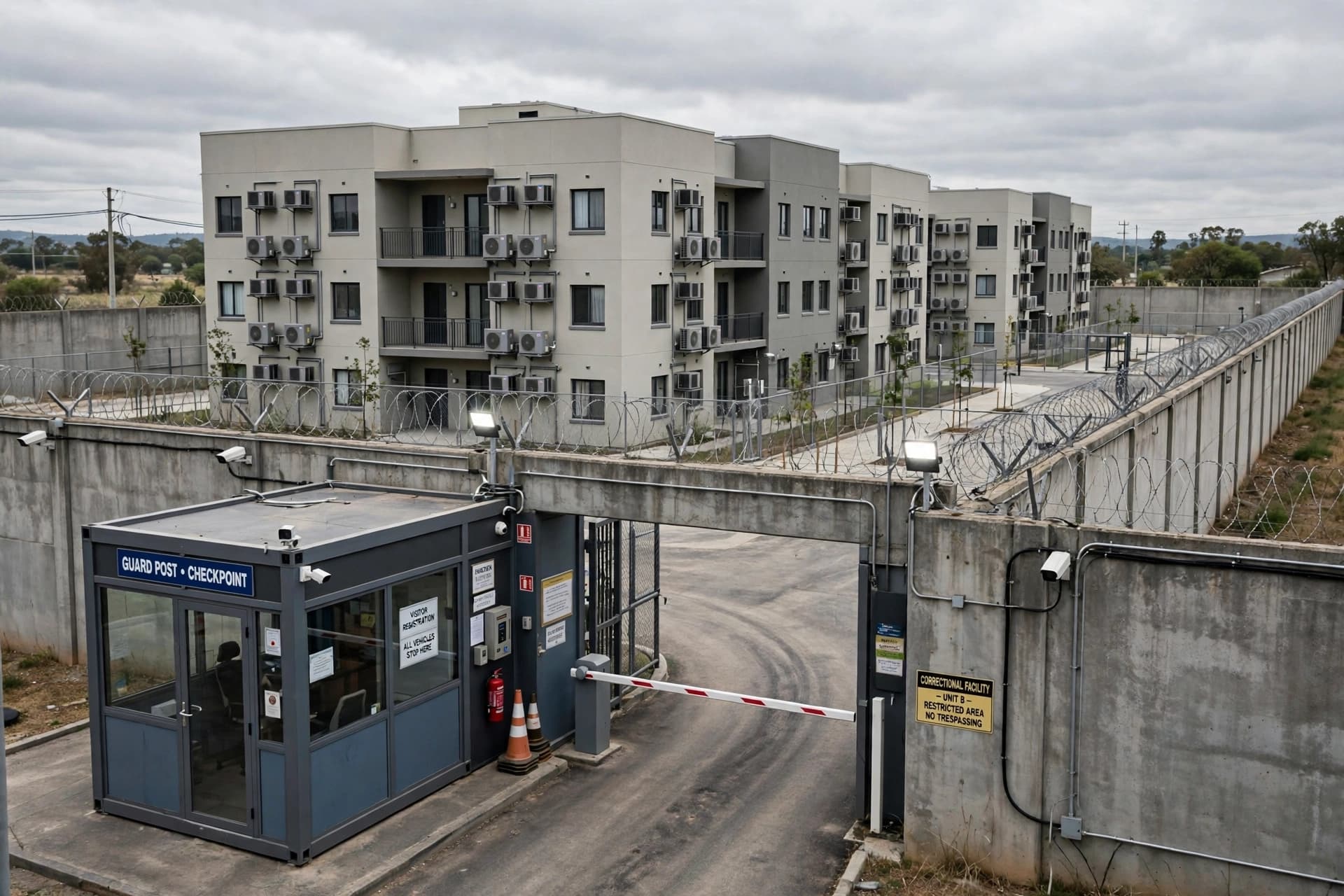
The discovery came during a surprise inspection on September 23 at Cibinong Prison in Bogor, a medium-security facility about 30 kilometers south of the capital . Investigators from Indonesia's Ombudsman found more than ten residential units separate from the regular prison blocks. Inside, they documented air conditioners, big-screen televisions, refrigerators, sofas, dining areas, and even a gym and a golf simulator under construction . Luxury cars were parked in the compound, and an unlocked exit at the back allowed access to an adjoining forest .
“We found strong indications that certain inmates had access to special facilities unavailable to ordinary prisoners,” said Syafrida Rachmawati Rasahan, a member of the Ombudsman office. “We encountered inmates inside the residential compound and discovered facilities resembling homestays, apartments and villas rather than prison housing” .
The response was swift. On Tuesday, authorities announced the suspension of five structural officials, including the prison chief, suspected of responsibility for the uncovered facilities . Rudi Setiawan, inspector general of the Ministry of Immigration and Corrections, said dozens of inmates and prison employees had been questioned as part of the inquiry .
The buildings were originally intended as official housing for prison personnel. Investigators are now examining whether they were converted into unauthorized accommodations for inmates, and whether prison officials accepted payments in exchange for the privileges . The identities of the inmates who allegedly lived in the compound have not been officially disclosed .
For observers of Indonesia's correctional system, the scandal carries a familiar weight. Simon Butt, director of the Centre for Asian and Pacific Law at the University of Sydney, noted that similar issues have surfaced before. In 2010, an inmate named Artalyta Suryani had access to laser beauty therapy while behind bars. In 2017, authorities discovered that inmates at Sukamiskin Prison in Bandung had paid guards for special treatment and keys to come and go as they pleased . “Few of those involved have faced serious consequences,” Butt said. “Each of these revelations drew headlines, but none appears to have produced lasting change” .
The 4-hectare Cibinong Prison houses a mix of inmates, including those convicted of corruption and other high-profile offenders . Lawmakers and anti-corruption activists have urged authorities to identify which prisoners occupied the facilities and to clarify whether bribes were paid . The Ombudsman has described the findings as “the tip of the iceberg” if not corrected systemically .
AI Image Disclaimer: The images accompanying this article were generated by artificial intelligence and are intended for conceptual illustration only.
Sources: The Associated Press, The New York Times, Australian Broadcasting Corporation, The Canadian Press, Jakarta Post, Sina
Published by Banx Network. This article is part of the Banx decentralized media programme, powered by the BXE token on the XRP Ledger.