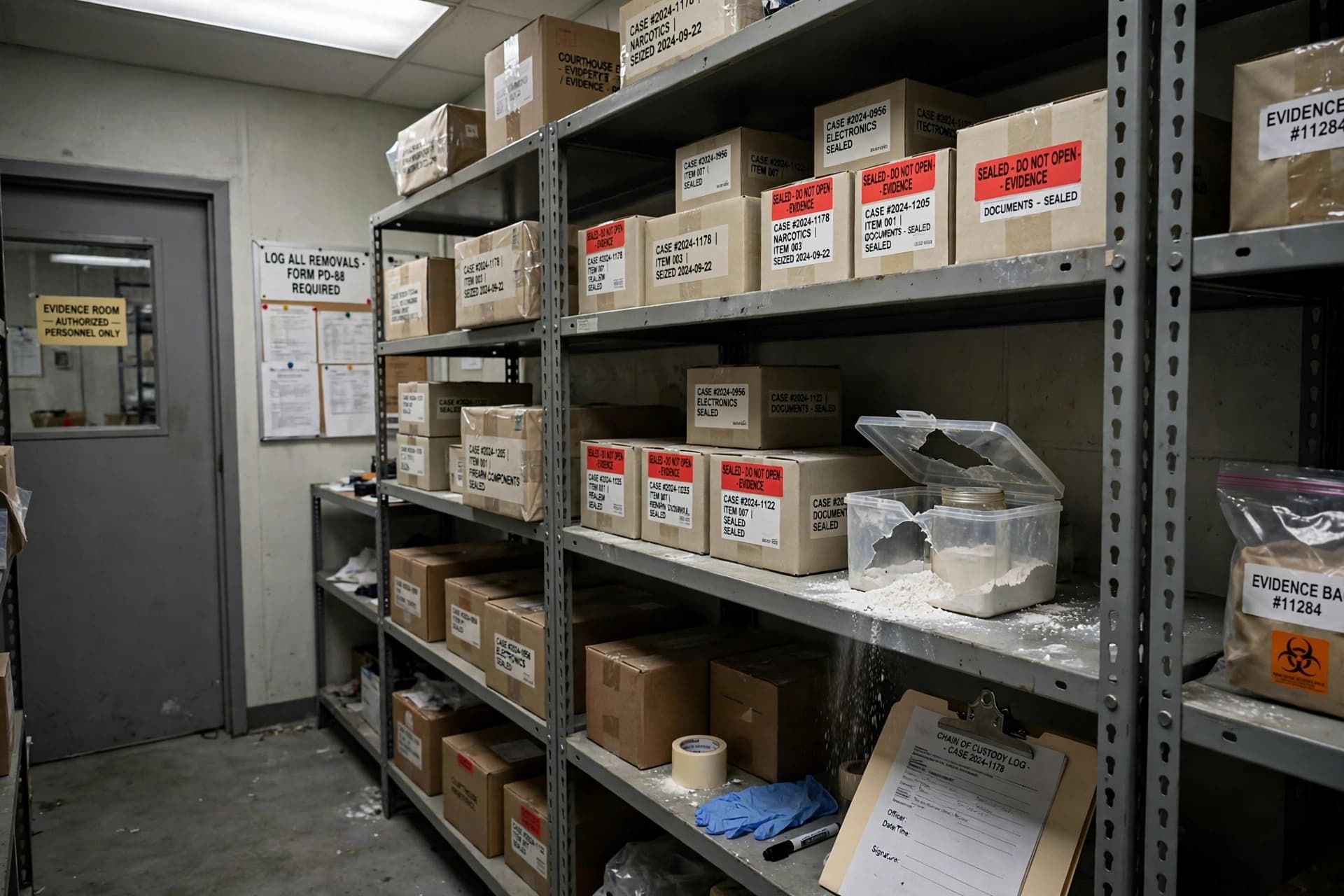
Evidence, in the language of a courtroom, is meant to be the anchor of truth—the object locked in a vault, carrying the full weight of guilt or innocence. But in Fiji's Suva High Court, the anchor for nearly forty kilograms of cocaine has been swapped for flour. When the scales of justice needed something to weigh, they found only baking ingredients, and the drugs themselves had long since vanished.
Fiji police confirmed this week that cocaine stored in the Suva High Court exhibit room for the long-running drug trial of dual Fijian-Canadian citizen Joshua Aziz Rahman had been replaced. Seven blocks of cocaine were first discovered missing, and forensic testing of the remaining thirty-two revealed they were all flour. In total, thirty-nine kilograms of cocaine are unaccounted for, with an estimated street value of up to fifteen million dollars.
Rahman was convicted in 2021 and sentenced to twenty-three years, but was released in February 2026 after a successful appeal. Prosecutors then successfully challenged that ruling, and the conviction was restored. During the lengthy appeals process, the cocaine remained in court storage until authorities prepared to destroy it this month and discovered the discrepancy.
Fiji police are focusing their investigation on "those directly responsible for managing exhibits in the High Court registry." A "stakeholder" in the case is currently overseas and will be questioned. Police revealed that CCTV cameras in the exhibit room partly failed during the period when the drugs were taken, and biometric security systems were also faulty. Police Commissioner Rusiate Tudravu said: "Once the cocaine is deposited at the Suva High Court exhibit room, we don't guard it there. They have their own arrangements."
The case is not isolated. Following public outcry, Fiji police further disclosed that another 12.9 kilograms of cocaine—from a 2018 raid on Australian horse trainer John Nikolic's yacht—had also disappeared from the exhibit room, bringing the total missing from Fiji court storage to more than fifty-two kilograms. Fiji Labour Party leader Mahendra Chaudhry has called for a high-level independent inquiry, questioning security arrangements at the High Court exhibit room and noting that the silence of the Chief Justice and Chief Registrar is troubling.
Fiji has in recent years become a front line for transnational drug trafficking in the Pacific. Prime Minister Sitiveni Rabuka dissolved the country's drug enforcement bureau last year after twenty-seven officers were brought to court on drug-related charges over three years. Assistant Police Commissioner Mesake Waqa has said corruption "has challenged us for quite some time," though he insisted the force "is not a corrupt institution." When even a court's evidence can be replaced by flour, what remains of public trust may be a heavier question than the missing cocaine itself.
AI Image Disclaimer: The visual materials in this article were produced by artificial intelligence and are used solely for illustrative purposes.
Sources: Australian Broadcasting Corporation, Fiji Sun, The Independent, Daily Mail, RNZ
Published by Banx Network. This article is part of the Banx decentralized media programme, powered by the BXE token on the XRP Ledger.