Planetary history is written in craters, atmospheres, and orbital dynamics, a narrative that spans billions of years. Venus, our sister planet, shares a similar size and composition with Earth, yet its evolution took a drastically different path. One intriguing mystery is the absence of a natural satellite. While Earth has the Moon and Mars has two small moons, Venus stands alone. A compelling hypothesis suggests that Venus may have once had a moon, only to consume it in a catastrophic collision. This idea invites us to reflect on the violent origins of our solar system and the fragile balance of celestial mechanics.
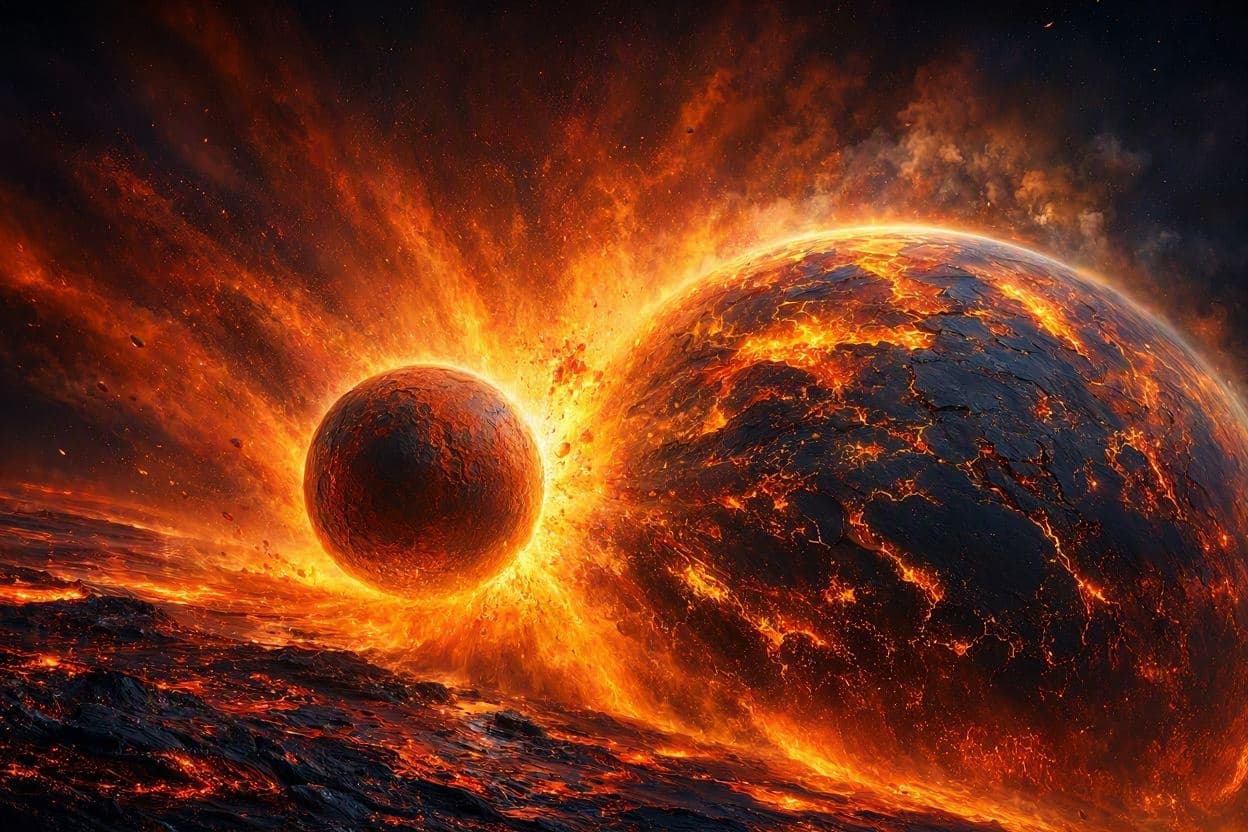
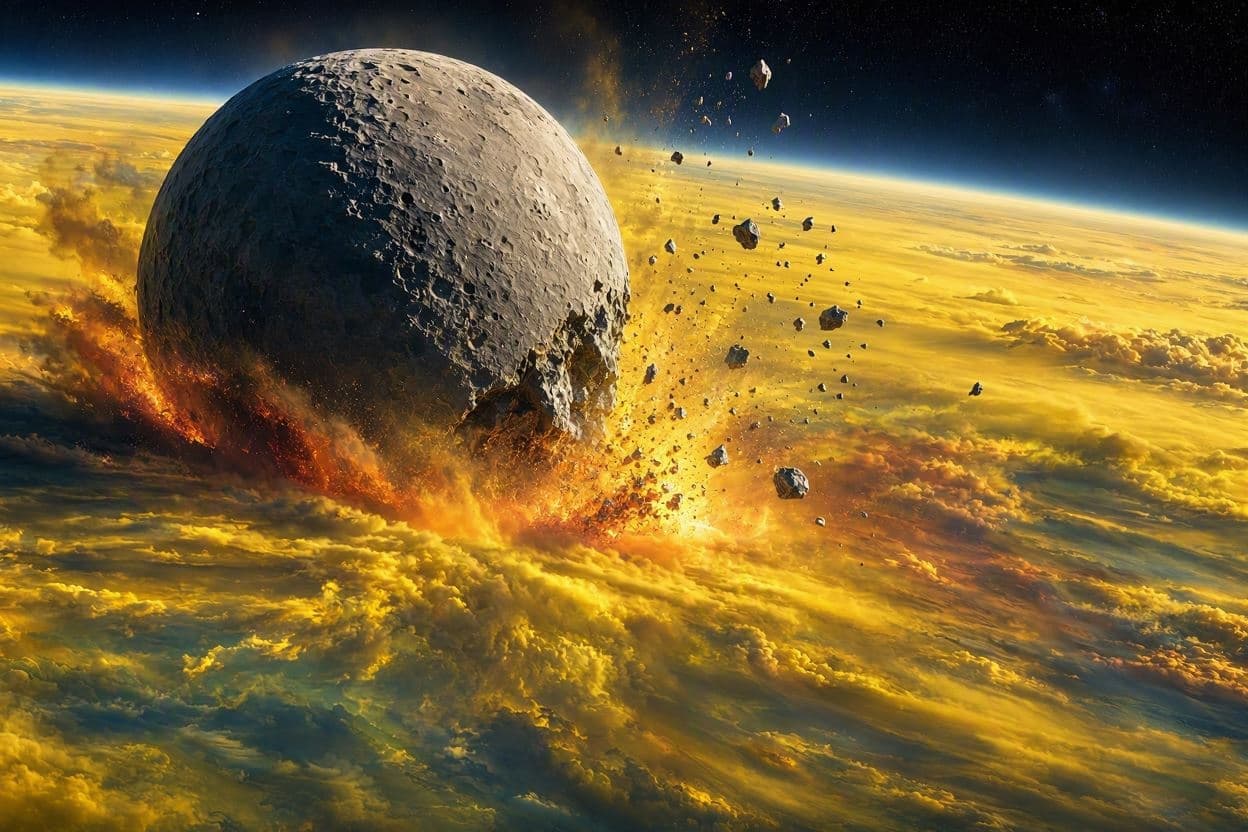
The theory proposes that early in the solar system’s history, a large impactor struck Venus, creating a moon from the debris. This moon would have orbited the planet for millions of years, gradually interacting with Venus’s thick atmosphere and gravitational field. Over time, tidal forces and atmospheric drag could have caused the moon’s orbit to decay, leading it to spiral inward until it crashed back into the planet. This "cannibalism" would have erased the evidence of the moon’s existence, leaving only subtle clues in Venus’s rotation and geology.
Support for this idea comes from simulations of planetary formation, which suggest that large impacts were common among terrestrial planets. Earth’s Moon is believed to have formed from such an impact, but Venus’s proximity to the Sun and its dense atmosphere may have created different conditions. The lack of a moon today implies that if one existed, it did not survive the long-term dynamical evolution of the planet.
Venus’s slow, retrograde rotation is another piece of the puzzle. Most planets spin in the same direction as their orbit, but Venus spins backward and very slowly. Some scientists argue that a massive collision or the gravitational influence of a lost moon could have altered its spin axis and rate. This unusual rotation affects the planet’s climate and geological activity, making it a unique case study in planetary science.
The atmosphere of Venus, thick with carbon dioxide and sulfuric acid clouds, also plays a role in this hypothesis. A moon orbiting within or near such a dense atmosphere would experience significant drag, accelerating its orbital decay. This process would be much faster than in the vacuum of space, explaining why Venus might have lost its satellite while Earth retained hers. The environment of the planet itself became the agent of its moon’s destruction.
Critics of the theory point out that there is no direct evidence of a past moon, such as specific isotopic signatures or geological features that clearly indicate a re-impact. Other explanations for Venus’s rotation include gravitational interactions with the Sun and other planets, or internal core-mantle dynamics. Without a sample return mission or more detailed seismic data, the moon-eating hypothesis remains speculative but plausible.
Future missions to Venus, such as NASA’s VERITAS and DAVINCI+, aim to study the planet’s surface and atmosphere in greater detail. These missions may provide data on Venus’s interior structure and history, helping to constrain models of its formation and evolution. Discoveries about the planet’s past could shed light on whether a moon ever existed and what happened to it.
The question of Venus’s missing moon reminds us of the diversity of planetary outcomes. Even planets that start similarly can end up vastly different due to chance events and environmental factors. It highlights the importance of comparative planetology in understanding our own Earth and the potential for life elsewhere. Every planet has a story, and Venus’s is one of mystery and transformation.
The hypothesis that Venus consumed its own moon offers a fascinating explanation for its lack of satellites and unusual rotation. It underscores the dynamic and violent nature of planetary history. Let us await further discoveries from upcoming missions.
AI Image Disclaimer: Please be aware that images used in this context are AI-generated visualizations for illustrative purposes.
Sources: Scientific American Nature Astronomy NASA Planetary Science Division
Published by Banx Network. This article is part of the Banx decentralized media programme, powered by the BXE token on the XRP Ledger.