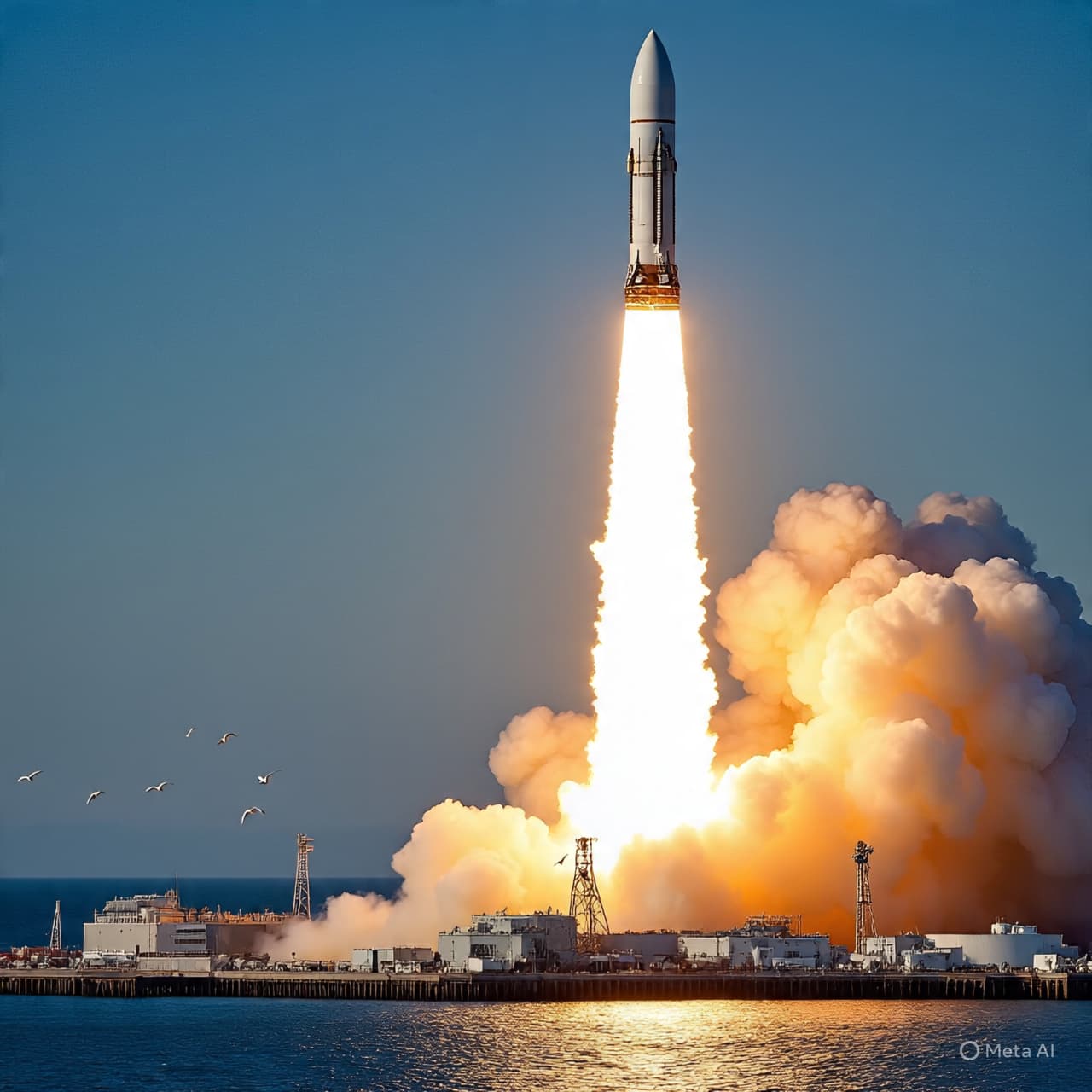
Progress in space is rarely linear. It advances in careful increments, interrupted at times by moments that force reflection rather than celebration. In Japan, one such moment arrived as the nation’s new flagship H3 rocket rose from the launch pad carrying both technological promise and national expectation.
The H3 rocket failed to place a geolocation satellite into its intended orbit after launch, marking another setback for Japan’s space ambitions. While the rocket lifted off successfully, a malfunction during the mission prevented the satellite from separating properly, ultimately leading to mission failure. Engineers later confirmed that the payload did not reach orbit and was lost.
The H3 program was designed to symbolize renewal. Developed to replace the aging H-2A series, the rocket was intended to be more cost-effective and competitive in a global launch market increasingly crowded by private operators. Its success was seen as central to maintaining Japan’s independent access to space, particularly for government and security-related missions.
This latest failure follows earlier delays and technical challenges that have slowed the program’s rollout. Space officials emphasized that the rocket itself performed as expected during initial flight stages, narrowing the focus of the investigation to systems involved in satellite deployment. Reviews are now underway to determine whether design changes or operational adjustments are required before future launches.
Despite the disappointment, Japanese officials struck a measured tone. Space development, they noted, has always involved risk, and setbacks are treated as data rather than defeat. The satellite’s loss is expected to affect geolocation services planning, but authorities stressed that backups and alternative arrangements remain in place.
As the launch site returned to quiet, the broader significance of the event lingered. For Japan, the H3 rocket represents not only engineering ambition but national resolve in a domain where patience is as essential as precision. The path forward now bends toward analysis, correction, and another attempt — reminders that in spaceflight, failure is often part of learning how to fly.
Published by Banx Network. This article is part of the Banx decentralized media programme, powered by the BXE token on the XRP Ledger.