There are moments when the silence after a countdown feels heavier than the roar of engines — when the horizon seems to hold its breath with us, waiting to see if our most daring ambitions will meet the sky as we hoped. For the NASA and its long-anticipated partnership with The Boeing Company on the Boeing CST‑100 Starliner, such a moment has arrived in the form of an official classification that underscores both the triumph and fragility of human spaceflight.
After months of review and investigation into the actions and anomalies of the first crewed Starliner flight test — which launched in June 2024 and encountered unplanned thruster failures and related problems during its journey to the International Space Station — NASA has designated the incident as a Type A mishap, the agency’s highest severity classification for mission failures. This label, reserved for events with the potential for significant harm, financial loss, or systemic failure, carries weight well beyond technical jargon; it is a public acknowledgment that the mission did not unfold as intended, despite the remarkable fact that both astronauts ultimately returned safely by alternative means.
At the core of this classification is not a single mechanical fault, but a convergence of challenges that stretched from propulsion system anomalies to procedural and leadership shortcomings. An independent investigation found that helium leaks and repeated thruster malfunctions during critical phases of the flight undermined the spacecraft’s control and safety margins. More than that, the report highlighted decision-making and operational culture issues — both within Boeing and, in some respects, within NASA itself — that may have contributed to risk acceptance rather than mitigation.
What makes this moment especially reflective is the juxtaposition of aspirations and outcomes. The Starliner was intended to expand the United States’ commercial crew capability, offering a redundant partner to SpaceX’s Crew Dragon for transporting astronauts to and from low Earth orbit. Instead, the test flight’s troubles revealed weaknesses that demand scrutiny and correction, reinforcing the reality that space exploration — no matter how advanced our technology — remains a domain where rigorous safety culture is inseparable from innovation.
NASA Administrator Jared Isaacman has not shied away from acknowledging these complexities. In statements accompanying the mishap classification, he emphasized that identifying and addressing organizational and leadership issues is as critical as remedying hardware shortcomings. The language of accountability echoes a broader intent: to shape not only a vehicle that can fly safely, but a process that supports human spaceflight with integrity.
This approach resonates with the wider ethos of scientific progress, where errors are not erased but examined, where setbacks become lessons. Just as the agency’s history includes moments of loss that reshaped its practices, today’s decision underscores the importance of transparency and diligence. It is a reminder that exploration is as much about the conditions that allow humans to venture as it is about the destinations themselves.
The designation of a Type A mishap also bears practical implications. Starliner will remain grounded for crewed missions until corrective actions, technical verifications, and cultural improvements are thoroughly implemented. NASA and Boeing continue to work collaboratively on resolving the identified issues, with future flights — including uncrewed test missions — contingent on meeting stringent safety standards.
In gentle news, the classification does not signify abandonment of the Starliner program, but rather a recalibration of expectations and responsibilities. NASA has affirmed its commitment to maintaining a robust commercial crew capability, and Boeing has indicated ongoing efforts to implement the corrective recommendations. This shared focus reflects the broader horizon of human spaceflight, where challenges are met not with retreat but with reflection and resolve.
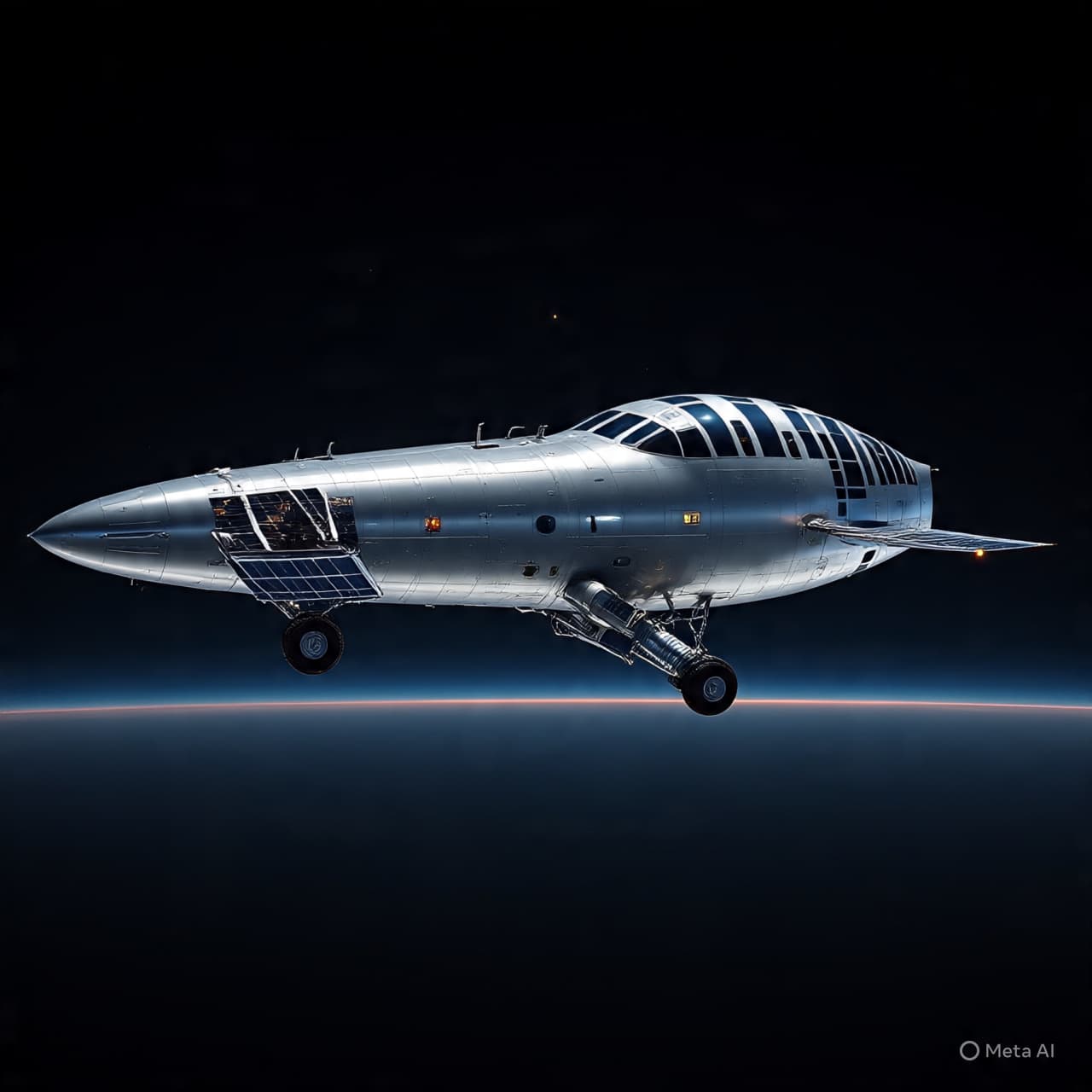
AI Image Disclaimer Visuals are created with AI tools and are not real photographs.
Sources
Reuters Associated Press CNN Space.com The New York Times
Published by Banx Network. This article is part of the Banx decentralized media programme, powered by the BXE token on the XRP Ledger.