Endings are rarely announced outright. They are usually felt first, sensed in the way familiar patterns no longer hold, in the quiet realization that the rules governing yesterday no longer explain today. When leaders speak of endings, they often mean transitions already underway.
Canada’s prime minister chose language that cut through diplomatic caution, declaring that “the world as we know it” has come to an end. The phrase landed heavily, not as a prediction of collapse, but as an acknowledgment that the assumptions shaping global politics, trade, and security have shifted beyond repair.
The statement was not rooted in apocalypse, but in accumulation. Years of geopolitical fragmentation, economic nationalism, technological rivalry, and climate stress have reshaped the global order piece by piece. What once felt like disruption now resembles a new baseline.
At the center of this reckoning is the erosion of certainty. The post–Cold War framework—defined by expanding trade, stable alliances, and broadly shared rules—no longer functions as it once did. Markets are more defensive. Supply chains are shorter and more political. Security guarantees are spoken aloud rather than assumed.
For Canada, a country whose prosperity has long depended on openness and predictability, the change is especially stark. The prime minister’s words reflected a recalibration underway in many middle powers: a recognition that reliance on global norms must now be paired with resilience against their failure.
The language of an ending also carries warning. It suggests that waiting for restoration is no longer a strategy. Governments must adapt to a world where cooperation is conditional, where power is asserted more openly, and where economic relationships are increasingly shaped by trust rather than efficiency.
Yet the declaration was not purely pessimistic. To name an ending is also to acknowledge agency. If the old order is gone, then new arrangements must be built deliberately, rather than inherited passively. Strategy replaces assumption. Alignment replaces habit.
What follows matters more than the phrase itself. Whether this moment produces fragmentation or renewal depends on how states respond to the vacuum left behind. History shows that periods of transition can harden into conflict—or open space for reimagined stability.
The world, of course, does not end when a leader says it has. But language has power. It signals permission to think differently, to act with urgency, to abandon the comfort of expecting continuity.
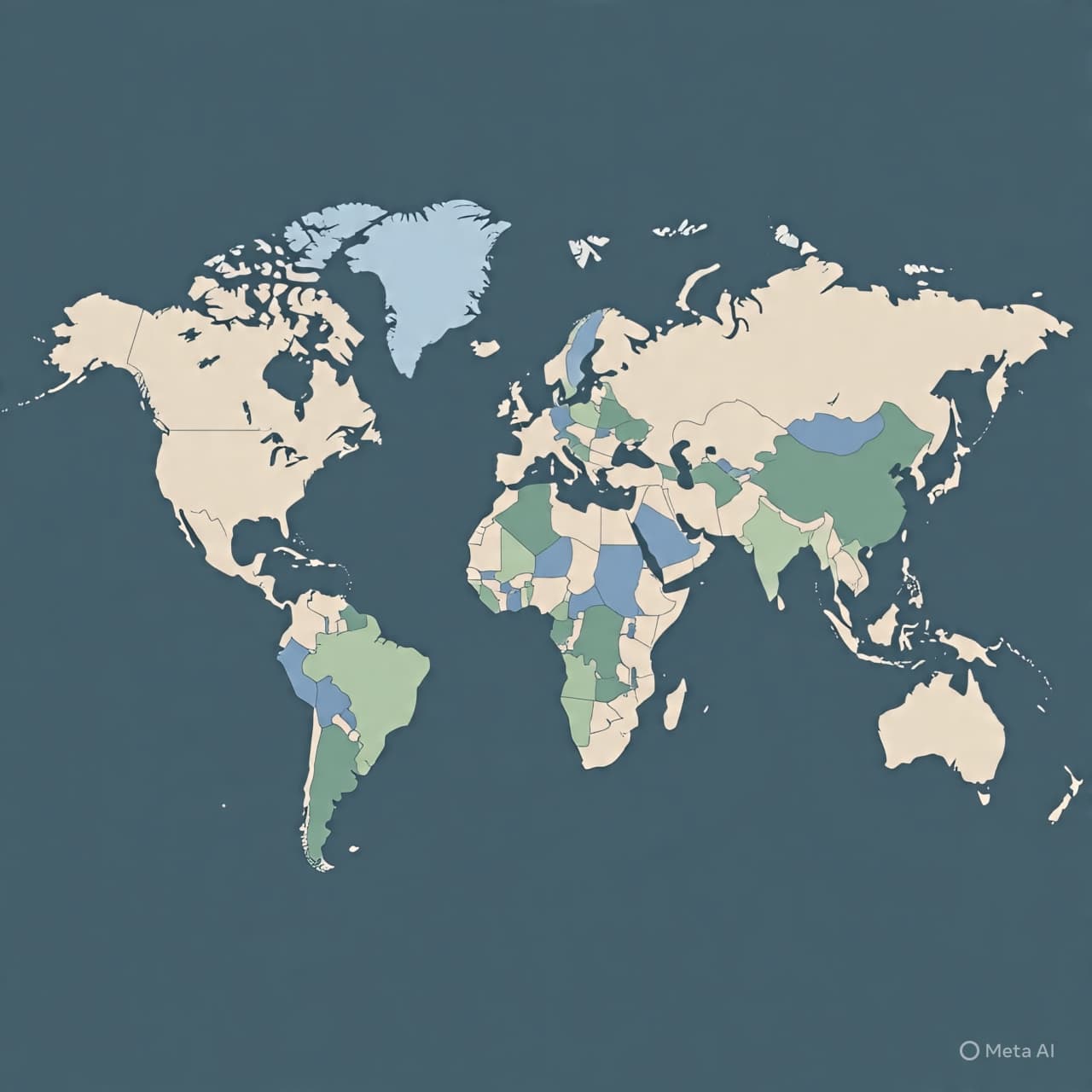
Canada’s prime minister spoke less as a prophet than as a witness, naming a reality already visible across borders and markets. The familiar map remains, but the paths across it have changed. The challenge now is not mourning what ended, but deciding what comes next.
AI Image Disclaimer Visuals are AI-generated and serve as conceptual representations.
Sources (names only) Reuters Financial Times Bloomberg The Economist Associated Press
Published by Banx Network. This article is part of the Banx decentralized media programme, powered by the BXE token on the XRP Ledger.