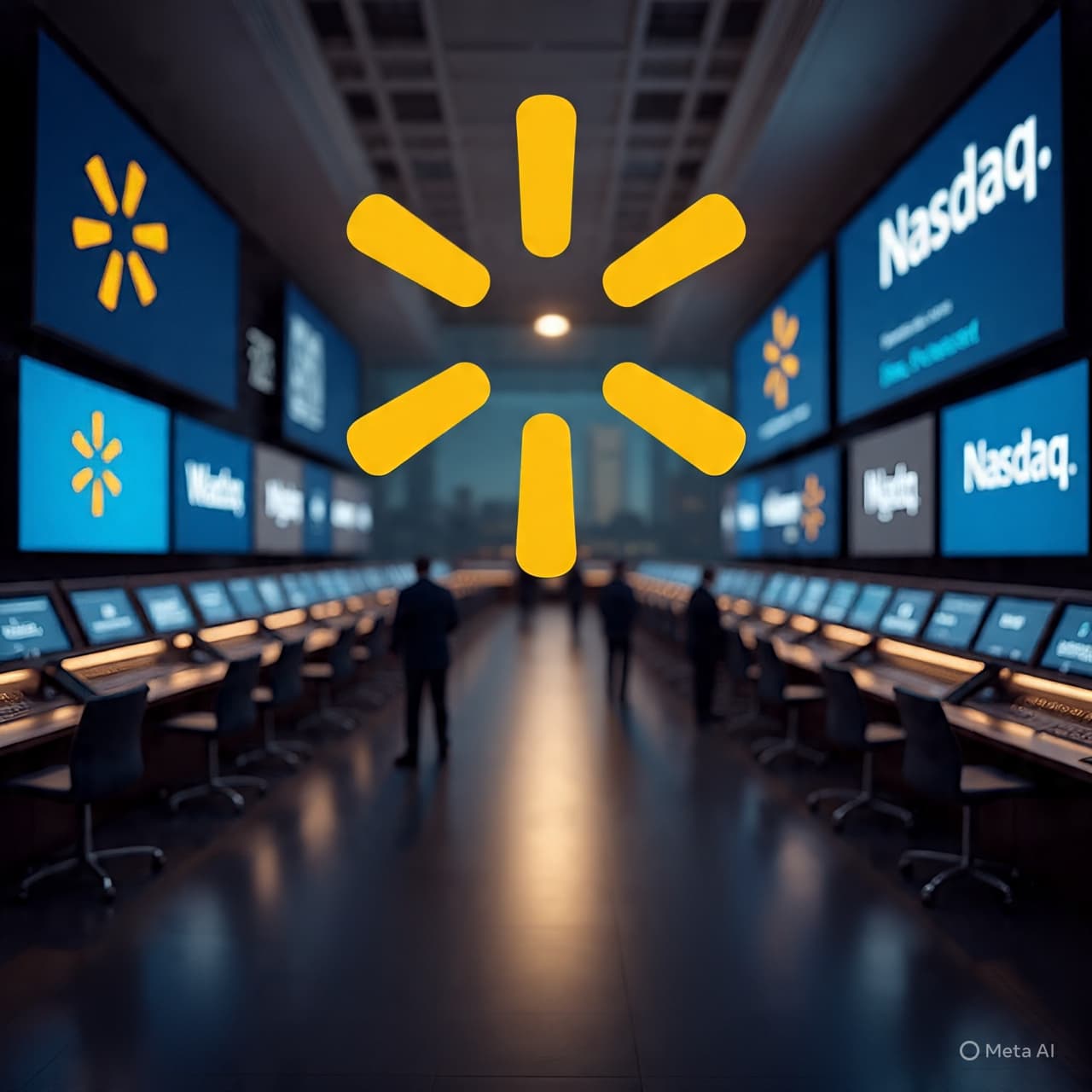
Corporate reinventions rarely announce themselves loudly. Sometimes they unfold in subtle decisions—a new logo, a revised tagline, or, in Walmart’s case, a departure from one of the most iconic financial stages in the world. The retail giant’s decision to leave the New York Stock Exchange and list on NASDAQ marks a moment of quiet but unmistakable recalibration, the kind that signals not just where a company trades, but where it hopes to go.
For decades, Walmart’s presence on the NYSE symbolized its standing as a traditional American powerhouse: vast, familiar, and anchored in brick-and-mortar dominance. But as the retail landscape shifts toward algorithmic logistics, data-driven personalization, and AI-shaped inventory systems, the company appears eager to align with an exchange increasingly associated with technology-leaning ambition. In a way, the move is less about geography and more about identity.
Executives framed the switch as part of a broader rebranding effort—an attempt to reflect how a company once defined by supercenters now operates as a global hybrid of physical and digital infrastructure. Walmart’s growing emphasis on automation, cloud partnerships, and marketplace integrations has altered its internal makeup. The NASDAQ, with its tech-forward halo, seems a fitting match.
Market analysts note that the change will have little impact on day-to-day operations or investor access. But symbolically, it positions Walmart closer to the companies it increasingly competes with, learns from, and imitates—organizations that built their empires on code as much as on customers. In a marketplace where optics travel as far as strategy, even a shift in ticker venue can carry meaning.
Still, this is no rupture with Walmart’s past. The company remains grounded in the discipline that made it a fixture of American retail. Yet the migration signals a willingness to be seen differently, perhaps even to be judged by standards once reserved for Silicon Valley contenders. In an age of rapid reinvention, Walmart appears ready to inhabit a narrative that stretches beyond aisles and warehouses.
Whether this rebranding ushers in measurable transformation or simply reframes public perception, the moment underscores a broader truth: even the most established companies must redraw their outlines to stay legible in a changing market.
Published by Banx Network. This article is part of the Banx decentralized media programme, powered by the BXE token on the XRP Ledger.