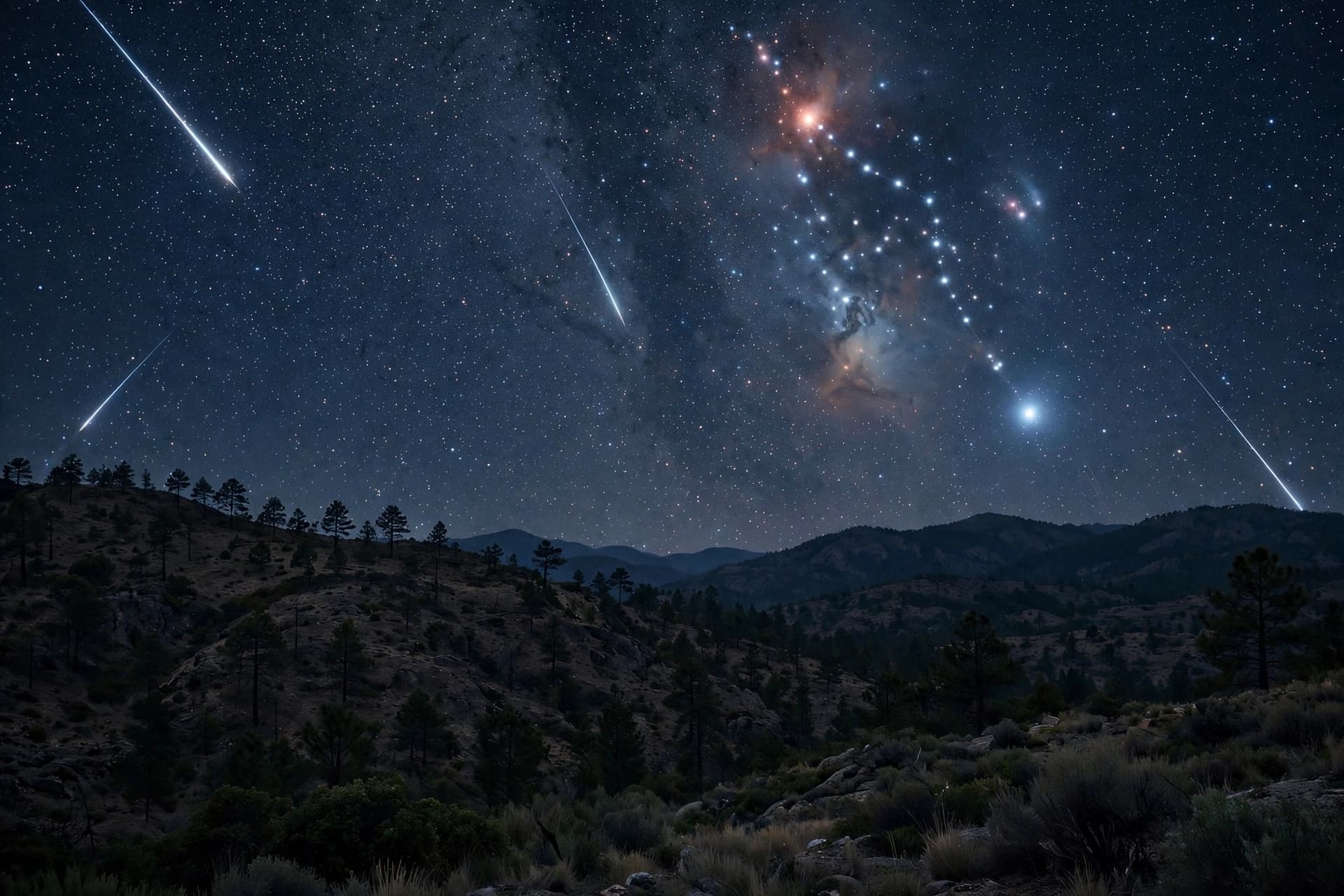
There are nights on Earth when the sky seems to remember its ancient magic. Curtains of green and violet sway above the poles, and for a brief moment, humanity stands quietly beneath the dance of light. We call them the northern lights, but perhaps they are more than spectacle — perhaps they are conversation, a soft exchange between planet and star.
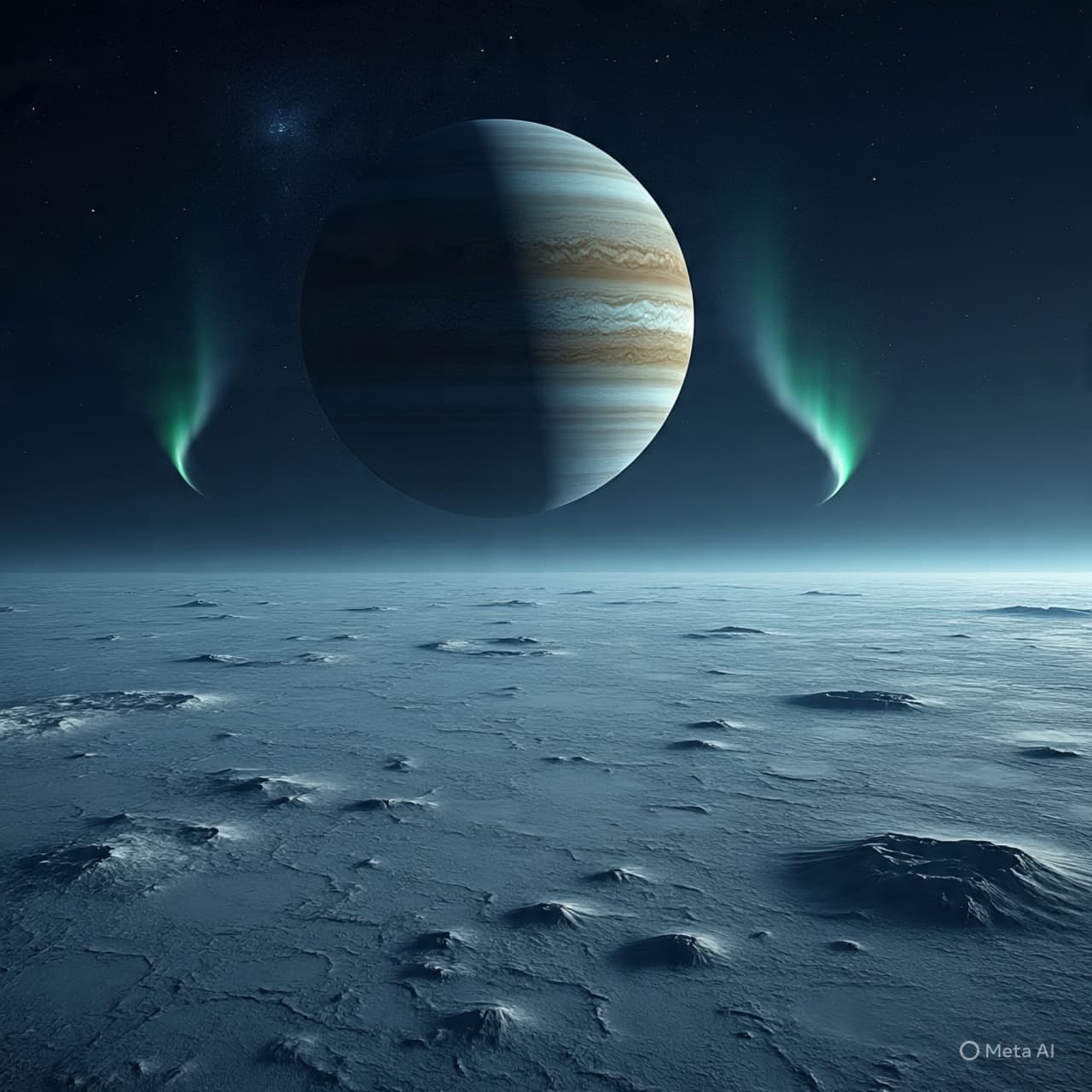
Far beyond our winter skies, in the cold reaches of the outer solar system, a similar whisper has now been observed. On — the largest moon orbiting — shimmering auroras ripple across an alien horizon. And thanks to observations from spacecraft, these distant lights appear strikingly similar to Earth’s own luminous displays.
The discovery is not merely poetic; it is scientific revelation wrapped in beauty. Ganymede is unique among moons in our solar system. It is the only moon known to possess its own intrinsic magnetic field — a protective bubble carved into space, much like Earth’s. When charged particles streaming from the sun and from Jupiter’s powerful magnetosphere collide with this magnetic shield, they ignite glowing auroras near the moon’s poles.
What makes the new observations compelling is how closely these auroras resemble those on Earth. Instruments aboard NASA spacecraft studying Jupiter’s system detected emissions in ultraviolet light, revealing oval-shaped auroral patterns dancing above Ganymede’s icy surface. Though invisible to the human eye, these emissions paint a familiar portrait: magnetic field lines guiding charged particles toward polar regions, energy released as radiant light.
Yet Ganymede’s auroras tell a deeper story. Scientists have long suspected that beneath its thick crust of ice lies a vast, salty ocean. The behavior of the auroras — their subtle rocking motion in response to Jupiter’s magnetic pull — provides indirect but persuasive evidence of that hidden sea. A subsurface ocean would conduct electricity, influencing how the magnetic field shifts and how the auroras sway. In this way, light becomes a messenger from beneath the ice.
It is a quiet reminder that even in the solar system’s cold outskirts, complexity thrives. Jupiter’s immense gravity shapes the environment, its magnetosphere towering and intense. But within that giant’s shadow, Ganymede maintains its own magnetic identity, standing apart from other moons. The interplay between Jupiter and its moon creates a delicate choreography of forces — invisible currents shaping luminous arcs in the dark.
For researchers, these findings deepen understanding of magnetic environments beyond Earth. For dreamers, they expand the imagination. If auroras shimmer above Ganymede’s frozen plains, what other hidden oceans and magnetic worlds await discovery? The universe often reveals its secrets not in thunderous declarations, but in quiet glows at the edge of vision.
As NASA and international partners continue exploring Jupiter’s realm, including upcoming missions focused on its icy moons, Ganymede’s lights will remain an emblem of possibility. They are not merely reflections of Earth’s beauty, but variations on a cosmic theme — proof that the dialogue between star and world echoes across vast distances.
In the end, the image is simple yet profound: a moon orbiting a giant planet, wrapped in invisible magnetism, crowned with auroras that mirror our own. It suggests that while worlds may differ in size, temperature, and distance, the physics that binds them is shared. And sometimes, that shared language appears as light moving silently through the dark.
AI Image Disclaimer Visuals are created with AI tools and are not real photographs.
Sources NASA European Space Agency Space.com CNN The Associated
Published by Banx Network. This article is part of the Banx decentralized media programme, powered by the BXE token on the XRP Ledger.