Key Highlights
- Ontario Premier Doug Ford proposes a takeover of Billy Bishop Airport.
- The plan aims to modernize the airport and expand air travel options.
- Concerns about noise and environmental impact persist among local residents.
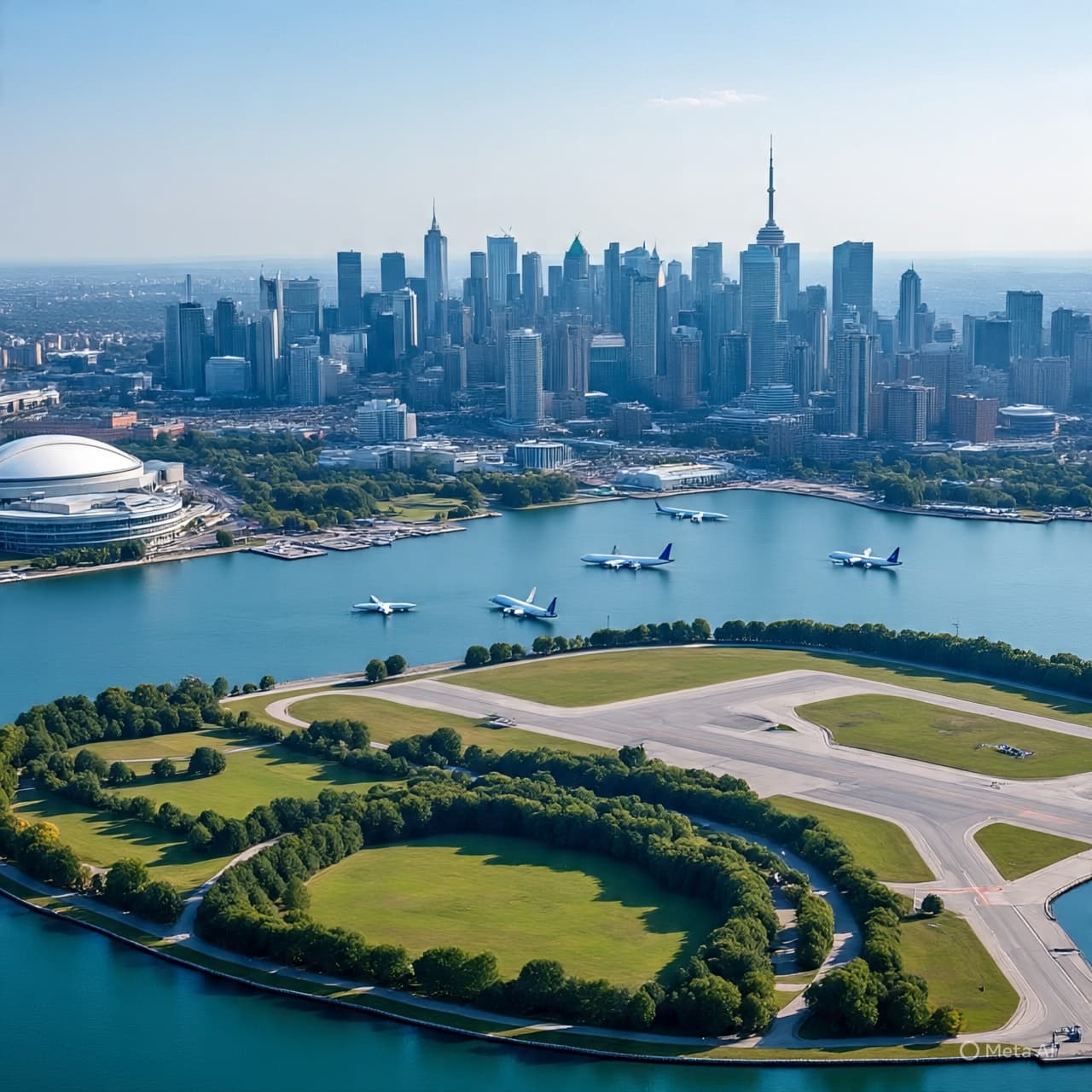
Billy Bishop Toronto City Airport, nestled on the edge of Toronto’s harbour, has long served as a vital link between the city and the world. With its picturesque views and strategic location, the airport has become a focal point of discussion regarding urban transportation and development. Recently, Ontario Premier Doug Ford announced plans for the provincial government to take over the City of Toronto's stake in the airport, a move he argues will facilitate modernization and expansion.
In his remarks, Ford emphasized the potential benefits of expanding Billy Bishop Airport, suggesting that it could accommodate quieter, modern jets. This expansion could enhance competition in the air travel market, providing travelers with an alternative to Toronto Pearson International Airport, one of North America's busiest hubs. Ford referred to the airport as a “crown jewel” of the region, highlighting its role as an economic engine that could bolster jobs, tourism, and business travel.
The governance of Billy Bishop Airport is complex, shaped by a tripartite agreement involving the City of Toronto, the Toronto Port Authority, and the federal government. Established in the early 1980s, this framework has created a system where significant changes require consensus among all parties. Currently, the City of Toronto owns approximately 20 percent of the airport's land, while the Toronto Port Authority holds the majority, and the federal government retains a smaller share.
Historically, the airport has been limited in the types of aircraft it can accommodate, primarily serving turboprop planes due to restrictions on runway length and aircraft type. Advocates for expansion argue that updating these restrictions could unlock new economic opportunities. They contend that modern aircraft are quieter and more efficient, which could expand flight routes while minimizing noise for nearby communities.
However, the airport's proximity to residential areas has made expansion proposals contentious. Local residents and officials have consistently raised concerns about environmental impacts, noise pollution, and the potential transformation of the waterfront. Previous attempts to extend the runway or allow larger aircraft have faced significant opposition at both municipal and federal levels.
Ford has acknowledged these concerns, stating that the province would work to mitigate noise and engage with affected communities. He framed the airport's expansion as part of a broader transportation strategy necessary for a growing city and province. Additionally, he indicated that the province would compensate Toronto for any lost revenue from its stake in the airport, which is estimated to be several million dollars annually.
As discussions progress, the future of Billy Bishop Airport remains uncertain. Any changes to governance will likely require negotiations with other stakeholders and potential adjustments to existing agreements that dictate the airport's operations. The airport stands at a crossroads, embodying the intersection of geography and policy, and its future may reflect broader conversations about urban growth, mobility, and governance in Toronto.
As the dialogue continues, the fate of Billy Bishop Airport will not only impact air travel but also shape the urban landscape and the relationship between the city and its waterfront.
Published by Banx Network. This article is part of the Banx decentralized media programme, powered by the BXE token on the XRP Ledger.