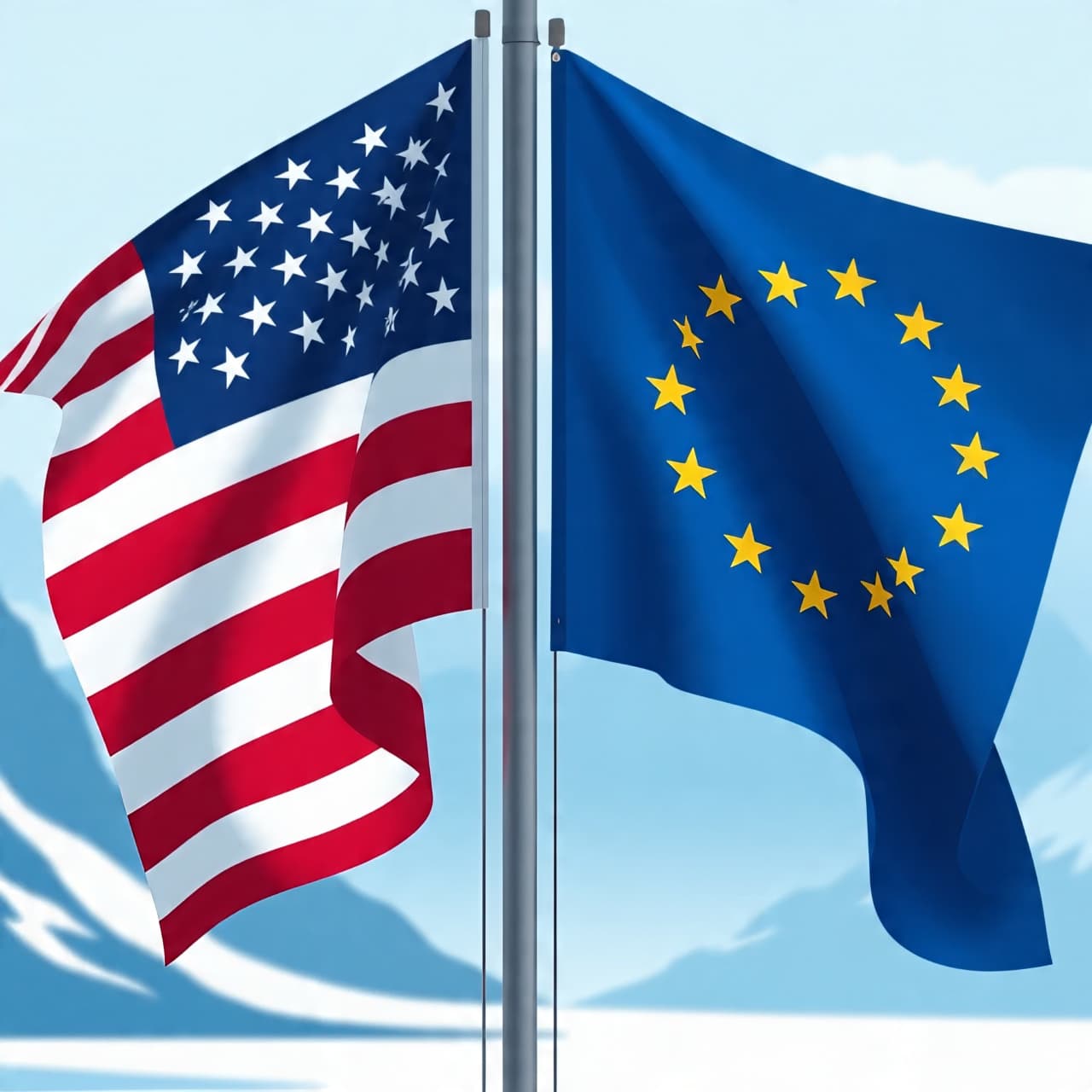
There are moments in history when a longstanding partnership feels less like a well‑worn tapestry and more like a rope bridge swaying in a gust of wind reassuringly strong at its center, yet marked by new strains the further one ventures from solid ground. In the current chapter of transatlantic relations, those strains have grown more visible. What was once an alliance grounded in shared post‑war commitments now shows signs of tension and re‑evaluation, as recent moves by the U.S. presidency have prompted deep reflection in capitals from Copenhagen to Paris.
For decades, the bond between the United States and its European allies was woven from common interests in security, democracy, and economic interdependence. Yet even such enduring threads can fray as leaders pursue shifting priorities and strategic horizons. In the early months of 2026, U.S. President Donald Trump’s revived push to assert American interests in the Arctic notably the controversial insistence on acquiring Greenland has reverberated far beyond the North Atlantic ice. His linkage of this Arctic pursuit to trade threats, and even to a personal disappointment over the Nobel Peace Prize, has unsettled European partners and ignited debates about the very nature of the alliance.
The echoes of that debate are not confined to rhetorical headlines. Threats to impose tariffs on goods from multiple European nations unless Greenland were ceded to U.S. control have raised alarms in Brussels and beyond. European Union officials are reportedly preparing retaliatory trade measures under the bloc’s anti‑coercion framework, a tool designed to defend against economic pressure. At the same time, some NATO members have dispatched additional forces to Greenland to bolster Arctic security and affirm their sovereignty, underscoring how closely economic and strategic considerations are now intertwined.
These developments have unfolded against a backdrop of broader unease about the transatlantic partnership. Many European leaders have expressed increased wariness over shifts in U.S. policy from transactional rhetoric to unconventional diplomacy prompting internal discussions about the future architecture of collective defense and cooperation. Some analysts suggest that European countries are contemplating a more self‑reliant defense posture or reassessing assumptions about the role of the United States in regional security, even as formal commitments like NATO’s Article 5 remain intact.
Still, neither side has walked away from the alliance. Convenings like the upcoming World Economic Forum in Davos have become focal points for transatlantic dialogue, where U.S. and European leaders seek to bridge their differences through diplomacy and candid conversation. At its best, this sort of engagement reflects a recognition that even in times of strain, the benefits of cooperation shared security, economic exchange, and coordinated global policy often outweigh unilateral alternatives.
In straight terms, recent tensions have been driven in part by President Trump’s public efforts to secure Greenland and by his administration’s tariff threats targeting several European nations. These moves have prompted diplomatic pushback from Denmark, the EU, and NATO allies, with discussions underway about retaliatory economic measures and reaffirmations of mutual defense commitments. European officials are urging calm and adherence to international norms as all sides navigate an alliance at a crossroads.
AI Image Disclaimer “Graphics are AI‑generated and intended for representation, not reality.”
Sources Reuters, AP News, Guardian, IMF analysis, Financial Times context via news reports.
Published by Banx Network. This article is part of the Banx decentralized media programme, powered by the BXE token on the XRP Ledger.