Some parts of the universe seem designed to stretch our sense of scale until numbers lose meaning. Black holes, with their quiet gravity and violent edges, often force us into that place of awe. And once again, astronomers have witnessed something extraordinary: a black hole unleashing winds so powerful they race outward at nearly 130 million miles per hour — a speed that feels almost mythic, as if physics itself were trying to speak in a language we have barely begun to learn.
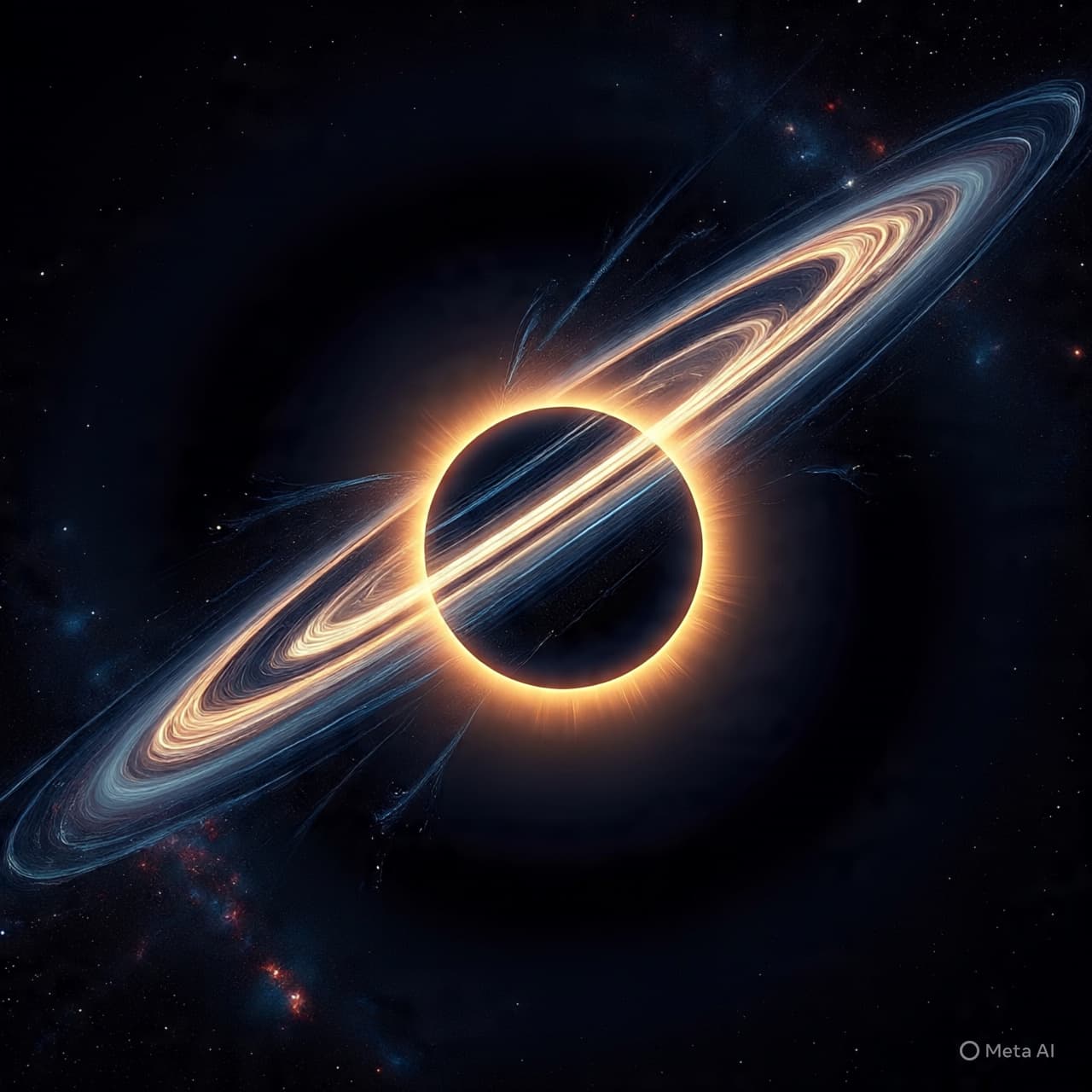
Researchers described the outflow as a kind of cosmic storm, forged near the event horizon where matter is shredded, heated, and accelerated. These winds are not gentle breezes but torrents of energized particles, flung outward from the black hole’s accretion disk with astonishing force. Instruments studying the region detected signatures of this blast, revealing the scale, temperature, and ferocity of material being hurled into space.
Such winds can reshape entire galaxies. By expelling gas and dust, they influence star formation, extinguish or ignite cosmic nurseries, and alter the balance of light and matter across thousands of light-years. The black hole at the center of this observation appears to be performing that very work — carving, sculpting, and redistributing the environment around it in ways both destructive and beautifully precise.
Scientists note that this phenomenon is also a reminder of how dynamic black holes truly are. They are not simple cosmic drains, passively consuming everything around them. Instead, they act as engines, converting gravitational fury into jets, winds, and radiation that ripple outward into the cosmos. This newest discovery adds another layer to the puzzle, offering data that could sharpen our understanding of how these powerful objects evolve.
What stands out most is not just the velocity of the wind but the sense of scale it conveys. A force moving at 130 million miles per hour defies personal reference. It is faster than intuition allows, faster than human experience can anchor. Yet it is happening, far beyond our planet, in a corner of the universe where matter dances at the threshold of oblivion.
As measurements continue and researchers refine their models, these winds may become a key piece of the broader mystery — how black holes shape galaxies, regulate cosmic growth, and influence the grand architecture of space itself. For now, the discovery stands as a reminder that the universe still holds wonders large enough to humble even the most practiced imagination.
Published by Banx Network. This article is part of the Banx decentralized media programme, powered by the BXE token on the XRP Ledger.