For years, the internet has been built on a simple model: creators produce content, and platforms profit from it. Whether it’s social media posts, YouTube videos, music, blogs, or artwork, the platforms traditionally control how content is distributed, monetized, and stored.
Web3 introduces an internet powered by decentralization and blockchain technology where users and creators can finally own their digital content outright, instead of handing control to centralized companies.
So, What Is Web3 Content Ownership?
Web3 content ownership means that your digital creations articles, videos, music, photos, artwork, and more — can be recorded as assets on the blockchain. This creates a transparent and verifiable record proving who owns what, without relying on a platform to “grant” you rights.
Ownership no longer lives in a company’s database. It lives in your crypto wallet just like cryptocurrency.
This shift is powered by technologies such as:
NFTs and Tokenized Content
NFTs (Non-Fungible Tokens) allow creators to mint content as unique digital assets. This means:
The creator is the verified owner Ownership can be transferred or sold Smart contracts automate royalty payments Scarcity and authenticity are preserved
A musician, for example, can release a song as an NFT with built-in royalties meaning every resale continues to pay them automatically.
That’s something Web2 platforms simply couldn’t offer.
Decentralized Storage and Distribution
Instead of storing files on centralized servers that can delete, censor, or restrict access, Web3 allows content to be stored on decentralized networks like IPFS or Arweave.
This makes content:
Harder to censor Resistant to platform bans Accessible globally Independent of any single company
Your work belongs to you and stays online regardless of what happens to a platform.
Why Web3 Content Ownership Matters
This new model unlocks huge benefits for creators:
1. True Digital Ownership
You control the rights, licensing, and usage of your content not the platform.
2. Fair Monetization
Web3 enables:
Direct crypto payments
Token-gated access
Collectible content
Automated royalties
Middlemen don’t drain the value creators and communities do.
3. Transparency and Trust
Ownership is recorded transparently on-chain, reducing disputes or exploitation.
4. Freedom from Centralized Control
Content can’t simply be deleted, demonetized, or shadow-banned without explanation.
Web3 content ownership is already happening across industries:
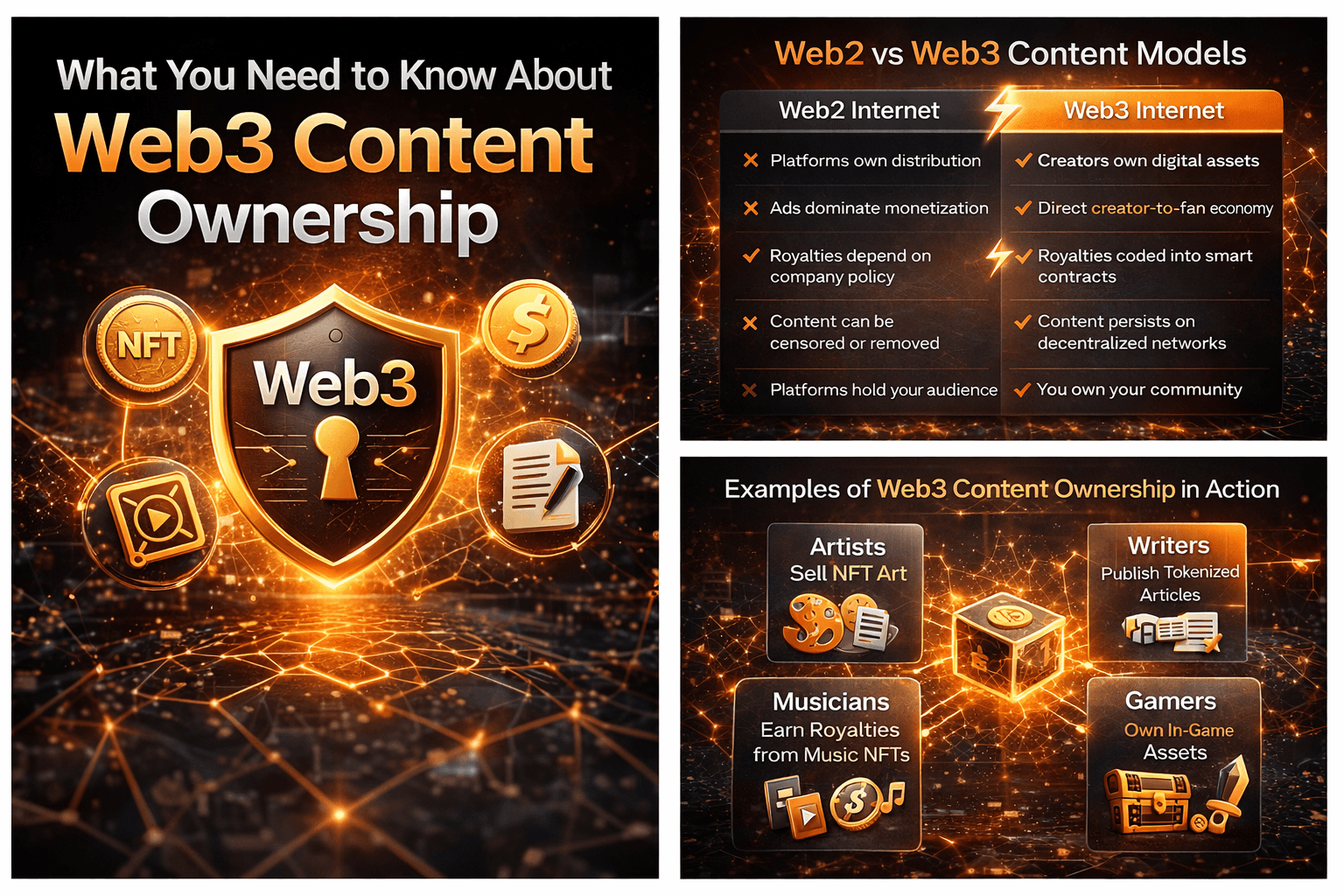
🎨 Digital artists selling NFT art 🎵 Musicians earning royalties from music NFTs 📰 Writers & journalists publishing tokenized articles 🎮 Gamers owning in-game assets 📹 Creators offering exclusive NFT-based memberships
Communities are no longer just “followers” they become participants and co-owners in the ecosystem.
But It’s Not Perfect Yet
Web3 is still evolving Challenges include:
Legal frameworks are still developing
Gas fees and blockchain costs can vary
Wallet and security risks exist
Copyright enforcement remains complex
Scams or hype-driven projects can mislead users
So while the technology is powerful, education and awareness are essential.
The Future of Content in Web3
Web3 opens the door to a world where: Creators keep ownership permanently Fans invest directly in creators Media is censorship-resistant Value flows fairly and transparently
This isn’t just a technological upgrade. It’s a shift in digital freedom, transparency, and economic empowerment.For years, the internet has been built on a simple model: creators produce content, and platforms profit from it. Whether it’s social media posts, YouTube videos, music, blogs, or artwork, the platforms traditionally control how content is distributed, monetized, and stored.
Web3 introduces an internet powered by decentralization and blockchain technology where users and creators can finally own their digital content outright, instead of handing control to centralized companies.
So, What Is Web3 Content Ownership?
Web3 content ownership means that your digital creations articles, videos, music, photos, artwork, and more — can be recorded as assets on the blockchain. This creates a transparent and verifiable record proving who owns what, without relying on a platform to “grant” you rights.
Ownership no longer lives in a company’s database. It lives in your crypto wallet just like cryptocurrency.
This shift is powered by technologies such as:
NFTs and Tokenized Content
NFTs (Non-Fungible Tokens) allow creators to mint content as unique digital assets. This means:
The creator is the verified owner Ownership can be transferred or sold Smart contracts automate royalty payments Scarcity and authenticity are preserved
A musician, for example, can release a song as an NFT with built-in royalties meaning every resale continues to pay them automatically.
That’s something Web2 platforms simply couldn’t offer.
Decentralized Storage and Distribution
Instead of storing files on centralized servers that can delete, censor, or restrict access, Web3 allows content to be stored on decentralized networks like IPFS or Arweave.
This makes content:
Harder to censor Resistant to platform bans Accessible globally Independent of any single company
Your work belongs to you and stays online regardless of what happens to a platform.
Why Web3 Content Ownership Matters
This new model unlocks huge benefits for creators:
1. True Digital Ownership
You control the rights, licensing, and usage of your content not the platform.
2. Fair Monetization
Web3 enables:
Direct crypto payments
Token-gated access
Collectible content
Automated royalties
Middlemen don’t drain the value creators and communities do.
3. Transparency and Trust
Ownership is recorded transparently on-chain, reducing disputes or exploitation.
4. Freedom from Centralized Control
Content can’t simply be deleted, demonetized, or shadow-banned without explanation.
Web3 content ownership is already happening across industries:
🎨 Digital artists selling NFT art 🎵 Musicians earning royalties from music NFTs 📰 Writers & journalists publishing tokenized articles 🎮 Gamers owning in-game assets 📹 Creators offering exclusive NFT-based memberships
Communities are no longer just “followers” they become participants and co-owners in the ecosystem.
But It’s Not Perfect Yet
Web3 is still evolving Challenges include:
Legal frameworks are still developing
Gas fees and blockchain costs can vary
Wallet and security risks exist
Copyright enforcement remains complex
Scams or hype-driven projects can mislead users
So while the technology is powerful, education and awareness are essential.
The Future of Content in Web3
Web3 opens the door to a world where: Creators keep ownership permanently Fans invest directly in creators Media is censorship-resistant Value flows fairly and transparently
This isn’t just a technological upgrade. It’s a shift in digital freedom, transparency, and economic empowerment.
Published by Banx Network. This article is part of the Banx decentralized media programme, powered by the BXE token on the XRP Ledger.