The landscape of Mars has a way of making the familiar strange. There are valleys and ridges, dust and rock, terrain that could almost belong to a desert on Earth if not for the color of the sky and the absence of any living thing. NASA's Perseverance rover has spent more than five years exploring one small corner of this alien world, and this year it began a journey into what its mission team calls the "Wild West"—a region west of Jezero Crater's rim where the rocks are older than anything the rover has yet encountered.
The area, known as "Lac de Charmes," lies beyond the crater floor where Perseverance landed in 2021. It is a frontier in the literal sense: a place where the rover's path has required careful navigation through valleys and ridges, collecting data along the way that helps scientists piece together the geological history of the region. The rocks here are igneous, formed from cooling lava or magma, or perhaps from the violence of an ancient impact. They date to a time when Mars was still a young planet, bombarded by asteroids, long before the sedimentary rocks of Jezero Crater formed in rivers and lakes.
For scientists, these ancient rocks are a window into the earliest era of Martian history. They may hold clues about how rocky planets evolved during the tumultuous early history of the solar system—a period that Earth's own geological record has largely erased through plate tectonics and erosion. Mars, with its dormant geology, has preserved a record that Earth has lost.
The rover's journey to this region has been supported by a quiet but significant technical achievement. A processor originally intended to enable communication with the Ingenuity helicopter was repurposed, allowing Perseverance to continue operating with the same computational resources despite the helicopter's retirement. The adaptation reflects the kind of ingenuity that has characterized the mission from the start.
Perseverance has already made discoveries that have shaped understanding of Mars' past. It has collected samples that may one day be returned to Earth, where they could be analyzed with instruments far more sophisticated than anything that can be sent to the planet's surface. The rocks of Lac de Charmes may add to that collection, offering material that formed in a different era and under different conditions than the samples already gathered.
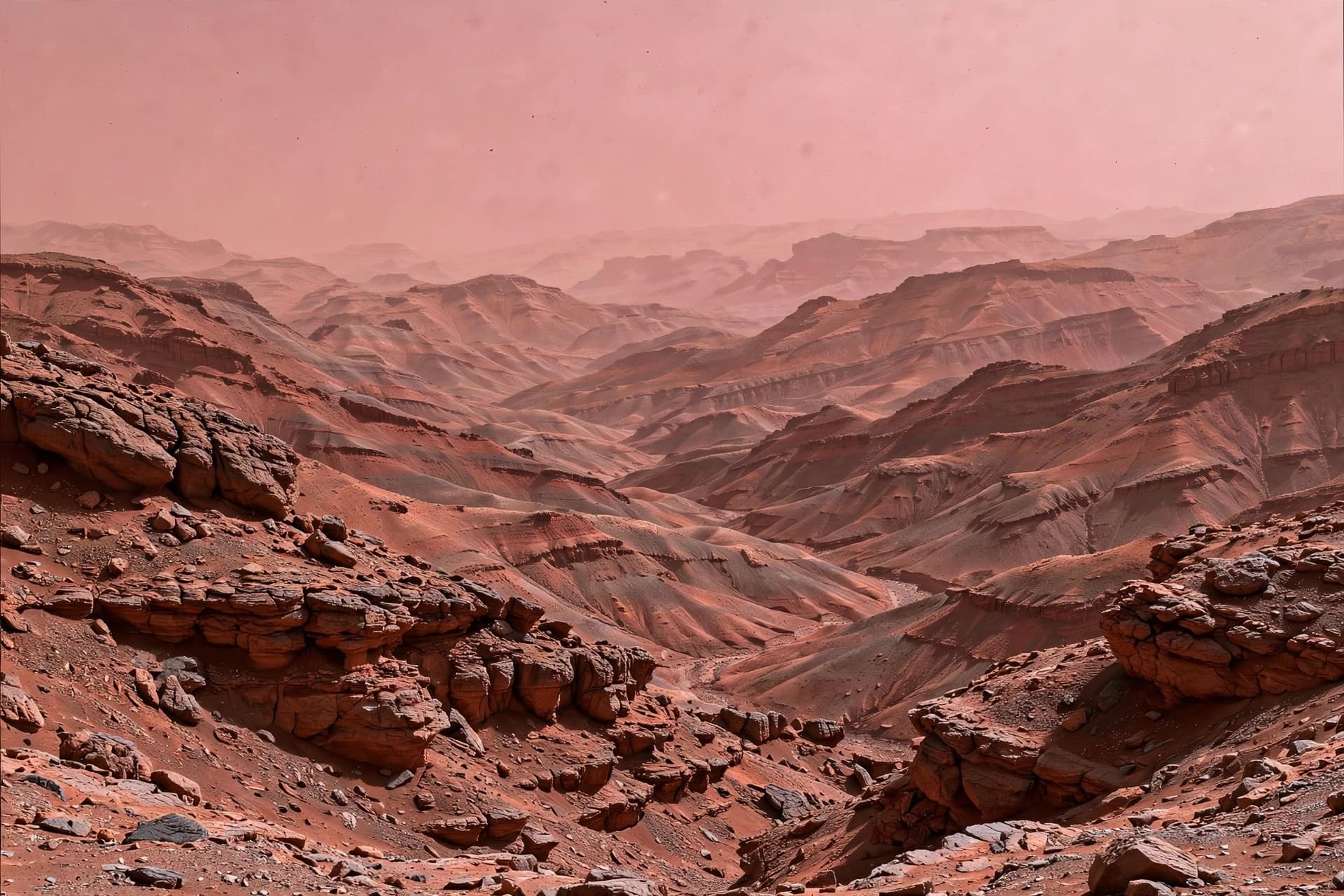
The photo released this week shows a landscape that is stark and quiet, a place where the only movement is the slow drift of dust and the steady progress of a rover that has traveled billions of miles to be here. It is not a dramatic image. There are no towering cliffs or sweeping vistas. But it captures something essential about exploration: the patient, incremental work of looking closely at a place no one has seen before.
Perseverance will continue its journey through the Wild West, collecting data and samples, moving slowly across terrain that has waited billions of years for a visitor. The rocks beneath its wheels formed when Mars was young, when the solar system was still settling into its present shape. In studying them, scientists are reaching back toward the beginning, tracing the story of a planet that might once have been habitable and might yet hold answers to questions we have only begun to ask.
---
AI Image Disclaimer: The visual content accompanying this article is AI-generated and does not depict actual imagery from the Perseverance rover.
Sources: Yahoo, Space.com, NASA
Published by Banx Network. This article is part of the Banx decentralized media programme, powered by the BXE token on the XRP Ledger.