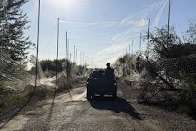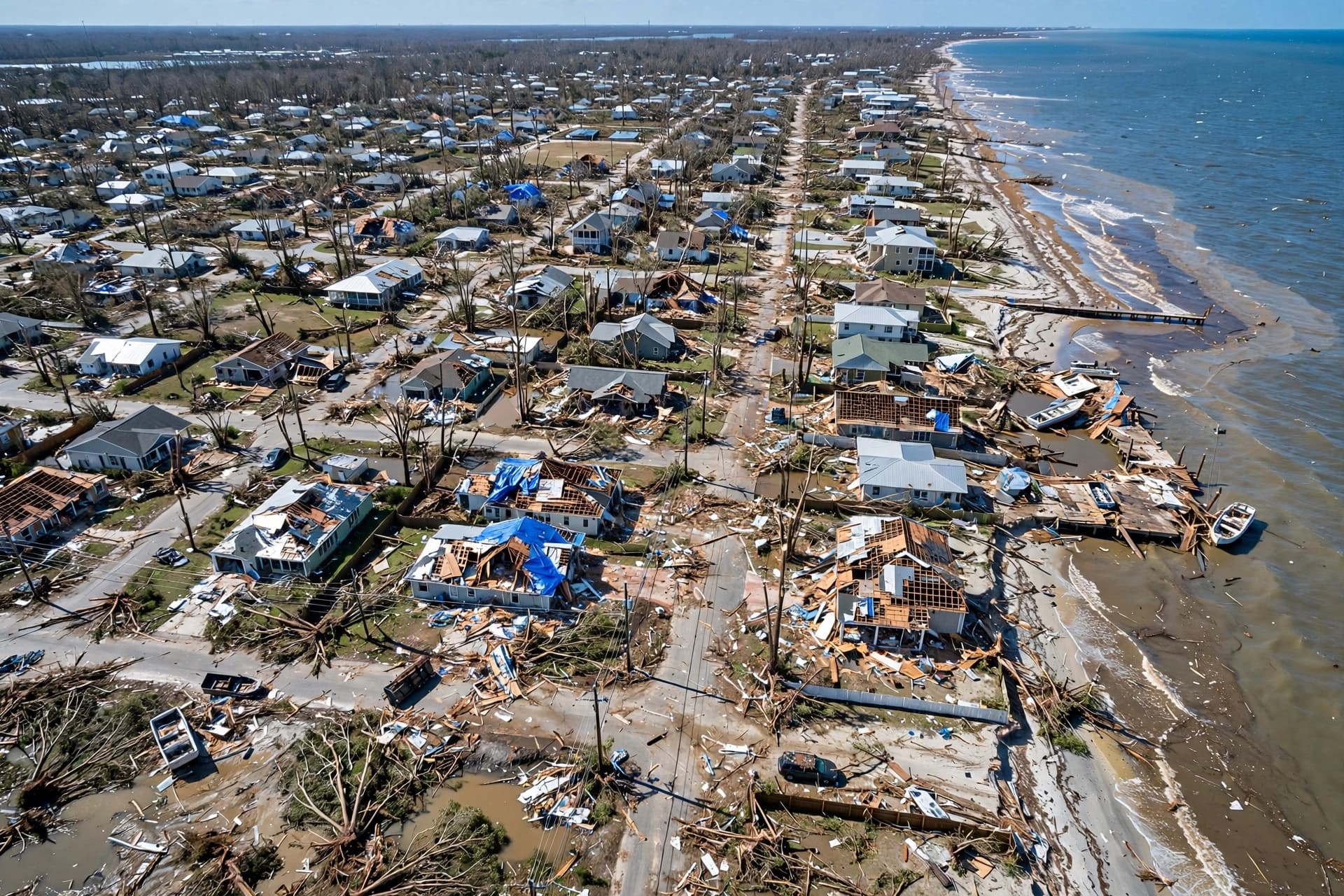
There is a particular kind of silence that follows a hurricane—not the stillness of peace, but the pause of a world catching its breath after violence. In the Florida Panhandle, that pause arrived on Saturday, October 10, 2026, as residents emerged from shelters to find their streets transformed: roofs torn away, trees toppled like matchsticks, power lines draped across roads, and the ordinary landmarks of daily life—a gas station, a high school gym, a boat house—reduced to debris.
Hurricane Isaias made landfall near Destin, Florida, late Friday as a Category 2 storm with sustained winds of 105 miles per hour, the first hurricane to strike the U.S. mainland since 2024. It had peaked earlier as a Category 3 before weakening slightly as it approached the coast. By Saturday morning, it had been downgraded to a post-tropical cyclone, but the damage left behind told its own story.
At least four people died in storm-related incidents, including two killed when trees fell onto their homes in Florida and Alabama. More than 850,000 properties lost power across Florida, Alabama, and Georgia at the height of the outages, with some residents warned they might wait days or weeks for restoration. Florida Governor Ron DeSantis urged caution even after the storm passed. "Be careful when going outside," he said. "Downed power lines, standing water, any of these can be very, very dangerous. Do not use generators inside your home or garage".
The images captured in the aftermath are striking in their ordinariness and their devastation. In Milton, a gas station stood flattened at the pumps, its canopy collapsed. A damaged airplane rested at Peter Prince Field. An apartment complex had its roof ripped off, the exposed interior visible from the air. In Destin, people salvaged belongings from a collapsed boat house. In Pensacola Beach, the boardwalk was filled with debris.
The human response was immediate and unglamorous. Jeff Lundy cut up a pine tree that had fallen on his father-in-law's house. Curt Brown picked through debris around his RV home. Baleigh Ziglar walked around downed trees in front of her mother's home, surveying what had once been a yard. These are the scenes that fill the hours after a storm—not heroics, but the quiet, necessary work of clearing paths and salvaging what remains.
The storm's late arrival was itself notable. The 2026 Atlantic hurricane season had been unusually quiet, with Isaias the first named hurricane to form. Forecasters attributed the delay to a historic El Niño pattern in the Pacific that suppressed Atlantic storm development until conditions shifted.
As Isaias moved inland, bringing heavy rain and the threat of flash flooding to the Southeast, the full accounting of its impact was still coming into focus. For the communities along the Panhandle, the work of recovery had already begun—not with grand gestures, but with the simple acts of neighbors helping neighbors, one fallen tree and one cleared road at a time.
AI Image Disclaimer: All images associated with this report are AI-generated and serve illustrative purposes only, not as documentary records of the hurricane or its aftermath.
Sources: AP News, Central News Agency (Taiwan), BBC, USA Today, Miami Herald, NRK, WPXI
Published by Banx Network. This article is part of the Banx decentralized media programme, powered by the BXE token on the XRP Ledger.